September 2025 in “Stem Cell Research & Therapy” TAZ boosts fat cell formation in goat stem cells by activating a specific signaling pathway.
September 2025 in “Development” Nelfb is crucial for forming skin fat tissue by regulating genes needed for fat cell development.
July 2025 in “Journal of Investigative Dermatology” Nelfb is essential for dermal fat development and survival.

Mealworm protein helps fat cell development and may aid in metabolic health and hair growth.
 January 2025 in “Dermatologic Therapy”
 Targeting multiple pathways may improve treatments for androgenetic alopecia.
October 2024 in “Cosmetics” Electric stimulation at 448 kHz can promote hair growth by enhancing cell activity in hair follicles.
 April 2024 in “Applied biological chemistry”
 Piperine from black pepper can make hair less oily by blocking fat cell development in hair roots.
 March 2024 in “World Academy of Sciences Journal”
 Exercise helps maintain healthy skin by promoting regeneration and reducing inflammation.
 October 2023 in “Benha Journal of Applied Sciences”
 PPAR-γ may be a key target for treating alopecia areata and other skin conditions.

The RNA AL136131.3 slows down hair growth and speeds up hair loss by affecting sugar breakdown in hair follicles.
 April 2023 in “Journal of Investigative Dermatology”
 MPZL3 protein helps control the size of oil glands and the growth of oil-producing cells in both mice and humans.
 November 2022 in “The journal of investigative dermatology/Journal of investigative dermatology”
 Different types of PPARγ are found in varying amounts in human skin and its parts, which could affect how skin treatments work.
March 2022 in “Experimental Eye Research” Parental uveitis causes hair loss in offspring of C57BL/6J mice.
July 2021 in “Authorea (Authorea)” Graham-Little Piccardi Lassueur Syndrome is a rare skin condition with specific hair loss and skin symptoms.
September 2019 in “The journal of investigative dermatology/Journal of investigative dermatology” PPARγ signaling modulation can protect hair follicle stem cells from chemotherapy-induced damage.
November 2018 in “Journal of Investigative Dermatology” Lichen Planopilaris causes irreversible hair loss due to immune attacks on hair stem cells, but modulating PPAR-γ might help treat it.
 July 2018 in “Elsevier eBooks”
 Lichen Planopilaris is a hair loss condition best treated early with various medications, including hydroxychloroquine, to prevent permanent baldness.
 November 2015 in “European Journal of Inflammation”
 Cicatricial alopecia, a permanent hair loss condition, is mainly caused by damage to specific hair follicle stem cells and abnormal immune responses, with gene regulator PPAR-y and lipid metabolism disorders playing significant roles.
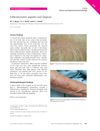 May 2014 in “Clinical and Experimental Dermatology”
 A 70-year-old woman with a rare skin condition improved after treatment with topical steroids and acitretin.
April 2023 in “Journal of Investigative Dermatology” AL136131.3 slows hair growth by affecting energy processes in hair loss.
13 citations
,
June 2024 in “BMC Genomics” The research helps understand hair development in sheep, aiding in better wool breeding.
9 citations
,
February 2023 in “Genes” lncRNAs influence cashmere fiber traits like diameter and color in goats.
3 citations
,
July 2025 in “Stem Cell Research & Therapy” lncRNA VIM-AS1 helps heal diabetic wounds by boosting energy production and reducing cell aging.
 12 citations
,
June 2019 in “Psychoneuroendocrinology”
12 citations
,
June 2019 in “Psychoneuroendocrinology” Allopregnanolone is needed for certain brain processing issues caused by D1 dopamine receptor activation.
 33 citations
,
May 2006 in “Journal of Investigative Dermatology”
33 citations
,
May 2006 in “Journal of Investigative Dermatology” PTHrP and its receptor can control blood vessel growth and hair development in mouse skin.
13 citations
,
February 2016 in “Journal of steroid biochemistry and molecular biology/The Journal of steroid biochemistry and molecular biology” Mice without active or present vitamin D receptors maintain normal blood sugar control and islet gene expression when calcium levels are normal.
 11 citations
,
September 2021 in “Journal of molecular endocrinology”
11 citations
,
September 2021 in “Journal of molecular endocrinology” ERβ has potential in treating prostate cancer and neurodegenerative diseases, but human studies are needed before clinical use.
 April 2017 in “Journal of Investigative Dermatology”
 Eating a lot of fat increases PKCβ and inflammation in skin fat cells, which affects skin and hair health.
Delta-opioid receptors affect skin cell circadian rhythms, possibly impacting wound healing and cancer.
January 2021 in “Deep Blue (University of Michigan)” Androgen receptors in the brain affect metabolism and reproduction differently in males and females, and may help manage PCOS symptoms in females.