 19 citations
,
April 2016 in “Experimental Dermatology”
19 citations
,
April 2016 in “Experimental Dermatology” Melanoblasts migrate to the skin using various pathways, and understanding this process could help with skin disease research.
14 citations
,
March 2015 in “Stem Cell Research & Therapy” ABCG2 protein marks stem-like skin cells in human epidermis.
660 citations
,
December 2011 in “Cell” Different hair follicles in the skin are innervated by unique combinations of mechanosensory neurons, crucial for touch sensation.
 1 citations
,
January 2021
1 citations
,
January 2021 CD4+ skin cells may be precursors to basal cell carcinoma.
41 citations
,
April 2009 in “Journal of comparative neurology” P2X3-IR fibers are widespread in rat skin and likely help detect pain.
 36 citations
,
September 2013 in “PLoS ONE”
36 citations
,
September 2013 in “PLoS ONE” Sweat gland stem cells help maintain glands, aid wound healing, and can regenerate skin structures.
1 citations
,
January 2009 in “Journal of Dermatology and Venereology” Cells from the upper hair follicle grow more actively, suggesting stem cells may be located there.
August 2025 in “Scientific Reports” Itchy keloids on the chest are linked to more nerve fibers and substance P.
 February 2024 in “Journal of Dermatological Science”
 Curved hair can develop when hair cells merge abnormally during growth.
5 citations
,
July 1999 in “Journal of Anatomy” Methylene blue staining effectively highlights detailed nerve structures in rat fur.
Lhx2 helps retinal cells respond to signals for eye development.
 January 2023 in “bioRxiv (Cold Spring Harbor Laboratory)”
 Newly born mesenchymal cells quickly spread out in response to tissue tension during early development.
 September 2022 in “bioRxiv (Cold Spring Harbor Laboratory)”
 The Kras mutation changes normal cell signals, leading to disrupted tissue structure and potential cancer.
4 citations
,
February 2023 in “Stem Cell Research & Therapy” Mouse skin cells can become sperm-like cells in the lab.
 15 citations
,
May 2003 in “The Laryngoscope”
15 citations
,
May 2003 in “The Laryngoscope” FGF-1 causes spiral ganglion neurites to branch more.
 6 citations
,
September 2020 in “Advanced Biology”
6 citations
,
September 2020 in “Advanced Biology” Blue-light activation of TrkA improves hair-follicle stem cells' ability to become neurons and glial cells.
83 citations
,
February 1991 in “Development” Fos protein is crucial for cell transition to cornification in keratinized tissues.
 March 2026 in “Dermatology Online Journal”
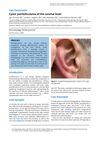
 Cystic panfolliculoma is a rare, harmless tumor that can be confused with other skin tumors.

Proper niche formation in Drosophila requires Slit-Robo signaling for cell migration.
 August 2023 in “International Journal of Molecular Sciences”
 The human scalp hair bulb contains different types of melanocytes with varying abilities to produce melanin.
43 citations
,
October 2005 in “Molecular and cellular endocrinology” Hair melanocytes help the skin respond to stress and regulate hair pigmentation.
 April 2023 in “The journal of investigative dermatology/Journal of investigative dermatology”
 Melanocytes are cells that make skin and hair color and help protect skin from sun damage.
233 citations
,
October 2004 in “Differentiation” Stem cells are in deep skin layers, while differentiating cells are in shallow layers.
December 2010 in “HAL (Le Centre pour la Communication Scientifique Directe)” The cornea develops independently of the lens, following its own default pathway.
1 citations
,
April 2024 in “Cells” Corneal cells can potentially revert to stem cells, aiding in repair and regeneration.
4 citations
,
January 2011 in “Cell stem cell” Hair follicle stem cells can return to their original niche and help regenerate hair.
 13 citations
,
February 2020 in “Cold Spring Harbor Perspectives in Biology”
13 citations
,
February 2020 in “Cold Spring Harbor Perspectives in Biology” New methods have helped find cells that create other cells in the body.
 April 2023 in “Journal of Investigative Dermatology”
 Hair growth is driven by cells that move and change like a conveyor belt.
18 citations
,
March 2009 in “Experimental Dermatology” Pilomatricoma can develop into various hair-related structures.
109 citations
,
November 2011 in “Nature Neuroscience”