April 2025 in “International Journal of Dermatology” JAK inhibitors effectively reduce alopecia areata symptoms in Black patients.
 November 2024 in “SKIN The Journal of Cutaneous Medicine”
 Ritlecitinib provides new treatment options for diverse alopecia areata patients.
 October 2024 in “Canadian Journal of Health Technologies”
 Olumiant should be covered for severe alopecia areata if certain conditions are met.
 June 2024 in “Clinical Endocrinology and Metabolism”
 Balancing hormones is crucial for women's health and may require hormone therapy.
 April 2024 in “Pharmacoepidemiology and drug safety (Print)”
 The algorithm accurately identified alopecia in women of childbearing age using claims data.
 December 2023 in “Journal of the American Academy of Dermatology”
 Refugee patients face long wait times for dermatology care, worsening health disparities.
 October 2023 in “Deleted Journal”
 No single method is best for quitting smoking; it depends on individual preferences and health.
 September 2023 in “Дерматовенерология, косметология”
 Digital video microscopy is a useful non-invasive tool for diagnosing non-scarring alopecia.
 August 2023 in “Clinical Endocrinology and Metabolism”
 Balancing hormones can help women feel youthful and healthy.
June 2023 in “Clinical Chemistry” Unregulated supplements can contain hidden drugs causing misleading symptoms and test results.
 January 2023 in “Journal of The American Academy of Dermatology”
 Being overweight, having gallbladder removal surgery, and taking cholesterol-lowering drugs are linked to a higher chance of getting vulvar lichen sclerosus.
October 2022 in “Zenodo (CERN European Organization for Nuclear Research)” Truman Plus Male Enhancement is marketed as a natural testosterone booster to improve men's sexual health and energy.
October 2022 in “Zenodo (CERN European Organization for Nuclear Research)” EndoPump Male Enhancement lacks proven effectiveness and may pose health risks.
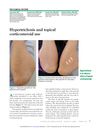 February 2022 in “Cleveland Clinic Journal of Medicine”
 Prolonged use of topical corticosteroids can cause excessive hair growth.
Combining online and in-person dermatology care can improve quality and access.
 July 2020 in “Journal of the American Academy of Dermatology”
 Spironolactone does not increase the risk of breast cancer recurrence.
 November 2019 in “Neuro-oncology”
 Rind-based techniques can lower scalp radiation dose and reduce hair loss in brain cancer treatment.
 May 2018 in “International journal of cell science & molecular biology”
 Early anti-aging hair treatments should focus on anti-inflammatory agents and promoting healthy hair growth cycles.
 August 2017 in “Journal of Pharmacy Practice and Research”
 Risk analysis is important for safely adjusting pharmaceutical formulas while maintaining their quality and effectiveness.
 August 2017 in “DOAJ (DOAJ: Directory of Open Access Journals)”
 Stem cell therapies show potential for treating hair loss with fewer side effects.
 January 2016 in “Reactions Weekly”
 A girl's hair loss from a pharmacy error improved after getting the right medicine.
 November 2015 in “Clin-Alert”
 Some medications and supplements can cause serious side effects, including hair loss, heart rhythm problems, liver injury, and other health issues.

A girl lost her hair due to being given the wrong medication because of a pharmacy's computer error.
 February 2013 in “Social Science Research Network”
 Some people pay $240 for medication that costs $9 due to drug industry tactics and complicated healthcare policies.
January 2001 in “Journal of Shenyang Pharmaceutical University” New treatments for hair loss are being developed using both traditional Chinese and Western medicine.
September 1989 in “Drug and Therapeutics Bulletin” Topical minoxidil is not very effective for baldness.
November 2022 in “The Journal of Urology” Adopting the Mark Cuban Cost Plus Drug Company pricing model could save Medicare about $1.29 billion on urological drugs.
 September 2019 in “Reactions Weekly”
 Man experienced post-finasteride syndrome symptoms after using finasteride and dutasteride for hair loss.
 June 2018 in “Actas Dermo-Sifiliográficas”
 New treatments improve hair loss solutions for different age groups and genders.
 September 2017 in “Majallah-i taḥqīqāt-i ̒ulūm-i pizishkī-i Zāhidān”
 Androgenetic alopecia is a long-term, immune-related disorder that starts during puberty due to androgen secretion, and it might be improved with iron tablets, platelet transfusion, and anti-inflammation therapy.