 19 citations
,
August 2012 in “Cell death and differentiation”
19 citations
,
August 2012 in “Cell death and differentiation” Intu gene is crucial for hair follicle formation by helping keratinocytes differentiate through primary cilia.
 18 citations
,
October 2012 in “Dermatologic Clinics”
18 citations
,
October 2012 in “Dermatologic Clinics” Early diagnosis and aggressive treatment are key for managing rare scalp disorders that cause permanent hair loss.
 14 citations
,
October 2018 in “PloS one”
14 citations
,
October 2018 in “PloS one” Deleting the Far2 gene in mice causes sebaceous gland issues and patchy hair loss.
 1 citations
,
November 2023 in “Indian Dermatology Online Journal”
1 citations
,
November 2023 in “Indian Dermatology Online Journal” Primary essential CVG is a rare, benign scalp condition with treatment focusing on symptom management and hygiene.
 1 citations
,
January 2020
1 citations
,
January 2020 Ift20 is essential for hair follicle function and skin cell movement.
 January 2026 in “Acta Dermatovenerologica Alpina Pannonica et Adriatica”
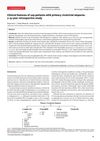
 Primary cicatricial alopecia causes permanent hair loss by destroying hair follicles, and its exact cause is unknown.
 April 2023 in “The journal of investigative dermatology/Journal of investigative dermatology”
 The study found that a key immune pathway protecting hair follicles is reduced in a mouse model of scarring hair loss.
 December 2012 in “Journal of undergraduate research in Alberta”
 Elongating cilia boosts SKP stem cell renewal, especially with PDGF.
 May 2026 in “Frontiers in Cell and Developmental Biology”
 Hair follicle organoids can help study hair biology and disorders but need improvements for wider use.
July 2025 in “Journal of Investigative Dermatology” Scarring alopecia involves increased immune cells and specific gene changes near damaged hair follicles.
 November 2023 in “bioRxiv (Cold Spring Harbor Laboratory)”
 Disrupted cholesterol production impairs hair follicle stem cells, leading to hair loss.
April 2018 in “Journal of Investigative Dermatology” Mutations in Far2 mice cause hair loss due to sebaceous gland issues.
January 2019 in “Clinical pediatric dermatology” Scalp micropigmentation is a non-surgical alternative to hair transplants that mimics hair follicles and requires no downtime.
20 citations
,
November 1989 in “PubMed” Accurate fungal identification is crucial for proper treatment in immunocompromised patients.
1 citations
,
September 2025 in “PLoS ONE” Disrupted cholesterol production causes permanent hair follicle damage and hair loss.

Early and accurate identification of primary scarring alopecias is crucial to prevent permanent hair loss.
October 2019 in “Research Square (Research Square)” Certain circular RNAs may regulate wool follicle growth in sheep.

Single-born goats produce more and finer cashmere than twin-born goats.
32 citations
,
February 2002 in “Veterinary Dermatology” Canine dermal papilla cells and fibroblasts have distinct growth patterns and protein expressions.
 4 citations
,
January 2014 in “Dermatology”
4 citations
,
January 2014 in “Dermatology” A woman with acne and baldness was found to have a rare ovarian condition but successfully had a child through fertility treatment.
 1 citations
,
April 2010 in “Expert Review of Dermatology”
1 citations
,
April 2010 in “Expert Review of Dermatology” The document concludes that early diagnosis and treatment are crucial for managing rare hair loss disorders and that more research is needed to improve treatment strategies.
Scalp involvement in primary cutaneous lymphomas is common and can be aggressive, requiring careful attention.
 27 citations
,
January 2010 in “Animal”
27 citations
,
January 2010 in “Animal” South American camelids should be sheared early, fleece type affects fiber quality, and the S/P follicle ratio doesn't distinguish between Bolivian llama genotypes.
 25 citations
,
February 2019 in “Genomics”
25 citations
,
February 2019 in “Genomics” Cashmere and milk goats have different hair growth cycles and gene expressions, which could help improve wool production.
10 citations
,
October 2021 in “Animal nutrition” Vitamin B6 helps increase hair growth and density in rabbits by affecting certain cell signaling pathways.
 3 citations
,
April 2010 in “The American Journal of Dermatopathology”
3 citations
,
April 2010 in “The American Journal of Dermatopathology” Most people with scarring and nonscarring hair loss show similar D2-40 levels, but some with scarring hair loss have higher levels.
3 citations
,
January 1991 in “Toxicology in Vitro” Hair follicle cultures are effective for studying cell communication and testing chemicals.
31 citations
,
November 1991 in “Brain Research” Aδ-LTMRs have complex synapses with glycine, while Aβ-LTMRs have simpler ones.
August 2015 in “PubMed Central” Epithelial-derived Pop-Up Keratinocytes (ePUKs) may enhance wound healing in regenerative medicine.
 August 2015 in “MOJ proteomics & bioinformatics”
 ePUKs could be valuable for regenerative medicine due to their wound healing abilities.