17 citations
,
September 2020 in “Inflammation and Regeneration” WNT activation in scalp fibroblasts boosts hair growth by increasing FGF9.
15 citations
,
June 2015 in “PLoS ONE” Thymosin beta-4 promotes hair growth in mice.
14 citations
,
April 2015 in “Stem Cell Research & Therapy” Granulation tissue-derived cells can aid wound healing and serve as an alternative source of stem cells for tissue repair.
6 citations
,
August 2023 in “Journal of Investigative Dermatology” Skin plays a key role in managing iron levels, and inflammation can affect systemic iron, potentially causing anemia.
4 citations
,
February 2025 in “Nutrients” Gynostemma pentaphyllum extract improves hair elasticity, density, and thickness safely.
 3 citations
,
December 2023 in “Cell proliferation”
3 citations
,
December 2023 in “Cell proliferation” Stuff from umbilical cord stem cells helps skin heal and look younger.
October 2025 in “Annals of Medicine and Surgery” Retinoids may improve hair growth in androgenic alopecia when used with other treatments.
 July 2025 in “Dermatologica Sinica”
 Glycyrrhizin may help regrow hair by activating a specific pathway.
 June 2025 in “International Journal of Research in Dermatology”
 The combination of tretinoin gel and minoxidil effectively improves hair growth and satisfaction in people with androgenetic alopecia.
lncRNA MRPS28 regulates hair follicle development in cashmere goats, affecting cashmere quality.
 May 2025 in “International Journal of Molecular Sciences”
 DHHB from Platycladus orientalis L. promotes hair growth and could be a natural alternative to current treatments.
 December 2024 in “Antioxidants”
 Luteolin can reduce hair graying in mice, with external treatment being more effective.
CyRL-QN15 peptide boosts hair growth in diabetic mice by activating specific cell pathways.
 October 2023 in “Journal of Indian System of Medicine”
 Ayurveda can help treat premature hair graying with lifestyle changes and herbal remedies.
December 2016 in “Chinese Journal of Dermatology” Adenosine boosts hair growth by increasing angiogenin levels.
 May 2014 in “La Revue de médecine interne”
 Early detection and treatment of primary biliary cirrhosis and related autoimmune diseases improve outcomes.
3 citations
,
January 2011 in “International journal of trichology” Low DHEA-S levels might be linked to alopecia areata and could be a potential treatment target.
 July 2010 in “Journal of Investigative Dermatology”
 Scientists found gene mutations that affect hair loss, skin stem cells, and skin disorders, and identified drugs that may help treat blood vessel and skin conditions.
21 citations
,
June 2003 in “Journal of Morphology” Monotreme and marsupial skin proteins show primitive features and species-specific differences compared to placental mammals.
73 citations
,
December 2015 in “Nature Genetics” Mutations in TBX3 cause horses to have more even hair color instead of Dun camouflage.
 January 2017 in “Research Portal (King's College London)”
 Mantel's family life affected her view of femininity and worsened her endometriosis.
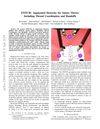 April 2024 in “arXiv (Cornell University)”
 STITCH improves suture accuracy and efficiency, especially with human help.
20 citations
,
September 2004 in “Journal of Anatomy” The inner root sheath evolved to help hair grow safely through the skin in mammals.
10 citations
,
November 1964 in “Zentralblatt für Veterinärmedizin Reihe A” Benign epithelial tumors in dogs don't spread or become cancerous.
4 citations
,
May 2009 in “Wound Repair and Regeneration” Genetically modified cells can regenerate skin and hair in rats.
 1 citations
,
November 2002 in “Endocrine practice”
1 citations
,
November 2002 in “Endocrine practice” The patient's high testosterone was reduced by a medication that suppresses gonadotropin.
 1 citations
,
September 2022 in “Journal of dermatological science”
1 citations
,
September 2022 in “Journal of dermatological science” Certain vitamins and their derivatives can help hair grow longer by activating specific growth signals.
 June 1996 in “Journal of Dermatological Science”
 Two new compounds were found that could promote hair growth as well or better than minoxidil.
 26 citations
,
August 2016 in “ACS Applied Materials & Interfaces”
26 citations
,
August 2016 in “ACS Applied Materials & Interfaces” A boronic acid copolymer quickly forms cell clusters, useful for tissue and tumor modeling.
 September 2017 in “Journal of Investigative Dermatology”
 The research concluded that hyaluronic acid affects the formation and growth of hair follicle-like structures in a lab setting.