 77 citations
,
March 2001 in “Clinics in Dermatology”
77 citations
,
March 2001 in “Clinics in Dermatology” Androgenetic alopecia involves genetics, hormones, and can be treated with medications or surgery.
 60 citations
,
September 2016 in “Dermatologic Surgery”
60 citations
,
September 2016 in “Dermatologic Surgery” PRP treatment may stimulate hair growth by promoting blood vessel formation, increasing growth factors, and preventing cell death.
 40 citations
,
August 2010 in “Archives of dermatology”
40 citations
,
August 2010 in “Archives of dermatology” A 5-year-old boy's skin condition improved with systemic valganciclovir after a cardiac transplant and immunosuppressive therapy.
 39 citations
,
March 2009 in “Archives of Dermatological Research”
39 citations
,
March 2009 in “Archives of Dermatological Research” Apigenin may help promote hair growth and could treat hair loss.
 33 citations
,
February 1999 in “The journal of investigative dermatology/Journal of investigative dermatology”
33 citations
,
February 1999 in “The journal of investigative dermatology/Journal of investigative dermatology” IGF-1 increases whisker growth in transgenic mice.
 28 citations
,
March 2016 in “Toxicologic pathology”
28 citations
,
March 2016 in “Toxicologic pathology” Dogs could be good models for studying human hair growth and hair loss.
 27 citations
,
September 1999 in “Journal of Investigative Dermatology”
27 citations
,
September 1999 in “Journal of Investigative Dermatology” Human skin cells contain Protease Nexin-1, and male hormones can decrease its levels, potentially affecting hair growth.
 24 citations
,
August 2017 in “Prostaglandins & Other Lipid Mediators”
24 citations
,
August 2017 in “Prostaglandins & Other Lipid Mediators” CRTH2 antagonists might be useful for treating many conditions because they play a role in immune and inflammation responses.
 22 citations
,
February 2002 in “Clinics in Geriatric Medicine”
22 citations
,
February 2002 in “Clinics in Geriatric Medicine” Many elderly women experience unwanted facial hair and various hair loss conditions, with treatments available for each condition.
 15 citations
,
November 2015 in “Trends in biotechnology”
15 citations
,
November 2015 in “Trends in biotechnology” Gene regulation could revolutionize hair color by altering pigmentation from within.
 12 citations
,
January 2016 in “Journal of Clinical and Investigative Dermatology”
12 citations
,
January 2016 in “Journal of Clinical and Investigative Dermatology” Low vitamin D levels are common in people with Alopecia Areata.
 9 citations
,
January 2019 in “American Journal of Dermatopathology”
9 citations
,
January 2019 in “American Journal of Dermatopathology” DKK-1 gene linked to hair loss in AGA and AA patients; more research needed for potential therapy.
 8 citations
,
August 2019 in “Dermatologic surgery”
8 citations
,
August 2019 in “Dermatologic surgery” Nonsteroid treatments for alopecia areata show promise but need more high-quality research.
 7 citations
,
January 2020 in “Nature”
7 citations
,
January 2020 in “Nature” Stress turns hair white by depleting color-giving cells in hair follicles through a specific neurotransmitter related to the body's stress response.
 6 citations
,
August 2015 in “Journal of Molecular Histology”
6 citations
,
August 2015 in “Journal of Molecular Histology” Caspase-7 has functions in skin and hair that are not related to cell death.
 5 citations
,
March 2012 in “Clinical and Experimental Dermatology”
5 citations
,
March 2012 in “Clinical and Experimental Dermatology” A woman experienced temporary hair loss after taking albendazole, which resolved on its own within 3 months.
 4 citations
,
May 2019 in “Skin Research and Technology”
4 citations
,
May 2019 in “Skin Research and Technology” Finasteride helps hair growth but stopping it causes faster hair loss.
 4 citations
,
January 2017 in “Annals of Dermatology”
4 citations
,
January 2017 in “Annals of Dermatology” Tianeptine may help prevent hair loss by promoting hair growth and reducing cell death.
 4 citations
,
May 2006 in “médecine/sciences”
4 citations
,
May 2006 in “médecine/sciences” The hairless gene is crucial for hair health, and its mutations cause hair loss.
 3 citations
,
February 2008 in “Basic and clinical dermatology”
3 citations
,
February 2008 in “Basic and clinical dermatology” Telogen Effluvium is a hair loss condition where treatment involves identifying and managing its triggers.
 2 citations
,
December 2018 in “Journal of cosmetic dermatology”
2 citations
,
December 2018 in “Journal of cosmetic dermatology” Higher CRBP1 levels are linked to more severe alopecia areata.
 1 citations
,
July 2010 in “International Society of Hair Restoration Surgery”
1 citations
,
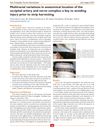
July 2010 in “International Society of Hair Restoration Surgery” Recognizing racial differences in anatomy helps make hair transplants safer.
 1 citations
,
November 1983 in “The Lancet”
1 citations
,
November 1983 in “The Lancet” Acute leukemias with the Philadelphia chromosome may be biphenotypic, and identifying this is important for proper treatment.
 August 2020 in “The American Journal of Cosmetic Surgery”
 Hair transplant surgery significantly reduces anxiety in balding patients, especially those under 30 years old.
 August 2017 in “Journal of Investigative Dermatology”
 Activin increases skin tumor formation, skin Tregs help hair growth, lymph-node removal doesn't improve melanoma survival, cells can revert to stem cells in wound healing, and skin bacteria produce peptides that may treat infections.
 December 2012 in “Journal of Dermatological Science”
 Wnt/beta-catenin signaling in the skin helps fat cell development during hair growth and repair.
 April 2012 in “Informa Healthcare eBooks”
 Telogen effluvium is a common hair loss condition where many hairs enter the resting phase, often not noticeable until significant loss occurs, and treatment focuses on the underlying cause.
 January 2006 in “Yearbook of Dermatology and Dermatologic Surgery”
 Hair graying is caused by the loss of pigment cells due to poor maintenance of stem cells in the hair follicle.
 September 1997 in “JEADV. Journal of the European Academy of Dermatology and Venereology/Journal of the European Academy of Dermatology and Venereology”
 Alopecia patients have a less active liver monoxygenase system, which can be treated with photochemotherapy and system inducers.
 March 2026 in “Editora Pasteur eBooks”
 Early diagnosis and a combination of treatments can effectively manage hair loss and improve quality of life.