60 citations
,
July 2014 in “Autophagy” The protein FLCN is involved in cellular cleanup and is regulated by ULK1.
 April 2018 in “Journal of Investigative Dermatology”
 CREB, a protein that can promote cancer traits, is controlled by β-catenin in skin cancer cells.

PTHrP is important for bone formation and may be targeted for osteoporosis treatment and longevity therapies.
 June 2025 in “Deleted Journal”
 Selamectin effectively cured the cats' infestation.
July 2024 in “Journal of Investigative Dermatology” Brepocitinib improves cicatricial alopecia and reduces key immune markers.
 April 2016 in “Journal of Investigative Dermatology”
 A peptide known for reducing wrinkles also effectively inhibits an enzyme linked to skin inflammation and acne.
24 citations
,
February 2002 in “The journal of investigative dermatology/Journal of investigative dermatology” Two new proteins, hKAP1.6 and hKAP1.7, are found in the hair follicle cortex.
 9 citations
,
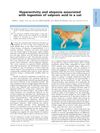
May 2001 in “Journal of the American Veterinary Medical Association”
9 citations
,
May 2001 in “Journal of the American Veterinary Medical Association” A cat's hyperactivity and hair loss were caused by eating valproic acid but improved after stopping access to the drug.
4 citations
,
October 2001 in “Mycoses” A young cat had a rare fungal infection caused by Microsporum gypseum.
 3 citations
,
January 2015 in “Sen i Gakkaishi”
3 citations
,
January 2015 in “Sen i Gakkaishi” The new keratin film without KAPs stains better and could help study keratin functions.
 13 citations
,
April 2020 in “Experimental Cell Research”
13 citations
,
April 2020 in “Experimental Cell Research” PCAT1 helps hair growth by controlling miR-329/Wnt10b.
38 citations
,
January 2017 in “PPAR Research” PPAR-γ helps control skin oil glands and inflammation, and its disruption can cause hair loss diseases.
 8 citations
,
July 2018 in “Analytical sciences”
8 citations
,
July 2018 in “Analytical sciences” Using 5-butylpicolinate esters improves the sensitivity and reliability of detecting testosterone and dihydrotestosterone in saliva.
 June 2024 in “International Journal of Dermatology”
 Upadacitinib may effectively treat resistant lichen planopilaris.
 2 citations
,
April 2022 in “PubVet”
2 citations
,
April 2022 in “PubVet” The cat's skin condition improved significantly with medication, with no relapse.
 38 citations
,
October 2011 in “Analytical biochemistry”
38 citations
,
October 2011 in “Analytical biochemistry” Hair proteins have weak spots in their α-helical segments.
Matriptase-2 helps control iron levels by suppressing hepcidin, and its deficiency can cause iron-deficiency anemia.
1 citations
,
May 2022 in “The FASEB journal” The document concludes that biotin, folate, and RGD peptides are promising for targeting cancer cells with prodrugs, but the conjugates are not yet tested for use.
13 citations
,
June 2023 in “Frontiers in Molecular Neuroscience” Blocking the KATP channel may help treat migraines.
26 citations
,
June 2003 in “PubMed” Alpha-difluoromethylornithine prevents cancer in mice but causes hair loss.
 May 2025 in “The Journal of Rheumatology”
 Early diagnosis and treatment are crucial for CAPS, and Eculizumab can be effective.
 148 citations
,
April 2009 in “Molecular Pharmaceutics”
148 citations
,
April 2009 in “Molecular Pharmaceutics” Researchers developed promising agents for prostate cancer imaging, with the best one showing high potential for clinical use.
100 citations
,
May 2006 in “American Journal Of Pathology” Matriptase is crucial for skin barrier, hair growth, and may contribute to skin cancer.
March 2026 in “Drug Testing and Analysis” PTeCA is a reliable marker for detecting oxidative hair treatments.
 28 citations
,
November 2018 in “Journal of Cellular and Molecular Medicine”
28 citations
,
November 2018 in “Journal of Cellular and Molecular Medicine” CXXC5 is a protein that controls cell growth and healing processes, and changes in its activity can lead to diseases like cancer and hair loss.
28 citations
,
February 2010 in “Experimental Dermatology” The frizzy mouse and hairless rat mutations are due to changes in the Prss8 gene.
33 citations
,
August 2000 in “Experimental Cell Research” 124 citations
,
November 2000 in “The journal of investigative dermatology/Journal of investigative dermatology” PAD3 plays a key role in hair and skin protein structure and may be linked to skin diseases.
March 2021 in “Juniper Online Journal Material Science” Energy healing treatment improved L-cysteine's stability, solubility, bioavailability, and shelf-life.
138 citations
,
November 1977 in “Biochimica et Biophysica Acta (BBA) - Proteins and Proteomics”