 9 citations
,
August 2015 in “Tissue Engineering and Regenerative Medicine”
9 citations
,
August 2015 in “Tissue Engineering and Regenerative Medicine” Human skin cell byproducts can potentially be used to treat hair loss and promote hair growth.
207 citations
,
July 2006 in “Development” MTS24 marks a new type of skin cell that helps hair growth and repair.
 149 citations
,
July 2014 in “Cold Spring Harbor Perspectives in Medicine”
149 citations
,
July 2014 in “Cold Spring Harbor Perspectives in Medicine” The dermal papilla is crucial for hair growth and health, and understanding it could lead to new hair loss treatments.
 68 citations
,
April 2012 in “Journal of Investigative Dermatology”
68 citations
,
April 2012 in “Journal of Investigative Dermatology” The conclusion is that Fgf18 and Tgf-ß signaling could be targeted for hair loss treatments.
29 citations
,
January 2021 in “Journal of nanobiotechnology” Tiny particles from brain cells help hair grow by targeting a specific hair growth pathway.
 29 citations
,
March 2012 in “Stem Cell Research & Therapy”
29 citations
,
March 2012 in “Stem Cell Research & Therapy” Some stem cells in the body rarely divide, which could help create better treatments for diseases and aging.
 29 citations
,
December 2005 in “BioEssays”
29 citations
,
December 2005 in “BioEssays” Wnt/ß-catenin signaling is crucial for regulating skin stem cells and hair growth, with the right levels and timing needed for proper function.
 4 citations
,
July 2025 in “Frontiers in Immunology”
4 citations
,
July 2025 in “Frontiers in Immunology” Early intervention with JAK inhibitors may prevent alopecia areata progression.
3 citations
,
December 2024 in “Stem Cell Reports” Low fucosylation boosts stem cell growth in the eye.
 2 citations
,
December 2025 in “Nature Communications”
2 citations
,
December 2025 in “Nature Communications” H2AK119ub helps keep hair follicle stem cells in a resting state, preventing early aging.
September 2025 in “Science Advances” PADI4 enzyme slows down cell growth in developing hair follicles.
 June 2025 in “International Journal of Molecular Sciences”
 Targeting EMT and fibrotic remodeling may help treat androgenetic alopecia.
 April 2018 in “Journal of Investigative Dermatology”
 Both Th1 and Th2 immune responses are increased in alopecia areata, with Th2 response more strongly linked to how severe the disease is.
 11 citations
,
June 2012 in “Journal of Dermatological Science”
11 citations
,
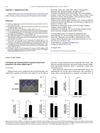
June 2012 in “Journal of Dermatological Science” Scientists identified a group of human skin cells with high growth and regeneration potential.
August 2025 in “Biomaterials” A new therapy using secretions from fetal cartilage cells shows promise for safe and effective hair regrowth.
December 2025 in “The Journal of Cell Biology” Keratin 15 helps maintain skin cell growth and repair.

A low dose of rapamycin increases inner ear hair cell creation by boosting SOX2+ cell numbers.
 91 citations
,
August 2014 in “Development”
91 citations
,
August 2014 in “Development” The circadian clock is crucial for tissue renewal and regeneration, affecting stem cell functions and having implications for health and disease.
 48 citations
,
February 2016 in “Scientific Reports”
48 citations
,
February 2016 in “Scientific Reports” Researchers created rat liver stem cells that could help repair liver failure in rats and may be useful for studying human liver diseases.
 3 citations
,
April 2011 in “Expert Review of Dermatology”
3 citations
,
April 2011 in “Expert Review of Dermatology” Male hair loss is caused by inactive hair follicle stem cells.
 May 2026 in “Frontiers in Cell and Developmental Biology”
 Collagen networks play a key role in hair loss and follicle miniaturization.
 26 citations
,
July 2016 in “The journal of investigative dermatology/Journal of investigative dermatology”
26 citations
,
July 2016 in “The journal of investigative dermatology/Journal of investigative dermatology” The protein Par3 is crucial for healthy skin, affecting the skin barrier, cell differentiation, and stem cell maintenance.
 15 citations
,
September 2007 in “Cell & tissue research/Cell and tissue research”
15 citations
,
September 2007 in “Cell & tissue research/Cell and tissue research” Embryonic and adult stem cells are valuable for improving skin grafts and cell therapy.
12 citations
,
January 2022 in “Cells” Dermal papilla cell vesicles can boost hair growth genes in fat stem cells.
 11 citations
,
May 2018 in “Philosophical Transactions of the Royal Society B”
11 citations
,
May 2018 in “Philosophical Transactions of the Royal Society B” New materials help control stem cell growth and specialization for medical applications.
 6 citations
,
May 2013 in “PloS one”
6 citations
,
May 2013 in “PloS one” The Foxn1(-/-) nude mouse shows disrupted and expanded skin stem cell areas due to high Lhx2 levels.
 37 citations
,
June 2011 in “Journal of Cellular Biochemistry”
37 citations
,
June 2011 in “Journal of Cellular Biochemistry” Androgen is important in controlling stem cell differentiation, reducing fat development, and increasing lean mass.
 September 2017 in “Journal of Investigative Dermatology”
 Researchers created human cells that can turn into sebocytes, which may help study and treat skin conditions like acne.
 April 2017 in “Journal of Investigative Dermatology”
 PRC1 influences skin stem cell development by both turning genes on and off, affecting hair growth and skin cell types.
April 2010 in “Cancer Research” Stat3 activation increases hair follicle progenitors but reduces bulge region stem cells.