21 citations
,
June 1991 in “Journal of Inherited Metabolic Disease” Selenium deficiency caused symptoms in a child, which improved with selenium supplements.
August 2024 in “Animal Bioscience” Exosomal miR-222-3p reduces melanin production in rabbits by targeting the SOX10 gene.
12 citations
,
December 1981 in “Journal of Endocrinology” α-MSH increases melanin production in moulting hair follicles, while AVT inhibits it.
November 2022 in “Skin Appendage Disorders” PT-20 did not significantly improve gray hair repigmentation.
 3 citations
,
May 2022 in “The journal of investigative dermatology/Journal of investigative dermatology”
3 citations
,
May 2022 in “The journal of investigative dermatology/Journal of investigative dermatology” Skin lesions in Carney Complex are caused by a gene change in some skin cells that leads to increased pigmentation and may lead to tumors.
12 citations
,
January 2013 in “Indian dermatology online journal” Dermatopathia pigmentosa reticularis causes skin discoloration, hair loss, and nail problems.
 8 citations
,
June 2016 in “Journal of Cutaneous Pathology”
8 citations
,
June 2016 in “Journal of Cutaneous Pathology” Two women were diagnosed with a rare melanoma that looked like hair loss but was actually a type of skin cancer.
 9 citations
,
November 2000 in “Journal of the American Academy of Dermatology”
9 citations
,
November 2000 in “Journal of the American Academy of Dermatology” A woman with a rare type of dermatomyositis improved with low-dose prednisone and methotrexate.
 May 2015 in “Journal of Investigative Dermatology”
 Melanoma risk tools need improvement, a gene mutation causes a hair disorder that might be treated by managing cell stress, a potential therapy for a skin-ear disorder involves blocking cell channels, skin wrinkling may indicate lung aging regardless of smoking, and oxidative stress might contribute to common baldness.
30 citations
,
August 2005 in “British journal of dermatology/British journal of dermatology, Supplement” A specific gene mutation causes hair loss and potential eye issues, even if vision seems normal.

A man's scalp hair loss was due to a combined melanocytic nevus and alopecia areata, suggesting a possible link between the two conditions.
 2 citations
,
January 2005 in “The Japanese Journal of Veterinary Dermatology”
2 citations
,
January 2005 in “The Japanese Journal of Veterinary Dermatology” Abnormal adrenal function is not the cause of alopecia in Pomeranians; it may be due to breed-specific hormones.
20 citations
,
January 2002 in “Laboratory Animals” Mutations in the hairless gene cause hair loss and skin cysts in rhesus macaques.
24 citations
,
January 2023 in “Cancer Research” AMPK activation may reduce melanoma risk in red-haired individuals.
April 2018 in “Journal of Investigative Dermatology” Melanogenesis-related proteins may trigger immune responses in alopecia areata patients.
 12 citations
,
June 2019 in “Psychoneuroendocrinology”
12 citations
,
June 2019 in “Psychoneuroendocrinology” Allopregnanolone is needed for certain brain processing issues caused by D1 dopamine receptor activation.
22 citations
,
February 2012 in “Journal of Investigative Dermatology” A specific gene mutation causes severe skin and nail issues and hair loss.
 9 citations
,
November 2017 in “Journal of Glaucoma”
9 citations
,
November 2017 in “Journal of Glaucoma” Latanoprost eye drops may cause skin depigmentation.
March 2019 in “eCommons (Cornell University)” The pony's skin condition improved significantly with prednisolone treatment.
23 citations
,
May 2017 in “Journal of the American Academy of Dermatology” FFA patients have fewer melanocytes and thinner skin compared to others.
 1 citations
,
March 2024 in “Ophthalmic Plastic and Reconstructive Surgery”
1 citations
,
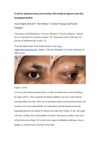
March 2024 in “Ophthalmic Plastic and Reconstructive Surgery” A pilomatrixoma in the eyebrow can cause hair loss and skin lightening.
April 2026 in “The FASEB Journal” Exosomal miR-199a-3p from dermal papilla cells helps control hair color by affecting melanocytes.
 3 citations
,
July 2013 in “Journal of Cutaneous Pathology”
3 citations
,
July 2013 in “Journal of Cutaneous Pathology” A woman's hair loss, resembling an autoimmune condition, improved after treatment, but requires ongoing checks due to potential serious associations.
January 1962 in “Archives of Dermatology” A 5-year-old girl has lipoid proteinosis, causing voice issues, hair thinning, skin lesions, and tongue movement problems.
 93 citations
,
October 2006 in “The International Journal of Biochemistry & Cell Biology”
93 citations
,
October 2006 in “The International Journal of Biochemistry & Cell Biology” Melanocytes are crucial for skin pigmentation and can affect conditions like melanoma, vitiligo, and albinism, as well as hair color and hearing.
31 citations
,
November 2015 in “PloS one” Reducing Tyrosinase prevents mature color pigment cells from forming in mouse hair.
 April 2018 in “Journal of Investigative Dermatology”
 Different types of stem cells in the skin contribute to the variety of melanoma forms.
3 citations
,
May 2020 in “Acta pharmaceutica” Protocatechuic acid can reduce melanin production and boost antioxidant activity in hair follicles.
 July 2025 in “Dermatology Practical & Conceptual”
 Topical eyedrops may cause eyelash whitening and skin lightening around the eyes.
 January 2022 in “bioRxiv (Cold Spring Harbor Laboratory)”
 Skin lesions in Carney complex are likely caused by a specific group of skin cells that promote pigment production due to a genetic mutation.