 October 2010 in “Journal of Men's Health”
 Larger prostate size in older men may be linked to poorer semen quality and fertility issues.
 September 2010 in “European Urology Supplements”
 Opioid use may lower PSA levels, suggesting a possible role in prostate cancer control; PSA testing is useful for detecting prostate cancer; serum triglycerides are not linked to prostate cancer risk; and higher urethral PSA levels may be associated with local hormone activity.
 September 2010 in “European Urology Supplements”
 The document does not confirm if radical prostatectomy is the best treatment for locally advanced prostate cancer.
 April 2010 in “The Journal of Urology”
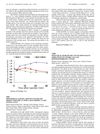
 Human prostate cells produce more WISP1/CCN4 when there's not enough oxygen.
 April 2010 in “The Journal of Urology”
 The research found that androgens help control blood flow in the rat prostate through a specific binding site.
 September 2009 in “European Urology Supplements”
 Surgery for high-risk prostate cancer is challenging but doesn't lead to more complications, and additional treatment is often needed.
 October 2008 in “The Journal of Urology”
 Finasteride reduces prostate cancer risk but may increase high-grade tumors and has side effects; biopsy methods have similar outcomes; psychosocial factors affect sexual recovery post-surgery.
 August 2008 in “Current Opinion in Internal Medicine”
 In 2007, prostate cancer research improved understanding of risk, diagnosis, and treatment, but also showed heart risks with certain therapies and the need for personalized care.
 February 2007 in “Faculty Opinions – Post-Publication Peer Review of the Biomedical Literature”
 Taking 1mg of finasteride daily for hair loss can lower PSA levels by 40-50%, so to keep PSA effective as a cancer screening tool, the PSA value should be doubled during treatment.
 January 2007 in “El Servicio de Difusión de la Creación Intelectual (National University of La Plata)”
 Combining D-004 and finasteride is more effective at reducing prostate enlargement than using either alone.
 June 2006 in “American Journal of Epidemiology”
 Higher BMI is linked to a lower risk of non-aggressive prostate cancer and a higher risk of aggressive prostate cancer.
 June 2006 in “American Journal of Epidemiology”
 Long-term diabetes is linked to lower prostate cancer risk.
 November 2005 in “The Journal of Urology”
 Dutasteride may lower the chance of finding prostate cancer in men with enlarged prostates.
December 2004 in “SUNScholar (Stellenbosch University)” Certain genetic markers can indicate a person's risk of developing prostate cancer.
April 2023 in “Zenodo (CERN European Organization for Nuclear Research)” Chronic use of 1 mg/day finasteride for hair loss may delay prostate cancer diagnosis by lowering PSA levels.
January 2021 in “HAMDAN MEDICAL JOURNAL” Finasteride treats hair loss and reduces prostate cancer risk.
September 2019 in “Human Andrology” Higher serum androgens contribute to male pattern baldness.
 August 2019 in “Journal of The American Academy of Dermatology”
 No link found between hair loss severity and PSA levels in men.
January 2018 in “프로그램북(구 초록집)” No link between hair loss severity and PSA levels in men.

Hair loss at the top of the head is linked to prostate cancer, but other types of hair loss are not.
 April 2012 in “The Journal of Urology”
 Early baldness increases prostate cancer risk, radiotherapy and surgery have similar second cancer rates, and ALA may reduce prostate cancer risk.
 March 2011 in “European Urology Supplements”
 Gene variation affects prostate issues and hair loss.
 March 2010 in “The Journal of Urology”
 Hair loss, prostate size, and urinary issues are related due to androgen effects.
 January 2008 in “The Year book of endocrinology”
 Gene variant linked to prostate cancer, hormone levels, and hair loss.
 September 2005 in “Archives of Dermatological Research”
 Large prostate patients more likely to have hair loss.
 76 citations
,
April 2005 in “Cancer Epidemiology, Biomarkers & Prevention”
76 citations
,
April 2005 in “Cancer Epidemiology, Biomarkers & Prevention” E211 G>A gene linked to lower risk of severe prostate cancer and hair loss.
39 citations
,
February 2011 in “The Prostate/The prostate” Some men's prostate tissues have low enzyme levels due to genetic changes, possibly affecting treatment for prostate enlargement.
 28 citations
,
September 2014 in “Journal of Clinical Oncology”
28 citations
,
September 2014 in “Journal of Clinical Oncology” Men with baldness at the front and top of their head at age 45 may have a higher risk of aggressive prostate cancer.
 22 citations
,
August 2014 in “Clinical endocrinology”
22 citations
,
August 2014 in “Clinical endocrinology” Taking finasteride for benign prostate hyperplasia may increase the risk of osteoporosis, especially at higher doses.
 16 citations
,
January 2000 in “The Journal of clinical endocrinology and metabolism/Journal of clinical endocrinology & metabolism”
16 citations
,
January 2000 in “The Journal of clinical endocrinology and metabolism/Journal of clinical endocrinology & metabolism” Antiandrogen drugs can reduce PSA levels in women with excess hair, suggesting PSA is a sign of male hormone activity in women.