 7 citations
,
February 2016 in “Arab journal of urology”
7 citations
,
February 2016 in “Arab journal of urology” People with early hair loss may have a higher chance of enlarged prostate and metabolic syndrome, so they should be checked for urinary and metabolic issues.
 6 citations
,
March 2015 in “Journal of Endocrinological Investigation”
6 citations
,
March 2015 in “Journal of Endocrinological Investigation” Taking both finasteride and dutasteride for prostate issues may raise the risk of heart problems.
 1 citations
,
December 2023 in “Curēus”
1 citations
,
December 2023 in “Curēus” Tadalafil is effective for treating urinary symptoms in men with BPH.
 1 citations
,
April 2019 in “Clinical Breast Cancer”
1 citations
,
April 2019 in “Clinical Breast Cancer” Medicines for enlarged prostate may raise the risk of breast growth and tenderness but not breast cancer.
 March 2023 in “Enciclopédia Biosfera”
 Finasteride effectively treats BPH but requires continuous use to maintain benefits.
 January 2006 in “Actas Urológicas Españolas”
 Incidental prostate cancer was found in 4.89% of patients undergoing surgery for benign prostatic hyperplasia.
 March 2018 in “Nepal journal of dermatology, venereology & leprology”
 Hair loss linked to prostate enlargement; stress and family history important factors.
 75 citations
,
January 2014 in “Korean Journal of Urology”
75 citations
,
January 2014 in “Korean Journal of Urology” 5α-reductase inhibitors can cause sexual problems, higher risk of aggressive prostate cancer, and depression.

Women with androgenetic alopecia (hair loss) have normal prostate specific antigen levels but higher testosterone levels.
 June 2011 in “Oncology times”
 New treatments are making advanced prostate cancer management more complex but also more hopeful.
 14 citations
,
November 2006 in “Current Medicinal Chemistry”
14 citations
,
November 2006 in “Current Medicinal Chemistry” New treatments for enlarged prostate are being developed to be more effective and have fewer side effects.
 98 citations
,
August 2004 in “BJU international”
98 citations
,
August 2004 in “BJU international” Medications have become the main treatment for enlarged prostate symptoms, replacing surgery and watchful waiting.
 97 citations
,
April 2016 in “Andrology”
97 citations
,
April 2016 in “Andrology” Hormones and metabolism play a complex role in prostate enlargement, and more research is needed to improve diagnosis and treatment.
 63 citations
,
December 2013 in “PLoS ONE”
63 citations
,
December 2013 in “PLoS ONE” Finasteride may reduce prostate cancer spread by lowering certain enzyme levels.
 30 citations
,
July 2019 in “Endocrinology”
30 citations
,
July 2019 in “Endocrinology” Certain HSD3B1 gene types are linked to worse prostate cancer outcomes and affect treatment response and other health conditions.
 18 citations
,
May 2002 in “BJUI”
18 citations
,
May 2002 in “BJUI” Finasteride doesn't change rat testicle weight or sperm production.
 17 citations
,
January 2015 in “MedChemComm”
17 citations
,
January 2015 in “MedChemComm” New treatments for prostate cancer are less toxic and show promise, but more research is needed to enhance their effectiveness and reduce side effects.
 17 citations
,
August 2011 in “Current Medicinal Chemistry”
17 citations
,
August 2011 in “Current Medicinal Chemistry” New treatments for enlarged prostate are being developed, some of which may be more effective than current medications.
 13 citations
,
July 1996 in “Annals of Internal Medicine”
13 citations
,
July 1996 in “Annals of Internal Medicine” International medical graduates outperformed U.S. graduates on an internal medicine exam.
 6 citations
,
January 2016 in “Evidence-based complementary and alternative medicine”
6 citations
,
January 2016 in “Evidence-based complementary and alternative medicine” Saw palmetto supplements may reduce prostate cancer cell growth without being toxic.
 March 2024 in “PLoS medicine”
 Physical activity, height, and smoking affect prostate cancer risk.
 March 2024 in “Cleveland Clinic journal of medicine”
 Alpha-blockers and 5-alpha reductase inhibitors are main treatments for BPH, with new support for phosphodiesterase-5 inhibitors and beta-3 agonists.
 April 2017 in “Austin Journal of Cancer and Clinical Research”
 5α-reductase inhibitors like Finasteride and Dutasteride may help manage prostate cancer by blocking testosterone conversion.
 April 2013 in “The Journal of Urology”
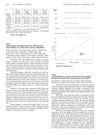
 Researchers created a simple tool to predict bladder blockage from prostate enlargement using urine flow rate and prostate volume.
 March 2011 in “European Urology Supplements”
 The document concludes that a new biosensor can efficiently detect prostate cancer cells and that standardized referrals help find significant cancers effectively.
 December 2010 in “Jurnal Natural (Faculty of Mathematics and Natural Science, Syiah Kuala University)”
 Age, race, family history, and certain genetic factors increase prostate cancer risk.
 February 2023 in “Global Journal of Reproductive Medicine”
 Medical treatments for benign prostatic hyperplasia mainly relieve symptoms, while surgery is more effective but not always suitable for elderly patients.
 October 2020 in “Cirugía y cirujanos”
 Obesity is linked to more severe lower urinary tract symptoms.
 116 citations
,
May 1992 in “The American Journal of Medicine”
116 citations
,
May 1992 in “The American Journal of Medicine” Flutamide rarely causes liver toxicity in prostate cancer patients.
 108 citations
,
February 2008 in “The Journal of urology/The journal of urology”
108 citations
,
February 2008 in “The Journal of urology/The journal of urology” Inhibiting 5α-reductase can help reduce prostate cancer risk and improve treatment.