 September 2010 in “European Urology Supplements”
 Higher urethral PSA levels after prostate removal surgery may be linked to more hair loss and higher PSA levels post-surgery.
 September 2010 in “European Urology Supplements”
 Serum triglyceride levels are not linked to prostate cancer risk.
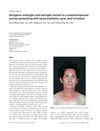 August 2009 in “International Journal of Dermatology”
 A postmenopausal woman's facial redness, acne, and excess hair were caused by too much hormone therapy for insomnia, but improved after stopping the treatment.
 June 2008 in “Experimental dermatology”
 Melatonin protects skin and hair from damage and stress by acting as an antioxidant and influencing cell growth.
 May 2006 in “Women's Health Medicine”
 Excessive hair growth in women, often from high androgen levels, is usually caused by PCOS, and can be treated with hair removal, medication, and possibly weight loss.

Antiepileptic drugs can cause cosmetic side effects and affect menstrual cycles, fertility, and bone health in women with epilepsy.
 December 2002 in “International Journal of Cosmetic Surgery and Aesthetic Dermatology”
 Scalp reduction surgery is safe and effective for certain patients with hair loss, leading to dense hair coverage and high satisfaction.
 November 2002 in “Dermatologic Surgery”
 Scalp reduction gives the most natural result for significant crown baldness, despite potential complications, and a systematic approach to surgical hair restoration results in few complications and high graft survival.
 September 1998 in “JEADV. Journal of the European Academy of Dermatology and Venereology/Journal of the European Academy of Dermatology and Venereology”
 Hair changes could indicate neurological diseases and help monitor treatment.
 September 1998 in “JEADV. Journal of the European Academy of Dermatology and Venereology/Journal of the European Academy of Dermatology and Venereology”
 The document concludes that individualized treatments for hair issues are effective, certain hair changes can indicate neurocutaneous diseases, specific lotions improve skin health, laser hair removal works but needs more study on long-term effects, men's cosmetics are diverse, peeling is effective but can have side effects, and facial pigmentation is often due to overactive skin cells.
 March 1998 in “Journal of dermatological science”
 Diphencyprone initially increases mouse hair growth, then slows it, possibly due to changes in specific protein levels.
 September 1997 in “Journal of the European Academy of Dermatology and Venereology”
 Hirsute women with ovarian-sourced hirsutism are more likely to have irregular periods, with higher BMI and altered hormone ratios.
 September 1997 in “Journal of the European Academy of Dermatology and Venereology”
 People with acne have more CD4+ immune cells in their skin than healthy people.
 July 1997 in “The Lancet”
 A new protein linked to Alzheimer's was discovered, and a hair loss treatment showed effectiveness but had some sexual side effects.
 July 1997 in “The Lancet”
 Finasteride increased hair count and regrowth in men with hair loss but also caused more sexual side effects than placebo.
 June 1995 in “International Journal of Gynecology & Obstetrics”
 Long-term use of oral contraceptives, especially starting before age 20, may increase the risk of early-onset breast cancer.
 June 1995 in “International Journal of Gynecology & Obstetrics”
 Higher doses of oestradiol implants improve bone density in postmenopausal women.
 June 1995 in “International Journal of Gynecology & Obstetrics”
 Cabergoline is more effective and has fewer side effects than bromocriptine for treating women with hyperprolactinemic amenorrhea.
 December 1989 in “The Journal of Dermatologic Surgery and Oncology”
 New techniques and findings in dermatologic surgery show improved pain management, safer liposuction, better hair transplantation, and effective treatments for skin conditions.
 February 1977 in “Archives of Dermatology”
 Topical mitotic blocking agents like colchicine can be dangerous and potentially fatal, and hair loss from rapid weight loss is due to low protein, not the speed of weight loss.

Eating more protein during weight loss can prevent hair loss caused by not having enough protein.
 June 2018 in “Advances in Cosmetic Surgery”
 Hair loss caused by genetics and hormones; more research needed for treatments.
 October 2015 in “Annals of Internal Medicine”
 Dutasteride, fesoterodine, and finasteride help older patients with urinary issues.
 September 1997 in “Journal of The European Academy of Dermatology and Venereology”
 Alopecia linked to higher anxiety and personality disorders.
 51 citations
,
June 2021 in “Signal Transduction and Targeted Therapy”
51 citations
,
June 2021 in “Signal Transduction and Targeted Therapy” The document concludes that while there are promising methods to control CRISPR/Cas9 gene editing, more research is needed to overcome challenges related to safety and effectiveness for clinical use.
 48 citations
,
February 2025 in “Nano-Micro Letters”
48 citations
,
February 2025 in “Nano-Micro Letters” Microneedles offer a promising, painless way to treat skin diseases but need improvements for better use.
 23 citations
,
May 2019 in “Expert Opinion on Therapeutic Patents”
23 citations
,
May 2019 in “Expert Opinion on Therapeutic Patents” New androgen receptor modulators show promise for treating diseases like prostate cancer and muscle wasting.
 13 citations
,
June 2024 in “Asian Pacific Journal of Cancer Prevention”
13 citations
,
June 2024 in “Asian Pacific Journal of Cancer Prevention” The (+) enantiomer of YH239-EE effectively kills breast cancer cells.
 5 citations
,
January 2022 in “Clinical cancer investigation journal”
5 citations
,
January 2022 in “Clinical cancer investigation journal” Certain Dibenzo derivatives may help treat prostate cancer.

Cadd4 effectively reduces cholesterol levels without side effects.