 May 2024 in “Proteome science”
 Bleaching damages hair by reducing the quality of keratin and keratin-associated proteins.
 188 citations
,
May 2009 in “Plant physiology”
188 citations
,
May 2009 in “Plant physiology” Researchers found 19 genes important for root hair growth in a plant called Arabidopsis.
Targeting the PGI2 pathway may help heal diabetic foot ulcers.
 January 2015 in “Journal of Nutrition and Health”
 Fish oil improves hair growth in diabetic and high-cholesterol rats.
 4 citations
,
December 2018 in “Macedonian Journal of Chemistry and Chemical Engineering”
4 citations
,
December 2018 in “Macedonian Journal of Chemistry and Chemical Engineering” A new method accurately measures amino acids in treated hair, showing bleaching reduces amino acids while protein treatments increase them.
75 citations
,
September 2007 in “Journal of Heredity” FGF5 gene mutations cause long hair in domestic cats.
45 citations
,
May 2022 in “Biomedicines” Analyzing follicular fluid can help predict and improve outcomes for women with PCOS undergoing fertility treatments.
 42 citations
,
January 2011 in “Journal of Biomedical Optics”
42 citations
,
January 2011 in “Journal of Biomedical Optics” Infrared and Raman imaging can non-destructively analyze hair structure and help diagnose hair conditions.
39 citations
,
August 1998 in “FEBS Letters” Two new enzymes, PAD-R11 and PAD-R4, were cloned and showed activity, with PAD-R11 resembling epidermal enzymes.
 35 citations
,
April 2014 in “American Journal of Medical Genetics”
35 citations
,
April 2014 in “American Journal of Medical Genetics” Boys with less severe EDA mutations in XLHED have milder symptoms and better sweat and hair production.
 33 citations
,
December 2021 in “PLoS ONE”
33 citations
,
December 2021 in “PLoS ONE” It's unclear which molecules best characterize dry skin due to inconsistent findings.
 22 citations
,
August 2019 in “Environmental research”
22 citations
,
August 2019 in “Environmental research” Pseudomonas sp. T5-6-I bacteria increase selenium uptake in Brassica oleracea plants by 130%.
 22 citations
,
April 2000 in “International Journal of Dermatology”
22 citations
,
April 2000 in “International Journal of Dermatology” A 78-year-old farmer with lung disease had skin lesions from a fungal infection that healed completely with medication.
15 citations
,
December 2013 in “Clinical Cosmetic and Investigational Dermatology” MAGP-1 decreases with age, leading to weaker, sagging skin.
15 citations
,
August 1991 in “American Journal of Medical Genetics” A special diet can fix hair problems in argininosuccinase deficiency.
 12 citations
,
January 2018 in “Biomaterials Science”
12 citations
,
January 2018 in “Biomaterials Science” Softer hydrogel surfaces help maintain hair growth-related functions in skin cells.
 12 citations
,
November 2014 in “PLOS Computational Biology”
12 citations
,
November 2014 in “PLOS Computational Biology” The study concluded that hair growth in mice is regulated by a stable interaction between skin cell types, and disrupting this can cause hair loss.
11 citations
,
January 2021 in “British Journal of Dermatology” Mutations in the AP1B1 gene cause a new syndrome with skin, hearing, and developmental issues.
10 citations
,
April 2020 in “PloS one” Lack of Crif1 in hair follicle stem cells slows down hair growth in mice.
 10 citations
,
June 2001 in “International Journal of Cosmetic Science”
10 citations
,
June 2001 in “International Journal of Cosmetic Science” Natural shampoos made in the lab conditioned hair better than commercial ones with chemicals.
 9 citations
,
April 2018 in “Journal of trace elements in medicine and biology”
9 citations
,
April 2018 in “Journal of trace elements in medicine and biology” Hair analysis can show nutritional status and environmental exposure, with phosphorus being very stable in hair and differences found based on gender and conditions like depression and autism.
 6 citations
,
December 2020 in “Biological & Pharmaceutical Bulletin”
6 citations
,
December 2020 in “Biological & Pharmaceutical Bulletin” Compounds from Eclipta prostrata L. plant have diabetes and obesity-fighting properties and reduce inflammation.
4 citations
,
October 2024 in “Experimental Dermatology” CD8A and FOXD2-AS1 may be key for diagnosing and treating alopecia areata.
 3 citations
,
April 2012 in “Bioinformation”
3 citations
,
April 2012 in “Bioinformation” Two specific SNPs in the TRPS1 gene cause excessive hair growth by altering the protein's structure.
 2 citations
,
July 2022 in “Pediatric dermatology”
2 citations
,
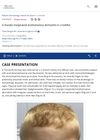
July 2022 in “Pediatric dermatology” A toddler with a rash and developmental delays improved after treatment for severe malnutrition caused by a diet lacking in protein.
2 citations
,
January 1973 in “ACTA HISTOCHEMICA ET CYTOCHEMICA” Brown skin in guinea pigs has more ascorbic acid and related enzymes, black skin uses ascorbic acid well, and white skin has the most protein.
 1 citations
,
August 2014 in “Asian-Australasian Journal of Animal Sciences”
1 citations
,
August 2014 in “Asian-Australasian Journal of Animal Sciences” Recombinant goat VEGF164 speeds up hair growth in mice.
 April 2026 in “International Journal of Drug Delivery Technology”
 Natural compounds from Ayurvedic herbs may effectively treat dandruff and promote hair growth.
 December 2025 in “Naunyn-Schmiedeberg s Archives of Pharmacology”
 Agomelatine may help reduce benign prostatic hyperplasia by blocking certain inflammatory pathways.
November 2025 in “Psychoneuroendocrinology” Hair proteomics could be a useful, non-invasive tool for identifying stress-related disorders.