 37 citations
,
January 2002 in “British journal of dermatology/British journal of dermatology, Supplement”
37 citations
,
January 2002 in “British journal of dermatology/British journal of dermatology, Supplement” Apple extract called procyanidin B-2 was found to greatly increase hair growth.
 92 citations
,
August 2017 in “Proceedings of the National Academy of Sciences of the United States of America”
92 citations
,
August 2017 in “Proceedings of the National Academy of Sciences of the United States of America” Newborn mouse skin cells can grow hair and this process can be recreated in adult cells to potentially help with hair loss.
 85 citations
,
September 2013 in “International Journal of Molecular Sciences”
85 citations
,
September 2013 in “International Journal of Molecular Sciences” Keratin 15 is not a reliable sole marker for identifying epidermal stem cells because it's found in various cell types.
 April 2016 in “The journal of investigative dermatology/Journal of investigative dermatology”
 RPGRIP1L helps skin cells stick together by blocking PKCβII, which can prevent skin blistering like in pemphigus.
 8 citations
,
December 2015 in “The Journal of Physiology”
8 citations
,
December 2015 in “The Journal of Physiology” The document concludes that stem cell inactivity is actively controlled and important for tissue repair and balance.
 December 2025 in “ADMET & DMPK”
 Personalized treatments for hair loss focus on specific genetic and biological pathways.
 9 citations
,
May 2023 in “Inflammation Research”
9 citations
,
May 2023 in “Inflammation Research” New small molecule drugs show promise in treating complex skin diseases but need more safety research.
 April 2025 in “Cellular and Molecular Biology”
 Human dermal stem/progenitor cells can divide and differentiate more than hair follicle dermal papilla cells.
 7 citations
,
December 2013 in “The Journal of Dermatology”
7 citations
,
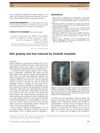
December 2013 in “The Journal of Dermatology” A woman's hair turned gray and fell out after starting a cancer drug called imatinib mesylate.
 September 2023 in “Dermatology and therapy”
 Ritlecitinib effectively improves hair growth in alopecia areata patients, regardless of hair loss pattern.
 9 citations
,
July 2018 in “European journal of dermatology/EJD. European journal of dermatology”
9 citations
,
July 2018 in “European journal of dermatology/EJD. European journal of dermatology” Disrupted sleep patterns can harm skin and hair cell renewal, but melatonin might help.
1 citations
,
January 2020 in “Seoul National University Open Repository (Seoul National University)” PDE3 inhibitor may help treat hair loss by promoting hair growth.
 46 citations
,
August 2003 in “The journal of investigative dermatology/Journal of investigative dermatology”
46 citations
,
August 2003 in “The journal of investigative dermatology/Journal of investigative dermatology” Phosphatidic acid may help hair grow by affecting cell growth pathways.
 8 citations
,
July 2024 in “Scientific Reports”
8 citations
,
July 2024 in “Scientific Reports” Salicylate helps wounds heal without scarring in mice.
73 citations
,
November 2000 in “Proceedings of the National Academy of Sciences of the United States of America” There are two ways to start hair growth: one needs Stat3 and the other does not, but both need PI3K activation.
1 citations
,
April 2015 in “International Journal of Pediatrics and Adolescent Medicine” Cyclosporine-A can cause excessive hair growth, which usually stops after discontinuing the drug.
138 citations
,
June 2004 in “Journal of Investigative Dermatology” Involucrin gene expression is controlled by specific proteins and signaling pathways.
101 citations
,
June 2003 in “The EMBO Journal” Phospholipase Cδ1 is crucial for normal skin and hair development.
 138 citations
,
July 2015 in “Clinical, Cosmetic and Investigational Dermatology”
138 citations
,
July 2015 in “Clinical, Cosmetic and Investigational Dermatology” Eating less sugar, milk, and saturated fats and more vegetables and fish may help treat and prevent acne.
5 citations
,
November 2021 in “The journal of investigative dermatology/Journal of investigative dermatology” Wnt/β-catenin signaling is important for keeping skin cell attachment structures stable.
124 citations
,
July 2017 in “eLife” Type XVII collagen helps control skin cell growth and could be a target for anti-aging treatments.
79 citations
,
October 2003 in “PubMed” Overexpression of PKCepsilon leads to increased TNFalpha, promoting metastatic squamous cell carcinoma in mice.
 31 citations
,
January 2007 in “Journal of biological chemistry/The Journal of biological chemistry”
31 citations
,
January 2007 in “Journal of biological chemistry/The Journal of biological chemistry” Stress activates a special function of the Vitamin D receptor with the help of c-Jun, which can also prevent cell death.
 April 2024 in “Journal of pharmacy & pharmacognosy research”
 A compound from Calophyllum inophyllum L. leaf may help treat non-small cell lung cancer.
 113 citations
,
June 2015 in “Stem Cell Research & Therapy”
113 citations
,
June 2015 in “Stem Cell Research & Therapy” Wnt and Notch signaling help wound healing by promoting cell growth and regulating cell differentiation.
 53 citations
,
July 2011 in “Biomaterials”
53 citations
,
July 2011 in “Biomaterials” Human liver cells stick to hair protein materials mainly through the liver's asialoglycoprotein receptor.
32 citations
,
December 2019 in “The Journal of clinical investigation/The journal of clinical investigation” A protein called IL-36γ causes skin side effects from certain cancer treatments when combined with a common skin bacteria.
 23 citations
,
February 2015 in “International Journal of Molecular Sciences”
23 citations
,
February 2015 in “International Journal of Molecular Sciences” Colchicine can inhibit hair growth by affecting cell activity and protein expression in hair follicles.
 1 citations
,
July 2014 in “International Journal of Dermatology”
1 citations
,
July 2014 in “International Journal of Dermatology” A cancer patient developed a type of hair loss after starting a cancer drug called vandetanib.
70 citations
,
August 2006 in “Cancer Research” AP-1 controls tumor cell type by affecting key signaling pathways.