 65 citations
,
February 2015 in “Neuro-Oncology”
65 citations
,
February 2015 in “Neuro-Oncology” Alisertib was found to be an effective and tolerable treatment for children with recurrent brain tumors.
 16 citations
,
March 2015 in “Clinical Cancer Research”
16 citations
,
March 2015 in “Clinical Cancer Research” The document concludes that side effects from Smoothened inhibitor drugs for skin cancer are reversible and can be managed with a team approach to maintain quality of life.
 7 citations
,
December 2013 in “The Journal of Dermatology”
7 citations
,
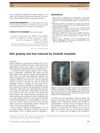
December 2013 in “The Journal of Dermatology” A woman's hair turned gray and fell out after starting a cancer drug called imatinib mesylate.

Ocu-miR-205 affects hair density in Rex rabbits by promoting cell changes and influencing hair follicle phases.

Ocu-miR-205 affects hair density in Rex rabbits by promoting cell changes and influencing hair follicle phases.
 1 citations
,
May 2023 in “Prospects in Pharmaceutical Sciences”
1 citations
,
May 2023 in “Prospects in Pharmaceutical Sciences” New cytokine-targeted therapies show promise for treating alopecia areata.
 1 citations
,
April 2018 in “Journal of Investigative Dermatology”
1 citations
,
April 2018 in “Journal of Investigative Dermatology” Fzd2 is important for skin and hair development through various signaling ways.
January 2026 in “Journal of Clinical Medicine” Janus kinase inhibitors reduce inflammation markers in severe alopecia areata patients.
 September 2025 in “Experimental & Molecular Medicine”
 Small molecules KY19382 and KY19334 may help treat skin cancer by reducing CDK1 levels and blocking harmful cell signals.

Rex rabbits should not be slaughtered before 120 days for the best fur quality.
 April 2018 in “The journal of investigative dermatology/Journal of investigative dermatology”
 Androgens increase growth factors in skin cells, which may lead to acne.
December 2015 in “OPAL (Open@LaTrobe) (La Trobe University)” QLT0267 stops hair follicle cell growth and movement.
 14 citations
,
January 2020 in “Mediterranean Journal of Rheumatology”
14 citations
,
January 2020 in “Mediterranean Journal of Rheumatology” New JAK inhibitor drugs show promise for treating skin diseases but need more research on safety and effectiveness.
 7 citations
,
August 2023 in “Journal of the American Academy of Dermatology”
7 citations
,
August 2023 in “Journal of the American Academy of Dermatology” JAK inhibitors offer new hope for treating severe alopecia areata.
 1066 citations
,
March 2010 in “Nature Reviews Molecular Cell Biology”
1066 citations
,
March 2010 in “Nature Reviews Molecular Cell Biology” MicroRNAs are crucial in controlling cell signaling, affecting cancer and tissue regeneration.
612 citations
,
February 2004 in “Nature” OXI1 kinase is essential for plant defense and root hair growth in Arabidopsis.
 215 citations
,
March 2018 in “Archives of Toxicology”
215 citations
,
March 2018 in “Archives of Toxicology” Tiny pollution particles called PM2.5 can harm skin cells by causing stress, damage to cell parts, and cell death.
 105 citations
,
August 2010 in “Pharmacology & therapeutics”
105 citations
,
August 2010 in “Pharmacology & therapeutics” Formyl-peptide receptor agonists could be new anti-inflammatory drugs.
 95 citations
,
January 2012 in “British Journal of Dermatology”
95 citations
,
January 2012 in “British Journal of Dermatology” Androgens block hair growth by disrupting cell signals; targeting GSK-3 may help treat hair loss.
88 citations
,
August 2019 in “Frontiers in immunology” Tyrosine kinases are important in skin autoimmune diseases and could be targets for new treatments.
 88 citations
,
July 2014 in “Journal of the American Academy of Dermatology”
88 citations
,
July 2014 in “Journal of the American Academy of Dermatology” Targeted cancer therapies often cause skin reactions, so dermatologists must manage these effects.
 87 citations
,
July 2018 in “Biochimica et Biophysica Acta (BBA) - Molecular Cell Research”
87 citations
,
July 2018 in “Biochimica et Biophysica Acta (BBA) - Molecular Cell Research” Mice studies show that Protein Phosphatase 2A is crucial for cell growth, development, and disease prevention.
 81 citations
,
February 2019 in “Experimental & Molecular Medicine”
81 citations
,
February 2019 in “Experimental & Molecular Medicine” PAK4 is crucial in cancer progression, brain development, and could be a therapeutic target, especially through the PAK4-CREB axis.
73 citations
,
April 2006 in “BioTechniques” Protein microarrays are highly sensitive tools useful for disease diagnosis and studying proteins.
 72 citations
,
April 2008 in “Organogenesis”
72 citations
,
April 2008 in “Organogenesis” Wnt signaling is crucial for skin and hair development and its disruption can cause skin tumors.
 70 citations
,
March 2008 in “Mechanisms of Ageing and Development”
70 citations
,
March 2008 in “Mechanisms of Ageing and Development” Maintaining DNA health in stem cells is key to preventing aging and tissue breakdown.
 68 citations
,
July 2011 in “Journal of Biochemistry/The journal of biochemistry”
68 citations
,
July 2011 in “Journal of Biochemistry/The journal of biochemistry” New LPA receptors (LPA4, LPA5, LPA6) have diverse roles in the body.
 64 citations
,
July 2016 in “Cold Spring Harbor Perspectives in Medicine”
64 citations
,
July 2016 in “Cold Spring Harbor Perspectives in Medicine” The p53 protein has complex, sometimes contradictory functions, including tumor suppression and promoting cell survival.
61 citations
,
December 1994 in “Planta” 44 citations
,
January 2023 in “New Phytologist” FER and TOR signaling help root hair growth in low temperature and low nitrate conditions.