3 citations
,
September 2021 in “BioEssays” Dandruff might be caused by changes in how hair follicles naturally release oils and an immune response to this imbalance.
2 citations
,
April 2022 in “Genes” The study found that the hair loss condition in Cesky Fousek dogs is influenced by multiple genes affecting skin and muscle structure, fat metabolism, and immunity.
1 citations
,
February 2025 in “Journal of Dairy Science” The SLICK1 allele in Holstein heifers affects hair and immune traits without altering prolactin signaling.
 1 citations
,
April 2023 in “Biomolecules”
1 citations
,
April 2023 in “Biomolecules” Fermented papaya and mangosteen in hair care products helped prevent hair loss and improve hair thickness.
 February 2026 in “International Journal of Molecular Sciences”
 Silencing SFRP1 alone promotes hair growth, but adding DKK1 does not help.
 June 2025 in “Journal of Cluster Science”
 Metal nanoparticles show promise for treating hair loss but need more research to ensure safety.
 May 2025 in “Frontiers in Pharmacology”
 New treatments are needed for non-scarring alopecia due to current limitations.
 January 2025 in “British Journal of Dermatology”
 Long scalp hair evolved for cooling and social signaling.
 November 2024 in “Aging Cell”
 Removing senescent cells can improve hair growth and regeneration.
 February 2024 in “International Journal of Molecular Sciences”
 Hair loss in Androgenetic Alopecia is caused by genetics, aging, and lifestyle, leading to hair follicle shrinkage and related health risks.
 September 2023 in “Biomedical Optics Express”
 New imaging techniques show testosterone delays hair growth and shrinks follicles in mice, but have limited depth for viewing.
November 2018 in “Journal of Investigative Dermatology” Lichen Planopilaris causes irreversible hair loss due to immune attacks on hair stem cells, but modulating PPAR-γ might help treat it.
Stem cell treatments show promise for hair loss but need more research.
27 citations
,
May 2019 in “Cosmetics” The hair cuticle is made of tough proteins that protect the hair, but more research is needed to fully understand its structure.
 13 citations
,
April 2018 in “Scientific Reports”
13 citations
,
April 2018 in “Scientific Reports” The genes KRT25 and SP6 affect curly hair in horses, with KRT25 also causing hair loss. If both genes are mutated, the horse gets curly hair and hair loss. KRT25 can hide the effect of SP6.
4 citations
,
June 2023 in “Journal of developmental biology” The skin systems of jawed vertebrates evolved diverse appendages like hair and scales from a common structure over 420 million years ago.
 18 citations
,
August 2014 in “Lipids”
18 citations
,
August 2014 in “Lipids” Human hair has more unsaturated fats inside than on the surface, and certain lipids may help bind the outer and inner layers together.
 42 citations
,
April 2008 in “Acta materialia”
42 citations
,
April 2008 in “Acta materialia” Different ethnicities and treatments affect human hair strength and structure.
 33 citations
,
November 2006 in “Survey of Ophthalmology”
33 citations
,
November 2006 in “Survey of Ophthalmology” Madarosis is the loss of eyelashes and eyebrows due to various health issues and requires thorough examination to diagnose and treat the underlying cause.
 29 citations
,
February 2013 in “Proceedings of the National Academy of Sciences of the United States of America”
29 citations
,
February 2013 in “Proceedings of the National Academy of Sciences of the United States of America” Loss of Fz6 disrupts hair follicle and associated structures' orientation.
The document concludes that Loose Anagen Hair Syndrome is a benign condition where hair is thin and easily pulled out, often improving with age.
 1 citations
,
July 2023 in “Journal of Cutaneous and Aesthetic Surgery”
1 citations
,
July 2023 in “Journal of Cutaneous and Aesthetic Surgery” The "Multi-Wave Punch" improves hair transplant results by reducing damage to hair follicles.
 1 citations
,
January 2018 in “Springer eBooks”
1 citations
,
January 2018 in “Springer eBooks” The document concludes that scalp cooling and treatments like minoxidil can help manage hair loss from cancer therapy.
 214 citations
,
March 1993 in “Archives of Dermatology”
214 citations
,
March 1993 in “Archives of Dermatology” Telogen effluvium is a reversible hair loss condition that requires a detailed diagnosis and often resolves on its own.
 16 citations
,
October 2012 in “British Journal of Dermatology”
16 citations
,
October 2012 in “British Journal of Dermatology” Chemotherapy can cause significant hair thinning and changes in hair texture, while tamoxifen has a smaller effect.
 418 citations
,
September 2012 in “Nature”
418 citations
,
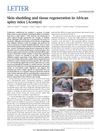
September 2012 in “Nature” African spiny mice can regenerate skin, hair, and cartilage, but not muscle, and their unique abilities could be useful for regenerative medicine.
 November 2014 in “Elsevier eBooks”
 Gene mutations can cause problems in male genital development.
 52 citations
,
January 2005 in “International journal of experimental pathology”
52 citations
,
January 2005 in “International journal of experimental pathology” Melatonin may reduce skin damage caused by X-rays in rats.
 46 citations
,
January 2010 in “The journal of investigative dermatology/Journal of investigative dermatology”
46 citations
,
January 2010 in “The journal of investigative dermatology/Journal of investigative dermatology” Mice lacking Insig proteins had hair growth problems due to cholesterol buildup, but this was fixed by the drug simvastatin.
 25 citations
,
May 2018 in “Clinical & Translational Oncology”
25 citations
,
May 2018 in “Clinical & Translational Oncology” New melanoma treatments can cause skin side effects, including skin cancer and rashes, but combining treatments may reduce these risks.