 60 citations
,
August 2008 in “Human molecular genetics online/Human molecular genetics”
60 citations
,
August 2008 in “Human molecular genetics online/Human molecular genetics” A position effect on the TRPS1 gene causes excessive hair growth in humans and mice.
 44 citations
,
November 2010 in “Current Opinion in Supportive and Palliative Care”
44 citations
,
November 2010 in “Current Opinion in Supportive and Palliative Care” Many patients find hair loss from chemotherapy very distressing, and while treatments like minoxidil and scalp cooling may help, there is no sure way to prevent it.
 38 citations
,
September 2014 in “Cell and Tissue Research”
38 citations
,
September 2014 in “Cell and Tissue Research” The hair follicle infundibulum plays a key role in skin health and disease, and understanding it better could lead to new skin disease treatments.
 33 citations
,
September 2012 in “Australasian Journal of Dermatology”
33 citations
,
September 2012 in “Australasian Journal of Dermatology” Chemotherapy can cause hair changes similar to alopecia areata, which might lead to misdiagnosis.
 30 citations
,
February 2017 in “Histochemistry and Cell Biology”
30 citations
,
February 2017 in “Histochemistry and Cell Biology” TPA promotes hair growth by increasing stem cell activity and activating specific cell signals.
 29 citations
,
November 2011 in “Veterinary pathology”
29 citations
,
November 2011 in “Veterinary pathology” The study found that mouse sweat glands develop before birth, mature after birth, and have specific keratin patterns.
 19 citations
,
May 2004 in “The American Journal of Dermatopathology”
19 citations
,
May 2004 in “The American Journal of Dermatopathology” The research found that a specific gene mutation causes fewer hair follicles and disrupted hair growth cycles, leading to thin and short hair in people with Hypotrichosis with Juvenile Macular Dystrophy.
 18 citations
,
March 2015 in “Journal of Dermatological Case Reports”
18 citations
,
March 2015 in “Journal of Dermatological Case Reports” Rectangular black granules, solitary yellow dots, and mostly single-hair follicles suggest Loose Anagen Hair Syndrome.
 17 citations
,
December 2010 in “Journal of Investigative Dermatology”
17 citations
,
December 2010 in “Journal of Investigative Dermatology” Flightless I protein affects hair growth, with low levels delaying it and high levels increasing hair length in rodents.
 15 citations
,
September 2008 in “Archives of Dermatological Research”
15 citations
,
September 2008 in “Archives of Dermatological Research” Roxithromycin, an antibiotic, can increase hair growth and might be used as a treatment for hair loss.
 14 citations
,
July 2016 in “Anatomical Science International”
14 citations
,
July 2016 in “Anatomical Science International” The study suggests that the arrector pili muscle is important for hair health and its damage might contribute to hair loss.
 9 citations
,
April 1986 in “Postgraduate Medicine”
9 citations
,
April 1986 in “Postgraduate Medicine” Hair loss has many causes and treatments, and losing some hair daily is normal; proper diagnosis is key, and minoxidil can help treat it.
 7 citations
,
November 2013 in “Pediatric and Developmental Pathology”
7 citations
,
November 2013 in “Pediatric and Developmental Pathology” Over half of the children had abnormal hair under a microscope, with many having genetic hair conditions.
 7 citations
,
January 2013 in “BioMed research international”
7 citations
,
January 2013 in “BioMed research international” Hair follicles and deer antlers regenerate similarly through stem cells and are influenced by hormones and growth factors.
 4 citations
,
September 2017 in “Skin appendage disorders”
4 citations
,
September 2017 in “Skin appendage disorders” The dog with an Alopecia Areata-like condition showed signs of an autoimmune disease and partially regrew hair without treatment, suggesting dogs could be models for human AA research.
 3 citations
,
September 2019 in “Clinical and experimental dermatology”
3 citations
,
September 2019 in “Clinical and experimental dermatology” Basal cell carcinomas may differentiate similarly to hair follicles and could be influenced by hair cycle-related treatments.
 3 citations
,
February 2005 in “Expert Opinion on Investigational Drugs”
3 citations
,
February 2005 in “Expert Opinion on Investigational Drugs” New treatments for hair loss are being developed using molecular biology.
 2 citations
,
August 2013 in “British Journal of Dermatology”
2 citations
,
August 2013 in “British Journal of Dermatology” Chemotherapy improved a girl's painful foot condition linked to pachyonychia congenita.
 2 citations
,
June 2001 in “American Journal of Pathology”
2 citations
,
June 2001 in “American Journal of Pathology” The document concludes that understanding how hair follicles naturally die and regenerate is important for insights into organ development and could impact health and disease treatment.
 1 citations
,
July 2023 in “Journal of Cutaneous and Aesthetic Surgery”
1 citations
,
July 2023 in “Journal of Cutaneous and Aesthetic Surgery” The "Multi-Wave Punch" improves hair transplant results by reducing damage to hair follicles.
 1 citations
,
January 2021 in “Skin appendage disorders”
1 citations
,
January 2021 in “Skin appendage disorders” Chemotherapy patients don't all lose their hair due to factors like hair growth rates, age, genetics, and the type of drugs used.
 1 citations
,
April 2015 in “Current problems in dermatology”
1 citations
,
April 2015 in “Current problems in dermatology” The document concludes that the trichogram is a useful tool for diagnosing hair loss and suggests semi-organ cultures for practical trichological research.
 1 citations
,
October 2025 in “Cureus”
1 citations
,
October 2025 in “Cureus” Ritlecitinib may cause severe musculoskeletal pain in some alopecia universalis patients.
 May 2023 in “Frontiers in chemistry”
 Zolpidem shows up in hair from the top back of the head after one dose and fades over time, suggesting it gets into hair through blood and sweat.
 February 2023 in “International Journal of Medical Arts”
 Trichloroacetic acid is a safe and effective treatment for hair loss in alopecia areata patients.
 June 2022 in “International Journal of Research -GRANTHAALAYAH”
 Antioxidants like catalase are important for preventing hair loss conditions like alopecia.
 January 2016 in “Springer eBooks”
 The document concludes that there are various causes and treatments for hair loss, with hair transplantation being a notable option.

Surgical repigmentation can permanently restore color to white hair in vitiligo patients.
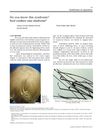
The document concludes that Loose Anagen Hair Syndrome is a benign condition where hair is thin and easily pulled out, often improving with age.
 January 1953 in “The Lancet”
 Alopecia areata's causes are unclear, treatments exist but relapses are common.