 January 2010 in “Elsevier eBooks”
 The document concludes that different types of hair loss have specific treatments, and early diagnosis is crucial for preventing permanent hair loss.
 November 2009 in “Actas dermo-sifiliográficas/Actas dermo-sifiliográficas”
 Hair transplantation effectively treated a bald patch in an 18-year-old woman with Temporal Triangular Alopecia.
 June 2008 in “Springer eBooks”
 The document concludes that permanent hair loss conditions are complex, require early specific treatments, and "secondary permanent alopecias" might be a more accurate term than "secondary cicatricial alopecia."
 January 2005 in “Elektronische Hochschulschriften der LMU München (Ludwig-Maximilians-Universität München)”
 Topical immunotherapy with DPCP is most effective for certain alopecia areata types, with success linked to age and disease duration, and influenced by a gene polymorphism.
 September 2003 in “Clinics in Family Practice”
 Different hair diseases affect people during childbearing years, with treatments ranging from medication to psychological support.
 August 2000 in “Australasian Journal of Dermatology”
 The document suggests "Occupational Skin Disease" is a useful standard text, finds "The Clinical Management of Itching" poorly organized, recommends "Atlas of Contact Dermatitis" for its illustrations, and values "Handbook of Diseases of the Hair and Scalp" for its information despite flaws.
 January 1989 in “Clinical and Experimental Dermatology”
 The symposium concluded that hair growth involves complex processes, including the hair follicle life cycle, the role of the dermal papilla, hair strength, pigmentation, and the impact of diseases and treatments like minoxidil on hair and skin.
 April 1906 in “The American Journal of the Medical Sciences”
 Keratosis Pilaris Atrophicans causes skin scarring and might be treated with a new synthetic retinoid.

Hair loss in African American women, caused by hair care, genetics, and environment, needs more research for better treatment.
 March 2012 in “Journal of The American Academy of Dermatology”
 White females have higher hair density, while Asian females have thicker hair in hair loss cases.
 11 citations
,
August 2017 in “American Journal of Dermatopathology”
11 citations
,
August 2017 in “American Journal of Dermatopathology” EVG staining helps tell apart follicular scars from follicular streamers, aiding in diagnosing different types of hair loss.
 3 citations
,
February 2012 in “The American Journal of Dermatopathology”
3 citations
,
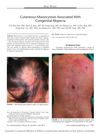
February 2012 in “The American Journal of Dermatopathology” A 3-year-old girl with skin mast cell buildup and congenital baldness improved with treatment, suggesting a rare link between these conditions.
 2 citations
,
January 1908 in “Journal of the American Medical Association”
2 citations
,
January 1908 in “Journal of the American Medical Association” Fear of hair-related issues causes significant mental distress, especially in high-stress women.
 April 2026 in “International Journal of Drug Delivery Technology”
 Alopecia can often be managed effectively with various treatments, but early diagnosis is crucial for preventing permanent hair loss.
 February 2026 in “Brazilian Journal of Implantology and Health Sciences”
 Chronic stress and high cortisol levels can cause hair loss by disrupting hair growth.

Histopathological confirmation is crucial for accurately diagnosing challenging alopecia areata cases.
 June 2024 in “Journal of Dermatology & Cosmetology”
 The FUL hair restoration technique is better for aesthetics and causes less scarring.
 October 2023 in “International Journal of Science and Research (IJSR)”
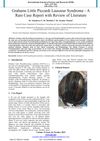
 Early diagnosis of GLPLS is crucial to prevent complications, but scarring alopecia is irreversible.
 September 2022 in “Skin appendage disorders”
 Seborrheic dermatitis may contribute to the development of central centrifugal cicatricial alopecia.

Clinical signs don't match inflammation levels in lichen planopilaris and frontal fibrosing alopecia.
 December 2019 in “Pubvet”
 The document concludes that atopic dermatitis in dogs is managed with various treatments including antipruritics, supplements, and possibly immunotherapy.
 March 2019 in “Dicle Medical Journal / Dicle Tip Dergisi”
 Hair and scalp diseases affect 11% of Turkish women, with seborrheic dermatitis being the most common.

Lichen planopilaris and frontal fibrosing alopecia are likely the same disease with different clinical appearances.
 August 2015 in “Dermatología Argentina”
 Frontal fibrosing alopecia causes hairline recession and eyebrow loss in postmenopausal women.
 February 2024 in “International Journal of Scientific Research in Science and Technology”
 Pomegranates have many health benefits, including fighting bacteria, viruses, cancer, and diabetes.
 June 2023 in “Pediatric investigation”
 A boy's scalp infection, usually found on the body, was effectively treated with antifungal cream.
February 2022 in “Authorea (Authorea)” PAON shows skin patterns due to genetic mosaicism.
18 citations
,
January 2018 in “BMC dermatology” A new mutation in the PLEC gene causes a rare condition with skin blistering, muscle weakness, and hair loss.
1 citations
,
May 2024 in “Dermatology Online Journal” Scalp pemphigus vulgaris can be effectively treated with low-dose prednisone and triamcinolone.
June 2026 in “Indian Dermatology Online Journal” A supernumerary nipple was correctly identified using dermoscopy, avoiding misdiagnosis.