 9 citations
,
January 2017 in “Dermatology Online Journal”
9 citations
,
January 2017 in “Dermatology Online Journal” Some hair loss drugs can cause a unique type of hair loss that resembles both psoriasis and alopecia.
 1 citations
,
October 2015 in “The American journal of gastroenterology”
1 citations
,
October 2015 in “The American journal of gastroenterology” Stopping infliximab and using strong topical steroids can regrow hair lost due to psoriasiform alopecia.
 1 citations
,
April 2012 in “Informa Healthcare eBooks”
1 citations
,
April 2012 in “Informa Healthcare eBooks” Some medications for inflammation can cause a condition with scalp rashes and hair loss, often linked to Crohn's disease, and may require treatment changes to prevent permanent hair loss.
 May 2012 in “CRC Press eBooks”
 Some patients on anti-TNF drugs experience a type of hair loss called TAIAPA.
April 2012 in “Informa Healthcare eBooks” Some drugs for inflammation may cause psoriasis-like hair loss.
49 citations
,
January 2012 in “Dermatology” Severe anti-TNF-α induced scalp eruptions often need stopping the drug and using systemic therapy to avoid scarring.
 13 citations
,
July 2019 in “Dermatologic therapy”
13 citations
,
July 2019 in “Dermatologic therapy” Stopping adalimumab and starting methotrexate with topical treatments improved the woman's scalp psoriasis and hair regrew.
1 citations
,
August 2025 in “Australasian Journal of Dermatology” Anti-TNF therapy can cause a rare hair loss condition similar to alopecia areata.
 72 citations
,
February 2011 in “The American Journal of Dermatopathology”
72 citations
,
February 2011 in “The American Journal of Dermatopathology” Anti-TNF therapy can cause a unique type of hair loss that may get better with topical treatments without stopping the therapy.
42 citations
,
March 2015 in “Anais Brasileiros de Dermatologia” Anti-TNF therapy can cause hair loss and skin issues.
 3 citations
,
March 2017 in “Case Reports in Dermatology”
3 citations
,
March 2017 in “Case Reports in Dermatology” A woman with lupus improved significantly from scalp hair loss after treatment, highlighting the need to identify psoriatic alopecia in lupus patients to avoid permanent hair loss.
November 2022 in “International Journal of Trichology” Finasteride can cause rare but serious skin rashes.
 278 citations
,
March 2013 in “Gut”
278 citations
,
March 2013 in “Gut” Anti-IL-12/IL-23 antibody therapy effectively treats psoriasiform skin lesions in IBD patients.
14 citations
,
January 2017 in “Dermatology Online Journal” Adalimumab can cause hair loss and scalp issues in some psoriasis patients.
5 citations
,
August 2024 in “Frontiers in Immunology” Upadacitinib effectively treats psoriasiform eczema and some related conditions.
 July 2018 in “Elsevier eBooks”
 Scalp psoriasis can cause different types of hair loss, with some patients developing permanent hair loss, and treatment may be stopped due to skin reactions.
 4 citations
,
October 2013 in “Clinics in Dermatology”
4 citations
,
October 2013 in “Clinics in Dermatology” Experts don't fully agree on how to diagnose certain hair growth disorders and more research is needed to understand them better.
51 citations
,
February 2013 in “JEADV. Journal of the European Academy of Dermatology and Venereology/Journal of the European Academy of Dermatology and Venereology” Metformin is effective for various skin disorders but may cause skin side effects.
 5 citations
,
January 2017 in “Skin appendage disorders”
5 citations
,
January 2017 in “Skin appendage disorders” A man developed an allergic skin reaction from a therapy cap used for hair loss treatment.
49 citations
,
July 1994 in “British journal of dermatology/British journal of dermatology, Supplement” Some children with methylmalonic and propionic acidaemias have skin problems related to their condition and diet.
 7 citations
,
June 2015 in “Cutaneous and Ocular Toxicology”
7 citations
,
June 2015 in “Cutaneous and Ocular Toxicology” Some drugs can cause skin reactions, which may improve when the drug is stopped, and rapid diagnosis and stopping the drug is crucial.
1 citations
,
January 2025 in “Dermatologic Therapy” Immune checkpoint inhibitors can increase the risk of autoimmune skin diseases, especially bullous pemphigoid.

Modern skin cancer treatments can cause skin side effects and hair loss, affecting patients' quality of life.
13 citations
,
August 1982 in “PubMed” Zinc deficiency causes skin issues and hair loss, treatable with zinc supplements.
 9 citations
,
January 2015 in “Dermatology Online Journal”
9 citations
,
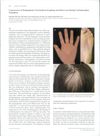
January 2015 in “Dermatology Online Journal” A patient with Crohn's disease grew back their hair after stopping Adalimumab, which had caused hair loss.
 10 citations
,
January 2008 in “Acta dermato-venereologica”
10 citations
,
January 2008 in “Acta dermato-venereologica” Carbamazepine caused hair loss and skin eruptions in a woman, which improved after stopping the medication.
1 citations
,
October 2024 in “The American Journal of Gastroenterology” Switching from infliximab to Ustekinumab improved both hair loss and Crohn's symptoms in the patient.
 2 citations
,
February 2014 in “Journal of Crohn's and colitis”
2 citations
,
February 2014 in “Journal of Crohn's and colitis” Some IBD patients on anti-TNFs developed severe skin issues, but ustekinumab helped.
April 2026 in “Journal of Investigative Dermatology” ZNF750 helps keep hair follicles healthy and prevents skin inflammation.
 April 2019 in “The journal of investigative dermatology/Journal of investigative dermatology”
 High potency topical steroids are the most effective treatment for pediatric alopecia areata.