143 citations
,
June 1983 in “Archives of dermatology” Mental and social factors greatly affect skin conditions and doctors find it hard to deal with these aspects.
 January 2005 in “Korean Journal of Psychosomatic Medicine”
 Women with alopecia often experience high levels of anxiety and depression, needing psychiatric help.
 4 citations
,
May 2023 in “arXiv (Cornell University)”
4 citations
,
May 2023 in “arXiv (Cornell University)” Current automatic metrics for long-form question answering don't align with human preferences; a multi-faceted evaluation approach is needed.
 2 citations
,
January 2020 in “Journal of Experimental Social Psychology”
2 citations
,
January 2020 in “Journal of Experimental Social Psychology” Baldness and shaved heads change how traits are seen but don't really affect leader preferences.
 April 2026 in “Frontiers in Pharmacology”
 Many medications may be linked to cognitive disorders, but most lack warnings on labels.
 July 2022 in “Postepy biochemii”
 DNA markers can predict physical traits for forensic use, but there are ethical and technical challenges.
 August 2023 in “The journal of investigative dermatology/Journal of investigative dermatology”
 Childhood atopic dermatitis does not significantly affect general cognition.
1 citations
,
May 2024 in “International journal of medicine and psychology.” Improving stress tolerance is crucial for better work performance and health.
 May 2023 in “GSC biological and pharmaceutical sciences”
 Forensic DNA phenotyping is becoming useful for predicting physical traits in criminal investigations but is limited by ethical concerns and incomplete genetic understanding.
1 citations
,
January 2025 in “JEADV Clinical Practice” Disease-specific tools better assess alopecia areata's impact on quality of life.
 60 citations
,
May 2018 in “Indian Journal of Psychological Medicine”
60 citations
,
May 2018 in “Indian Journal of Psychological Medicine” Women with PCOS often experience anxiety, depression, and a lower quality of life.
 September 2023 in “Reports of Vinnytsia National Medical University”
 The models accurately predicted urticaria in Ukrainian women but struggled to differentiate between mild and severe cases based on body structure.

Current methods can't accurately predict which long-form answers people prefer; evaluations should consider different answer qualities separately.
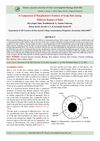 December 2022 in “Kristu Jayanti Journal of Core and Applied Biology (KJCAB)”
 Scalp hair characteristics vary across different regions of India and can help identify a person's origin.
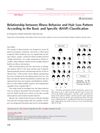 1 citations
,
January 2023 in “Annals of Dermatology”
1 citations
,
January 2023 in “Annals of Dermatology” The BASP classification helps predict patient behavior and improve treatment for hair loss.
March 2026 in “Journal of Pain” Preoperative stress markers alone don't predict chronic post-surgical pain.

Hair properties change under electromagnetic fields and are influenced by individual characteristics and the environment.
2 citations
,
January 2009 The procedure reliably measures cortisol in rhesus macaque hair.
May 2012 in “Neurotoxicology and Teratology” Hair cortisol can be a reliable way to measure long-term stress.
August 2018 in “Psychological Science”  36 citations
,
July 2016 in “Scientific reports”
36 citations
,
July 2016 in “Scientific reports” People's decision-making can be influenced by their internal biological clocks, as shown by gene expression, not just self-reported preferences for morning or evening.
 11 citations
,
December 2016 in “Frontiers in Psychology”
11 citations
,
December 2016 in “Frontiers in Psychology” Hair style affects perceptions of age, health, and attractiveness more than hair color does.
 2 citations
,
September 2008 in “Fertility and Sterility”
2 citations
,
September 2008 in “Fertility and Sterility” Women with PCOS and higher BMI, especially those with morbid obesity, are at greater risk for depression.
 February 2026 in “Cureus”
 Two methods reliably measure scalp area and hair count.
September 2024 in “Journal of the American Academy of Dermatology” Seborrheic dermatitis affects quality of life and sleep, linked to stress and nervous system changes.
 6 citations
,
July 2016 in “Gynecological Endocrinology”
6 citations
,
July 2016 in “Gynecological Endocrinology” PSA levels are higher in women with PCOS, but FAI is a more accurate marker for diagnosis.
Women with PCOS have different body composition and some metabolic differences compared to healthy women.
Imbalances in metals and proteins may help understand and treat bipolar disorder and schizophrenia.
4 citations
,
September 1999 in “Journal of Clinical Forensic Medicine” Caffeine in hair might help identify people, but it's not always reliable.