 5 citations
,
January 2012 in “Dermatology”
5 citations
,
January 2012 in “Dermatology” Adapted classification better assesses male pattern hair loss and its link to heart disease.
January 2021 in “Menoufia Medical Journal (Print)” Androgenetic alopecia negatively affects emotions and self-confidence, especially in younger people.
 6 citations
,
August 2014 in “Sri Lanka Journal of Diabetes Endocrinology and Metabolism”
6 citations
,
August 2014 in “Sri Lanka Journal of Diabetes Endocrinology and Metabolism” The FG score is better at detecting hyperandrogenism in PCOS patients than testosterone levels or FAI, but testosterone is the recommended test for diagnosis.
 4 citations
,
August 2019 in “Actas Dermo-Sifiliográficas”
4 citations
,
August 2019 in “Actas Dermo-Sifiliográficas” The Spanish HSS-29 scale effectively measures changes in life quality due to female-pattern hair loss.
50 citations
,
June 2014 in “Experimental and Clinical Endocrinology & Diabetes” Hair hormone levels can indicate obesity-related changes and are useful for research and clinical practice.
Emotional states significantly affect hair growth and hair disorders.
May 2023 in “Zenodo (CERN European Organization for Nuclear Research)” Forensic DNA phenotyping can predict physical traits from DNA but faces challenges in knowledge and ethics.
 October 2023 in “The Journal of Dermatology”
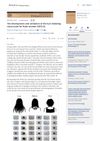
 The HSVS-A is an effective tool for quickly screening hair shedding in Asian women.
April 2026 in “Therapeutic Advances in Drug Safety” Finasteride is high-risk for cognitive disorders, while Carbidopa/Levodopa, Topiramate, and Clonazepam are moderate-risk.
40 citations
,
October 2017 in “Acta Dermato Venereologica” Understanding patients' views on their illness can help improve their disease management.
June 2024 in “British Journal of Dermatology” DLQI is a reasonable quality-of-life measure for alopecia patients, but more research is needed.
 July 2024 in “Nursing Research”
 Hair and nail cortisol levels can show long-term stress in young males.
17 citations
,
June 2024 in “Journal of the European Academy of Dermatology and Venereology” Alopecia areata significantly affects mental health, especially in women and those with severe cases.
January 2026 in “SSRN Electronic Journal” April 2024 in “Middle East Fertility Society Journal” Higher anxiety levels are linked to sexual dysfunction in women with PCOS.
 1 citations
,
January 2017 in “Spectrum Research Repository (Concordia University)”
1 citations
,
January 2017 in “Spectrum Research Repository (Concordia University)” Women with PCOS have altered brain structure and reduced cognitive performance.
39 citations
,
January 2009 in “Journal of Ovarian Research” Observers often disagree on ultrasound results for polycystic ovaries, needing better training for consistency.
 3 citations
,
November 2022 in “European Journal of Human Genetics”
3 citations
,
November 2022 in “European Journal of Human Genetics” New models predict male pattern baldness better than old ones but still need improvement.
 December 2013 in “Praxis medica”
 Using both DLQI and Skindex-16 together gives a better understanding of quality of life in skin disease patients.
 March 2025 in “Institutional Repositories DataBase (IRDB)”
 Hair cortisol can measure chronic stress but has inconsistent results.
 46 citations
,
May 2011 in “Movement Disorders”
46 citations
,
May 2011 in “Movement Disorders” Finasteride reduces Tourette syndrome symptoms, but results may be limited due to potential biases.
January 2016 in “프로그램북(구 초록집)” The revised BASP classification for hair loss is less accurate and harder to use but could still be a viable option.
186 citations
,
February 2015 in “Frontiers in Neuroscience” Testosterone affects brain behavior in complex and varied ways.
 January 2023 in “Neuroscience applied”
 People with an imbalance between their cognitive and emotional empathy have lower levels of the hormone oxytocin in their hair.
Understanding both skin and mental health aspects of alopecia areata is crucial for better patient care.
1 citations
,
November 2025 in “International Journal of Dermatology” The AAcQLI is a promising tool for assessing quality of life in children with alopecia areata.
154 citations
,
March 2012 in “Indian Journal of Surgical Oncology” PSA is best for detecting prostate cancer recurrence and evaluating treatment response.
March 2026 in “Pediatric Dermatology” Generative AI tools can accurately score alopecia areata, reducing subjectivity in evaluations.
 16 citations
,
February 2017 in “Dermatology and Therapy”
16 citations
,
February 2017 in “Dermatology and Therapy” The new visual scale is a quick and effective way to measure hair loss in women.

COVID-19 patients with hair loss experienced more cognitive issues and these issues were linked to higher levels of depression, anxiety, and stress.