 18 citations
,
January 2017 in “Journal der Deutschen Dermatologischen Gesellschaft”
18 citations
,
January 2017 in “Journal der Deutschen Dermatologischen Gesellschaft” High and low doses of prednisolone helped 62% of children with severe alopecia regrow hair with some weight gain and mild acne as side effects.
5 citations
,
June 2002 in “Clinical and Experimental Dermatology” Alopecia areata management involves explaining the condition, using treatments like steroids and immunotherapy, and providing support like counseling and wigs.
19 citations
,
January 2013 in “Annals of Dermatology” Early high-dose steroid treatment helps prolong disease-free periods in severe alopecia areata.
21 citations
,
March 2002 in “PubMed” High-dose steroid pulse therapy effectively regrows hair in severe multifocal alopecia areata.
May 2021 in “Medicina internă” High-dose corticosteroid treatment helped improve symptoms in a patient with Adult Onset Still Disease.
14 citations
,
January 2015 in “Annals of dermatology/Annals of Dermatology” Corticosteroid pulse therapy is more effective for severe alopecia areata than combination therapy.
 1 citations
,
January 2014 in “Hair therapy & transplantation”
1 citations
,
January 2014 in “Hair therapy & transplantation” Platelet-rich plasma treatment is not very effective for chronic severe alopecia areata.
21 citations
,
May 2017 in “Paediatric drugs” Individualized treatment plans are crucial for children with alopecia areata, with promising options like JAK inhibitors showing significant hair regrowth.
 January 2016 in “Springer eBooks”
 Alopecia Areata is an unpredictable autoimmune hair loss condition with limited and variable treatment effectiveness.
 October 2022 in “International journal of research in dermatology”
 A woman with lupus had unusual symptoms like blisters, skin inflammation, and throat ulcers, which improved with steroid and dapsone treatment.
 15 citations
,
January 2019 in “Journal of the Formosan Medical Association”
15 citations
,
January 2019 in “Journal of the Formosan Medical Association” Adalimumab helped control a child's severe eye disease when other treatments failed.
 November 2021 in “Research Square (Research Square)”
 A 16-year-old boy with lupus had a rare brain artery issue but fully recovered with treatment.
 October 2021 in “Dermatology practical & conceptual”
 High-dose corticosteroids can significantly regrow hair in severe alopecia areata.
 August 2023 in “The American Journal of Medicine”
 A young woman with lupus was treated with hydroxychloroquine and prednisone.
 June 2026 in “Mediterranean Journal of Hematology and Infectious Diseases”
 The girl's lupus with kidney and immune complications didn't improve with strong treatment.
 September 2019 in “Philippine Journal of Internal Medicine”
 Early immunosuppressive therapy leads to favorable outcomes in Filipino lupus patients with myocarditis.
 1 citations
,
July 2018 in “Elsevier eBooks”
1 citations
,
July 2018 in “Elsevier eBooks” Alopecia Areata is an autoimmune hair loss condition, with various treatments showing mixed effectiveness and no guaranteed cure.
 29 citations
,
August 2008 in “Current Opinion in Pediatrics”
29 citations
,
August 2008 in “Current Opinion in Pediatrics” Hair loss in teenagers is hard to treat and lacks a cure, with some treatments available depending on the type of hair loss.
 2 citations
,
May 2009 in “Medicine”
2 citations
,
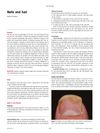
May 2009 in “Medicine” Hair and nails can help diagnose diseases, with nail issues often linked to skin conditions and hair loss having various causes and treatments.
 1 citations
,
May 2017 in “InTech eBooks”
1 citations
,
May 2017 in “InTech eBooks” The document concludes that alopecia areata is an unpredictable autoimmune hair loss condition with no cure, but various treatments exist that require personalized approaches.
July 2024 in “Journal of Investigative Dermatology” Tailored treatments for alopecia areata show promising results, with pulse steroids effective for mild cases and Ritlecitinib, Dupilumab, or methotrexate and prednisone effective for severe cases.
50 citations
,
January 2016 in “Journal of the American Academy of Dermatology” Pulse steroid therapy for alopecia areata shows a 43% complete response rate but has a high relapse rate, especially in children.
 1 citations
,
December 2020 in “Dermatology Archives”
1 citations
,
December 2020 in “Dermatology Archives” Systemic steroids temporarily improve severe alopecia areata in children but often lead to relapse.
 18 citations
,
February 2006 in “Brain & development”
18 citations
,
February 2006 in “Brain & development” A patient with Satoyoshi syndrome improved with a treatment combining several medications, including carbamazepine and methotrexate.
 1 citations
,
May 2025 in “The Journal of Rheumatology”
1 citations
,
May 2025 in “The Journal of Rheumatology” Anifrolumab helped some lupus patients reduce steroid use, but safety concerns remain.
 35 citations
,
May 2012 in “Expert Opinion on Pharmacotherapy”
35 citations
,
May 2012 in “Expert Opinion on Pharmacotherapy” The document concludes that there are various treatments for different types of alopecia, but more research is needed for evidence-based treatments.
 34 citations
,
April 2009 in “Expert Opinion on Pharmacotherapy”
34 citations
,
April 2009 in “Expert Opinion on Pharmacotherapy” Some treatments work for common baldness, but there's less evidence for other hair loss types, and more research is needed.
3 citations
,
July 2024 in “Archives of Dermatological Research” Oral ritlecitinib and baricitinib are promising treatments for severe alopecia areata due to their balance of effectiveness and safety.
 January 2009 in “Springer eBooks”
 The document concludes that managing skin conditions during pregnancy is important and requires specialized care.
 November 2023 in “Indian Dermatology Online Journal”
 Tofacitinib was effective for severe, treatment-resistant hair loss without side effects.