11 citations
,
November 2019 in “The FASEB Journal” A mutation in the MAP2 gene causes reduced hair follicle density, leading to hairlessness.
September 2013 in “Helda (University of Helsinki)” Mutations in specific genes cause certain congenital defects in dogs, aiding in understanding similar human diseases.
 29 citations
,
January 2010 in “Methods in Enzymology”
29 citations
,
January 2010 in “Methods in Enzymology” The document concludes that careful design of genetic fate mapping experiments is crucial for accurate cell lineage tracing in mice.
 14 citations
,
April 2019 in “Genes”
14 citations
,
April 2019 in “Genes” Researchers found a genetic region that influences the number of coat layers in dogs.
 May 2015 in “Journal of Dermatological Science”
 Researchers found a new area on chromosome 2 linked to a genetic hair loss condition.
119 citations
,
November 2016 in “American journal of human genetics” Mutations in three genes cause Uncombable Hair Syndrome, leading to frizzy hair that can't be combed flat.
 39 citations
,
May 2011 in “Human Immunology”
39 citations
,
May 2011 in “Human Immunology” Genetics play a role in acne, but how exactly they contribute is not fully understood.
 7 citations
,
July 2020 in “Immunological Investigations”
7 citations
,
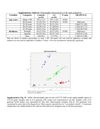
July 2020 in “Immunological Investigations” The rs231775 genetic variant is linked to a higher risk and severity of Alopecia Areata in males.
 10 citations
,
January 2007 in “Dermatology”
10 citations
,
January 2007 in “Dermatology” Sex-determining genes may affect male baldness.
 10 citations
,
May 2007 in “Oncology Reports”
10 citations
,
May 2007 in “Oncology Reports” Colorectal cancer's ability to spread is due to changes in many genes, not just one.
 58 citations
,
December 2018 in “Nature Communications”
58 citations
,
December 2018 in “Nature Communications” Male pattern baldness is mostly inherited, involves many genes, and is linked to other traits like early puberty and strong bones.
1 citations
,
December 2020 in “International journal of molecular sciences” External factors can cause skin cancer cells that usually don't spread to grow and form tumors in mice.
Defective nuclear transport may cause gene expression changes in Progeria.
5 citations
,
June 2022 in “Biophysical Journal” TGF-β and TNF influence hair follicle cell fate, with TNF being more effective in triggering cell death.
 181 citations
,
January 2009 in “Nature Genetics”
181 citations
,
January 2009 in “Nature Genetics” Certain mutations in a hair growth-related gene cause a type of genetic hair loss.
6 citations
,
April 2023 in “Current Issues in Molecular Biology” A specific gene variant may increase the risk of developing Alopecia Areata.
September 2021 in “The journal of investigative dermatology/Journal of investigative dermatology” Three genes linked to the development of trichilemmal cysts were found.
 82 citations
,
April 2008 in “Journal of Investigative Dermatology”
82 citations
,
April 2008 in “Journal of Investigative Dermatology” EDA2R gene linked to hair loss.
 April 2026 in “Human Genome Variation”
 The MBTPS2 gene variant c.970+5G>A is a common mutation causing IFAP syndrome.
27 citations
,
January 2000 in “Developmental Dynamics” Mutations in the Whn gene affect hair keratin gene expression differently.
 August 2023 in “Frontiers in Endocrinology”
 Mutations in mitochondrial DNA might significantly contribute to the development of Polycystic Ovarian Syndrome.
48 citations
,
October 2004 in “Molecular and Cellular Biology” Mice with a specific BRCA1 mutation have a higher risk of tumors, especially in the uterus and ovaries.
 26 citations
,
February 1998 in “Chemico-Biological Interactions”
26 citations
,
February 1998 in “Chemico-Biological Interactions” Scientists identified three genes important for processing certain brain chemicals, thyroid hormones, and medications.
143 citations
,
January 2007 in “The American Journal of Human Genetics” Certain genes on chromosomes 6, 10, 16, and 18 may increase the risk of alopecia areata.
5 citations
,
November 2020 in “Forensic Science International Genetics” Using trait prevalence priors in genetic prediction models for appearance traits is currently impractical due to limited knowledge and potential accuracy issues.
73 citations
,
June 2006 in “Animal genetics” The FGF5 gene determines hair length in dogs.
 58 citations
,
June 2018 in “Scientific reports”
58 citations
,
June 2018 in “Scientific reports” Researchers found 15 new genetic links to skin traits in Japanese women.
SLC24A5 shows a clear selective sweep, but no link to UV radiation intensity.
21 citations
,
March 2015 in “Neurological Sciences” A new genetic mutation linked to CARASIL syndrome and small artery disease was found in a Chinese family.
Loss of the p53 gene alone causes tumors, and losing both p53 and Rb genes speeds up aggressive skin cancer.