2 citations
,
December 2024 in “BMC Genomics” Key genes and pathways control sheep hair growth phases.
 10 citations
,
December 2015 in “International Journal of Molecular Sciences”
10 citations
,
December 2015 in “International Journal of Molecular Sciences” PDCD4 is important for controlling skin cell growth and healing.
 3 citations
,
December 2022 in “bioRxiv (Cold Spring Harbor Laboratory)”
3 citations
,
December 2022 in “bioRxiv (Cold Spring Harbor Laboratory)” The research reveals how early embryonic mouse skin develops from simple to complex structures, identifying various cell types and their roles in this process.
 408 citations
,
January 2017 in “Science”
408 citations
,
January 2017 in “Science” Some wound-healing cells can turn into fat cells around new hair growth in mice.
 November 2022 in “Journal of Investigative Dermatology”
 The research found specific genes that are more active in balding cells, which could be causing hair loss.
37 citations
,
February 2007 in “Experimental Dermatology” Increasing PDCD4 protein may help prevent or treat some skin cancers.
November 2024 in “Journal of Investigative Dermatology” Understanding snoRNA regulation may help slow skin aging.
38 citations
,
August 1973 in “Journal of Investigative Dermatology”  2 citations
,
August 2023 in “Autophagy”
2 citations
,
August 2023 in “Autophagy” Autophagy helps control skin inflammation and cancer responses and regulates hair growth by affecting stem cell activity.
3 citations
,
September 2018 in “Journal of Structural Biology” Oxidized trichocyte keratin has a helical dislocation in its structure.
April 1996 in “Journal of Dermatological Science” 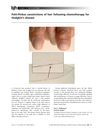 8 citations
,
February 2005 in “British Journal of Haematology”
8 citations
,
February 2005 in “British Journal of Haematology” Chemotherapy caused the patient's hair to have alternating thick and thin segments.
 245 citations
,
January 1998 in “Genes & Development”
245 citations
,
January 1998 in “Genes & Development” Hoxc13 gene is essential for hair, nail, and papilla development.

Sensory neuron remodeling and Merkel-cell changes happen independently during skin maintenance.
 8 citations
,
September 2002 in “Genes to Cells”
8 citations
,
September 2002 in “Genes to Cells” Killing specific cells in hair follicles can lead to hair growth problems in mice.
25 citations
,
October 2005 in “PubMed” Keratin 19 expression in certain skin cells is temporary and not a reliable stem cell marker.
 191 citations
,
September 2011 in “Cell stem cell”
191 citations
,
September 2011 in “Cell stem cell” Hair follicle stem cells use specific chromatin changes to control their growth and differentiation.
 417 citations
,
September 2005 in “PLoS biology”
417 citations
,
September 2005 in “PLoS biology” Understanding gene expression in hair follicles can reveal insights into hair growth and disorders.
July 2025 in “Journal of Investigative Dermatology” Secreted inhibitors of Wnt and IGF signaling control hair and tooth development, creating species-specific patterns.
24 citations
,
January 2018 in “Development” Frizzled 3 and Frizzled 6 together control the orientation of mouse hair follicles.
28 citations
,
January 2015 in “Journal of Cell Science” PINCH-1 is crucial for skin cell adhesion and movement, working with EPLIN and ILK.
May 2014 in “The journal of immunology/The Journal of immunology” Early over-expression of FoxN1 harms immune and skin development.
81 citations
,
January 1987 in “Current topics in developmental biology/Current Topics in Developmental Biology” Keratins change and are modified differently in skin layers and body parts.
 April 2026 in “Experimental & Molecular Medicine”
 Mouse and human skin development share similar fibroblast timelines.
 3 citations
,
January 2023 in “Science advances”
3 citations
,
January 2023 in “Science advances” The enzymes Tet2 and Tet3 are important for skin cell development and hair growth.
April 2018 in “Journal of Investigative Dermatology” Id2 gene helps keep hair follicle stem cells inactive.
April 2021 in “The journal of investigative dermatology/Journal of investigative dermatology” TET enzymes are important for skin and hair development by controlling gene activity in specific areas.
4 citations
,
January 2011 in “Cell stem cell” Hair follicle stem cells can return to their original niche and help regenerate hair.
87 citations
,
February 2000 in “Journal of Investigative Dermatology” Stem cells in developing hair follicles move to specific areas as they mature.
40 citations
,
August 2018 in “Disease Models & Mechanisms” Mature cells can re-enter the cell cycle and potentially lead to cancer.