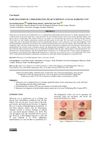
 March 2022 in “Folia Medica Indonesiana”
 The lump on a woman's scalp was a rare, potentially cancerous tumor from the hair follicle, not a common cyst.
 39 citations
,
May 2010 in “Stem Cells”
39 citations
,
May 2010 in “Stem Cells” Ephrins slow down skin and hair follicle cell growth.
5 citations
,
January 2021 in “Frontiers in Cell and Developmental Biology” Inhibiting Zyxin may help treat androgenetic alopecia by promoting hair growth.

K15 and Id3 are important in hair follicle regeneration, with K15 increasing in early stages and Id3 responding later.
4 citations
,
November 2024 in “BMC Ophthalmology” Surgical removal of eyelid mass showed it was non-cancerous, with no recurrence after one year.
 93 citations
,
June 2011 in “Journal of Neuroscience”
93 citations
,
June 2011 in “Journal of Neuroscience” p63 is essential for activating and differentiating stem cells in the nose's olfactory tissue.
 November 2022 in “Journal of Investigative Dermatology”
 Skin aging and cancer development are influenced by the competition between stem cells.
19 citations
,
January 2015 in “Development” Hoxc8 gene helps start mammary gland development by controlling specific signals.
September 2018 in “Apollo (University of Cambridge)” Translation levels actively determine keratinocyte cell fate.
 12 citations
,
June 2020 in “Frontiers in Cell and Developmental Biology”
12 citations
,
June 2020 in “Frontiers in Cell and Developmental Biology” The PP2A-B55α protein is essential for brain and skin development in embryos.
 August 2015 in “MOJ proteomics & bioinformatics”
 ePUKs could be valuable for regenerative medicine due to their wound healing abilities.
3 citations
,
September 2023 in “Genes” Dkk genes evolved faster in birds and reptiles, affecting hair development functions.
 9 citations
,
April 2006 in “American Journal of Pathology”
9 citations
,
April 2006 in “American Journal of Pathology” SGK3 is essential for proper hair growth and health.
176 citations
,
February 2006 in “Cancer Research” Patched1 helps prevent tumors by controlling cell growth.
July 2025 in “Journal of Investigative Dermatology” Scarring alopecia involves increased immune cells and specific gene changes near damaged hair follicles.
18 citations
,
March 2009 in “Experimental Dermatology” Pilomatricoma can develop into various hair-related structures.
20 citations
,
January 2017 in “Experimental Dermatology” Igf1r helps regulate hair growth cycles.
July 2016 in “Cancer research” Mutant cells in hair follicles are influenced by their location and interactions with surrounding cells.
4 citations
,
July 1979 in “Journal of the American Academy of Dermatology” The hair and oil glands react by changing structure when stressed.
October 2014 in “Cancer research” Blocking mTORC1 reduces skin tumor growth in mice.
67 citations
,
February 1994 in “Developmental dynamics” Specific proteins and molecules play key roles in the development of human hair follicles.
1 citations
,
February 2018 in “bioRxiv (Cold Spring Harbor Laboratory)” Researchers can now observe live cell processes in the Drosophila midgut for extended periods.
 November 2023 in “Advanced Science”
 A specific hair protein variant increases the spread of breast cancer and is linked to worse survival rates.
 30 citations
,
November 2018 in “EMBO Reports”
30 citations
,
November 2018 in “EMBO Reports” The Ovol2-Zeb1 circuit is crucial for skin healing and hair growth by guiding cell movement and growth.
October 2025 in “Cell Death and Disease” CD271 is crucial for maintaining healthy skin and preventing inflammation.
10 citations
,
December 2015 in “Experimental dermatology” EGFR helps mouse hair follicles stop growing by reducing certain growth regulators.
8 citations
,
June 2001 in “Journal of Biological Chemistry” A truncated protein linked to breast cancer may change cell adhesion.
2 citations
,
February 2022 in “Genomics” Researchers discovered new cell types in goat hair follicles that could help understand hair regrowth and human hair loss.
February 2012 in “Proceedings of SPIE, the International Society for Optical Engineering/Proceedings of SPIE” A new imaging technique can observe stem cells in living mice without harming them.
67 citations
,
December 2011 in “Stem Cells and Development” NADPH oxidase 4 is key for stem cell activity and growth under low oxygen.