21 citations
,
December 2006 in “Archives of dermatology” A kidney transplant patient developed pink skin bumps with spiny centers on her face and limbs.
1 citations
,
January 2008 in “SKINmed Dermatology for the Clinician” Treatment with prednisolone and dapsone stopped new blisters and partially healed previous ones.
 5 citations
,
January 1985 in “The Journal of Dermatologic Surgery and Oncology”
5 citations
,
January 1985 in “The Journal of Dermatologic Surgery and Oncology” A man developed unusual growths after a hair transplant, which were treated successfully with no recurrence after a month.
March 2000 in “Current Problems in Dermatology”  September 2019 in “Journal of Investigative Dermatology”
 Smoking and certain health conditions like thyroid disease may make palmoplantar pustulosis harder to treat.
October 2024 in “Indian Journal of Dermatology” Early biopsy is crucial for diagnosing rare skin sarcoidosis, improving treatment.
 July 2022 in “Dermatology Reports”
 A rare scalp condition called Erosive pustular dermatosis is hard to diagnose and treat.
7 citations
,
January 2020 in “Dermatology online journal” An adult with a rare skin condition improved with tazarotene treatment.
 June 2023 in “Journal of cosmetic dermatology”
 A woman developed skin lesions after PRP injections, possibly linked to COVID-19 infection and vaccination.
97 citations
,
January 1999 in “International Journal of Dermatology” Pityriasis rubra pilaris is a rare skin disorder with reddish-orange patches and thickened skin, needing better treatment understanding.
 8 citations
,
September 2016 in “The American Journal of Dermatopathology”
8 citations
,
September 2016 in “The American Journal of Dermatopathology” Enlarged sweat gland ducts may indicate scarring hair loss.
 July 2003 in “British Journal of Dermatology”
 Some skin conditions are associated with other serious diseases, and office microscopy may miss many fungal infections.
1 citations
,
April 2011 in “Clinical Kidney Journal” A benign skin tumor grew quickly in a dialysis patient and was surgically removed.
 9 citations
,
November 2000 in “Journal of the American Academy of Dermatology”
9 citations
,
November 2000 in “Journal of the American Academy of Dermatology” A woman with a rare type of dermatomyositis improved with low-dose prednisone and methotrexate.
 74 citations
,
September 1980 in “Medical Clinics of North America”
74 citations
,
September 1980 in “Medical Clinics of North America” Toxic epidermal necrolysis is a severe skin condition often caused by drugs, with complex treatment and a high risk of death, but survivors usually heal without scars.
39 citations
,
March 1997 in “The Lancet” Acquired perforating dermatosis often affects skin in people with kidney issues and diabetes.
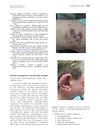
A 72-year-old man was diagnosed with a rare skin form of Rosai-Dorfman disease after years of misdiagnosis.
July 2024 in “Journal of Investigative Dermatology” Spontaneous keloids may be linked to nephrogenic systemic fibrosis in dialysis patients.
1 citations
,
April 2025 in “Clinical Cosmetic and Investigational Dermatology” A rare skin lesion in a 64-year-old woman was successfully treated with a laser, showing minimal redness and no return after one month.
5 citations
,
April 1984 in “Archives of Dermatology” Porphyria cutanea tarda causes skin issues due to an enzyme deficiency.
1 citations
,
July 2024 in “Journal of Investigative Dermatology” Plaquenil can cause a severe skin reaction called AGEP, requiring prompt diagnosis and treatment.
2 citations
,
October 1974 in “Archives of Dermatology” The woman's skin condition persisted for 20 years despite treatments.
 January 2022 in “Yonago Acta Medica”
 A woman got a skin condition from misusing a steroid cream, which improved after she stopped using it and started a new treatment.
 9 citations
,
July 2017 in “Dermatologic Therapy”
9 citations
,
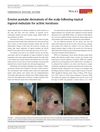
July 2017 in “Dermatologic Therapy” Two elderly men developed scalp inflammation after using a gel for skin lesions, which healed with treatment except for some permanent hair loss.
 9 citations
,
September 2021 in “Anais brasileiros de dermatologia/Anais Brasileiros de Dermatologia”
9 citations
,
September 2021 in “Anais brasileiros de dermatologia/Anais Brasileiros de Dermatologia” Certain skin symptoms can indicate underlying body-wide illnesses.
12 citations
,
September 2020 in “JAMA Dermatology” PRP patients show varied symptoms and need more research to understand related conditions.
 10 citations
,
October 2015 in “Journal of the International Association of Providers of AIDS Care”
10 citations
,
October 2015 in “Journal of the International Association of Providers of AIDS Care” A woman with HIV had a severe skin condition that improved with antiretroviral therapy.
64 citations
,
August 1977 in “PubMed” Skin changes help detect graft-versus-host reaction early after bone marrow transplants.
7 citations
,
March 2013 in “Annals of Hematology” Ganoderma lucidum can cause severe skin reactions and hair loss.
January 2005 in “Digest of the World Core Medical Journals” Oral zinc gluconate and topical steroids significantly improved a rare scalp condition in three elderly patients.