Search
for
Sort by
Research
180-210 / 1000+ resultsresearch Protocol for the relative efficacy of various formulations of minoxidil for androgenetic alopecia
Different minoxidil formulations may vary in effectiveness for treating hair loss.
research Before-after study with 24-hour ambulatory blood pressure monitoring after the first dose of 5 mg oral minoxidil
A 5-mg dose of oral minoxidil slightly lowers blood pressure temporarily, especially in those with higher initial blood pressure.
research Combination of Minoxidil 5% with Carboxytherapy versus Minoxidil 5% Alone in Treatment of Female Pattern Hair Loss
Using minoxidil with carboxytherapy is more effective for female pattern hair loss than minoxidil alone.
research Efficacy of minoxidil in patients of patterned hair loss: A prospective study at a tertiary care hospital of Central India
Minoxidil effectively treats patterned hair loss in both males and females.
research Efeitos de diferentes doses do Minoxidil oral, em dois tempos de exposição, no complexo prostático de camundongos Balb/C
Oral minoxidil affects prostate tissue but is less harmful than finasteride.
research Efektivitas Terapi Minoksidil pada Alopesia Androgenetik: Studi in Vivo
5% minoxidil significantly increases hair follicle density.
research The Belgian Ten‐Center Open Label Trial of Topical 2% Minoxidil Solution in Early Male Pattern Alopecia
Minoxidil is safe and effective for treating early male pattern baldness.

research Prospective evaluation of blood pressure, heart rate, and side effects in hypertensive patients using low-dose oral minoxidil for hair loss
Low-dose oral minoxidil is generally safe for hypertensive patients with hair loss.
![Minoxidil and Its Use in Hair Disorders: A Review [Corrigendum]](/images/assets/d5b5fb1b-96a4-4e61-a554-3fe9a1f78497/small/11472.jpg)
research Minoxidil and Its Use in Hair Disorders: A Review [Corrigendum]
Low-dose Minoxidil combined with Spironolactone helps reduce hair loss and improve hair density in women, with some mild side effects.

research Efficacy and safety of 3% minoxidil versus combined 3% minoxidil / 0.1% finasteride in male pattern hair loss: a randomized, double-blind, comparative study.
The combined treatment of 3% minoxidil and 0.1% finasteride is more effective in improving hair loss than 3% minoxidil alone, with similar side effects.
research EFECTIVITY MINOXIDIL AS A TREATMENT OF ALOPECIA AREATA
Minoxidil can effectively treat patchy hair loss by stimulating hair growth.
research MINOXIDIL NO TRATAMENTO DA ALOPECIA: REVISÃO DE LITERATURA SOBRE EFICÁCIA E SEGURANÇA
Minoxidil effectively promotes hair growth for alopecia, especially when combined with other treatments and proper monitoring.
research The German Double‐Blind Placebo‐Controlled Evaluation of Topical Minoxidil Solution in the Treatment of Early Male Pattern Baldness
The 2% minoxidil solution is safe and effective for early male pattern baldness.

research 42482 Low dose oral minoxidil as monotherapy in patients with hair loss
Low dose oral minoxidil can help with hair loss when used alone.
research LB1099 Placebo response in alopecia studies
Placebo effects in alopecia treatments are likely due to study design, not real improvement.

research EVALUATION OF THE EFFECT OF MILIACIN ON THE HAIR FOLLICLE CYCLE IN C57BL/6 MICE IN AN EXPERIMENTAL MODEL OF ANDROGENETIC ALOPECIA
Miliacin helps extend the hair growth phase in mice with hair loss.

research Evaluation of the Safety and Effectiveness of Oral Minoxidil in Children: A Systematic Review
Low-dose oral minoxidil is safe for treating children's hair disorders.
research Effect of minoxidil on cultured human hair follicle cells.
Minoxidil slows hair cell growth but doesn't change cell shape or development.
research A STUDY OF EFFICACY AND SAFETY OF ORAL MINOXIDIL IN MALE ANDROGENETIC ALOPECIA
Oral minoxidil effectively promotes hair growth in men with hair loss, but caution is needed for older or heart-risk patients.
research Minoxidil oral en dosis bajas en alopecia frontal fibrosante: serie de 122 pacientes
Low-dose oral minoxidil can improve hair and eyebrow growth in frontal fibrosing alopecia.
research Simultaneous determination of minoxidil and minoxidil sulfate by high-performance liquid chromatography with UV-detection and its applications
The study developed a method to detect minoxidil and its sulfate form, found that minoxidil sulfate is temperature-sensitive, and identified a way to potentially increase its stability for hair loss treatment.
research Aromatic C-nitrosation of a bioactive molecule. Nitrosation of minoxidil
Minoxidil reacts to nitrosation 7 times more than phenol, mainly due to its -NH₂ groups, leading to the creation of N-nitrosominoxidil.
research The efficacy of placebo in clinical trials of topical minoxidil for androgenetic alopecia: A systematic review and meta-analysis
research ENHANCED IN VITRO HAIR GROWTH AT THE AIR-LIQUID MINOXIDIL PRESERVES THE ROOT SHEATH IN CULTURED WHISKER FOLLICLES INTERFACE:
Culturing hair follicles at the air-liquid interface with minoxidil significantly boosts hair growth and preserves the root sheath.
research platelet-rich plasma versus topical 5% minoxidil in the treatment of androgenetic alopecia: A comparative observational study.
PRP therapy improves hair density and satisfaction more than Minoxidil for androgenetic alopecia.
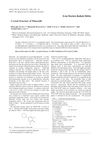
research Crystal Structure of Minoxidil
Minoxidil's crystal structure shows two different molecule shapes and nitrogen states.
research 77034 Efficacy and safety outcomes of oral minoxidil versus topical minoxidil in patients undergoing follicle unit extraction
research Comparative Study of effectiveness of low dose Oral Minoxidil vs Topical Minoxidil (5%) in Male Androgenetic Alopecia.
Low-dose oral minoxidil is more effective and convenient for treating male pattern baldness than topical minoxidil.

research The impact of minoxidil on male reproductive biology: a multi-approach study including systematic review, in vivo, and ex vivo experiments
Minoxidil may harm male reproductive health by causing testicular damage and hormonal disruption.