2 citations
,
January 1975 in “Archives of Dermatological Research” Certain enzymes react strongly with some hormones in rat skin during hair growth, mainly in sebaceous glands and hair sheaths.
45 citations
,
December 2004 in “Forensic Science International” Laser microdissection helps get DNA from single hair follicles for better forensic analysis.
 May 2023 in “Current Applied Science and Technology”
 Higher power CO2 laser causes more severe skin burns and damage.
 1 citations
,
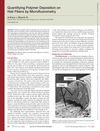
July 2019 in “Microscopy Today”
1 citations
,
July 2019 in “Microscopy Today” Microfluorometry effectively measures how much polymer coats and penetrates hair, useful for evaluating hair products.
April 2022 in “Book Publisher International (a part of SCIENCEDOMAIN International)” Catalase in processed meats may emit electromagnetic fields that increase cancer risk.
 8 citations
,
January 2016 in “Journal of fiber science and technology”
8 citations
,
January 2016 in “Journal of fiber science and technology” Bleaching hair increases cysteic acid levels in a predictable way.
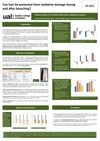 September 2018 in “University of the Arts London Research Online (University of the Arts London)”
 L-arginine, hydrolysed keratin, and cystine-silanol copolymer can help protect hair from damage during and after bleaching.
 105 citations
,
December 2009 in “Archives of dermatology”
105 citations
,
December 2009 in “Archives of dermatology” A specific drug can help treat Lichen Planopilaris, a condition causing permanent hair loss.
 1 citations
,
December 2022 in “The journal of investigative dermatology/Journal of investigative dermatology”
1 citations
,
December 2022 in “The journal of investigative dermatology/Journal of investigative dermatology” Choosing the right method to separate skin layers is key for good skin cell research.
18 citations
,
January 1965 in “Stain Technology”  October 2023 in “Journal of Molecular Liquids”
 A new method using imidazole-based liquids efficiently extracts keratin from yak hair.
23 citations
,
January 2016 in “Forensic Science International” Thermal hair straightening changes drug levels in hair, affecting test results.
12 citations
,
May 2023 in “Molecules” Polygoni Cuspidati Rhizoma et Radix contains compounds that inhibit certain enzymes.
 January 2025 in “International Journal of Molecular Biology and Biochemistry”
 The Shindai method effectively extracts keratin from human hair, with potential uses in bioplastics and biofertilizers.
3 citations
,
October 2025 in “Cancer” PROTACs offer a new, precise way to treat cancer by breaking down harmful proteins.
8 citations
,
October 1979 in “PubMed” Jute-batching oil alone didn't cause cancer in mice, but it may promote cancer when combined with another carcinogen.
 8 citations
,
November 2024 in “Scientific Reports”
8 citations
,
November 2024 in “Scientific Reports” Oven drying at 30°C gives the best essential oil yield and antioxidant activity for Hedychium spicatum rhizomes.
 6 citations
,
April 2021 in “Scientific Reports”
6 citations
,
April 2021 in “Scientific Reports” Phytochrome A is crucial for normal metabolism and development in tomato seedlings under far-red light.
24 citations
,
April 2008 in “Fertility and sterility” Pioglitazone improved insulin sensitivity and altered cortisol metabolism in PCOS patients.
51 citations
,
September 2000 in “Acta dermato-venereologica” PPAR alpha may help in hair growth and could be a target for treatment.
September 2025 in “OPAL (Open@LaTrobe) (La Trobe University)” The hydrogel effectively heals diabetic wounds and promotes hair growth.
4 citations
,
June 2022 in “Journal of cleaner production” New eco-friendly method strengthens and sets hair using light and causes less damage.
13 citations
,
February 2024 in “Clinical Cosmetic and Investigational Dermatology” Polynucleotides HPT improves Asian skin tone, firmness, and glow safely.
 September 2017 in “Journal of Investigative Dermatology”
 Thermal imaging is a useful non-invasive method to diagnose active inflammation in frontal fibrosing alopecia.
Thermal straightening can damage ethnic hair and may pose health risks.
11 citations
,
January 2016 in “Biointerphases” The hair's outermost surface has multiple layers of lipids and proteins.
 5 citations
,
January 2004 in “Biochimie”
5 citations
,
January 2004 in “Biochimie” Arsenic trioxide effectively treats APL, improving survival rates despite its toxicity.
January 2009 in “Chemical Reagents” The method produces finasteride with a 92% yield.
 June 2010 in “Journal of Chemical Crystallography”
 The compound was successfully made and shows potential for treating prostate cancer.
January 2024 in “International Journal of Physics and Applications” Low-level laser therapy can boost cell activity and energy production.