36 citations
,
August 2023 in “Journal of Investigative Dermatology” Understanding the hair growth cycle in mice is crucial for accurate research, as it affects study results and requires careful timing and methods.
Malnourished people have weaker hair that is easier to pluck.
17 citations
,
October 1981 in “American Journal of Clinical Nutrition” Malnourished people have weaker hair that is easier to pluck.
 24 citations
,
November 2013 in “British Journal of Dermatology”
24 citations
,
November 2013 in “British Journal of Dermatology” Chemotherapy causes hair loss starting soon after treatment begins and recovers about 3 months after ending, while tamoxifen does not significantly affect hair growth.
 16 citations
,
February 2014 in “Journal of Investigative Dermatology”
16 citations
,
February 2014 in “Journal of Investigative Dermatology” Researchers developed a mouse model that tracks hair growth using bioluminescence, improving accuracy in studying hair cycles.
 4 citations
,
November 2020 in “BMC Dermatology”
4 citations
,
November 2020 in “BMC Dermatology” Researchers identified genes in scalp hair follicles that may affect hair traits and hair loss.
June 2026 in “Journal of Applied Animal Welfare Science” Social hair plucking in rhesus macaques is linked to grooming, aggression, and health issues like hair loss, especially in females and lower-ranked individuals.
 173 citations
,
January 2014 in “Nature Cell Biology”
173 citations
,
January 2014 in “Nature Cell Biology” Wnt signaling controls whether hair follicle stem cells stay inactive or regenerate hair.
 52 citations
,
October 2012 in “Journal of Dermatological Science”
52 citations
,
October 2012 in “Journal of Dermatological Science” The document concludes that mouse models are crucial for studying hair biology and that all mutant mice may have hair growth abnormalities that require detailed analysis to identify.
 35 citations
,
May 2019 in “Frontiers in genetics”
35 citations
,
May 2019 in “Frontiers in genetics” Non-coding RNAs play key roles in the hair growth cycle of Angora rabbits.
 1 citations
,
March 2018 in “bioRxiv (Cold Spring Harbor Laboratory)”
1 citations
,
March 2018 in “bioRxiv (Cold Spring Harbor Laboratory)” The hair treatment made hair grow faster and thicker and strengthened the hair roots.
 July 2023 in “Biomolecules”
 The new "whisker follicle microinjection assay" can test how different biomolecules affect hair growth and color.
3 citations
,
February 2024 in “Forensic Sciences Research” Mitochondrial DNA from nails and hair can be effectively analyzed for forensic use.
2 citations
,
December 2022 in “International journal of molecular sciences” Plucked hairs can be used instead of skin biopsies to study hair traits because they contain specific cells related to hair.
7 citations
,
July 2025 in “The Journal of Physiology” C-tactile nerves are sensitive to hair movement.
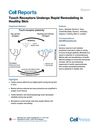 31 citations
,
November 2016 in “Cell Reports”
31 citations
,
November 2016 in “Cell Reports” Touch sensitivity in mouse skin decreases during hair growth due to changes in touch receptors.
236 citations
,
April 2015 in “Cell” Plucking some hairs can trigger nearby unplucked hairs to grow back more due to a collective response.
73 citations
,
November 2000 in “Proceedings of the National Academy of Sciences of the United States of America” There are two ways to start hair growth: one needs Stat3 and the other does not, but both need PI3K activation.
 January 2023 in “Skin Pharmacology and Physiology”
 Minor injuries to hair follicles can stimulate hair growth in mice by increasing a specific protein.
 51 citations
,
January 2004 in “Skin Pharmacology and Physiology”
51 citations
,
January 2004 in “Skin Pharmacology and Physiology” The document explains hair growth and shedding, factors affecting it, and methods to evaluate hair loss, emphasizing the importance of skin biopsy for diagnosis.
 18 citations
,
October 2018 in “Nutrients”
18 citations
,
October 2018 in “Nutrients” Annurca apple extract promotes hair growth by changing hair follicle metabolism to boost keratin production.
 43 citations
,
August 2008 in “Regenerative Medicine”
43 citations
,
August 2008 in “Regenerative Medicine” Scientists created early-stage hairs from mouse cells that grew into normal, pigmented hair when implanted into other mice.
 33 citations
,
January 2017 in “Conservation physiology”
33 citations
,
January 2017 in “Conservation physiology” Measuring reproductive hormones in brown bear hair could help identify their sex and reproductive state, but better collection methods or lab techniques are needed.
 106 citations
,
June 2005 in “Journal of Investigative Dermatology”
106 citations
,
June 2005 in “Journal of Investigative Dermatology” The document concludes that assessing hair follicle damage due to cyclophosphamide in mice involves analyzing structural changes and suggests a scoring system for standardized evaluation.
 30 citations
,
December 2017 in “Clinical, Cosmetic and Investigational Dermatology”
30 citations
,
December 2017 in “Clinical, Cosmetic and Investigational Dermatology” Parietal scalp area has lower hair density and smaller hair diameter in women with hair loss.
3 citations
,
June 1979 in “The Journal of Dermatology” Glycosaminoglycan levels peak early in hair growth and decrease as the cycle progresses.
January 2023 in “Figshare” Minor skin injuries can boost hair growth by increasing TNF-α.
 7 citations
,
January 2020 in “Scientific Reports”
7 citations
,
January 2020 in “Scientific Reports” Rabbit skin analysis showed changes in hair growth and identified miRNAs that may regulate hair follicle development.
January 2023 in “Faculty of 1000 Research Ltd” Androgen loss may speed up hair greying.
 September 2022 in “F1000Research”
 Removing hair from mice without reproductive glands led to grey hair, possibly helping to understand greying in aging.