1 citations
,
January 1994 in “Drug Development and Industrial Pharmacy” Topical radioprotectors can reduce radiation-induced hair loss.
 7 citations
,
July 2020 in “Pigment cell & melanoma research”
7 citations
,
July 2020 in “Pigment cell & melanoma research” RT1640 treatment reverses gray hair and promotes hair growth in mice.
 4 citations
,
March 1989 in “The BMJ”
4 citations
,
March 1989 in “The BMJ” Naproxen is not the cause of hair loss in a child; it's due to a toxic event with expected hair regrowth.
Activating certain hair follicle cells could prevent hair loss from cancer treatments.
 14 citations
,
November 2005 in “Life sciences”
14 citations
,
November 2005 in “Life sciences” Vitamin D3 may protect rat hair follicles from radiation damage.
 37 citations
,
April 2010 in “FEBS Letters”
37 citations
,
April 2010 in “FEBS Letters” The study concludes that the EDA2R gene is activated by p53 during chemotherapy but is not necessary for chemotherapy-induced hair loss.
22 citations
,
July 2013 in “International Journal of Radiation Biology” Antioxidant vitamins, especially vitamin E, help reduce radiation-induced intestinal damage.
 October 2004 in “Radiotherapy and oncology”
 Active vitamin D3 might protect hair follicles from radiation damage.
November 2025 in “Journal of Investigative Dermatology” Radiation-induced hair loss may be caused by hair growth stopping and inflammation in blood vessels.
 13 citations
,
January 2014 in “Dermatology”
13 citations
,
January 2014 in “Dermatology” Radiation-induced alopecia after angioembolization usually heals on its own and can look like other hair loss types, but patient history helps prevent misdiagnosis.
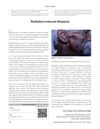 17 citations
,
January 2010 in “International journal of trichology”
17 citations
,
January 2010 in “International journal of trichology” A man experienced hair loss from radiotherapy, which can be temporary or permanent depending on radiation dose, with potential treatments available.
 14 citations
,
January 2013 in “Journal of Cutaneous Medicine and Surgery”
14 citations
,
January 2013 in “Journal of Cutaneous Medicine and Surgery” Some cancer treatments can cause permanent hair loss.
 February 2026 in “Clinical Cosmetic and Investigational Dermatology”
 A 7-year-old girl experienced temporary hair loss due to radiation, with signs of possible hair regrowth.
 July 2026 in “Open Science Framework”
 Radiation can cause hair loss, and better prevention and treatment methods are needed.
 February 2026 in “Scientific Reports”
 The model effectively mimics radiation-induced skin damage for future research.
16 citations
,
February 2019 in “Journal of Cellular and Molecular Medicine” Researchers created a rat model to study skin damage caused by radiation, which could help develop new treatments.
 4 citations
,
January 2016 in “Case reports in dermatological medicine”
4 citations
,
January 2016 in “Case reports in dermatological medicine” A man had temporary hair loss from radiation during a medical procedure but regrew his hair after treatment with minoxidil lotion.
50 citations
,
August 2021 in “Stem Cell Research & Therapy” Adipose-derived stem cells help heal radiation skin damage by reducing cell death and inflammation.
35 citations
,
February 2002 in “Journal of Radiological Protection” Caffeine reduces radiation skin damage but doesn't affect tumor treatment.
1 citations
,
March 2024 in “International journal of molecular sciences” Radiation therapy damages skin structure and immune function, causing inflammation and potential hair loss.
1 citations
,
March 2024 in “Life” Dermoscopy can help assess the severity of chronic radiation-induced skin damage in head and neck cancer patients.
 May 2026 in “Archives of Dermatological Research”
 Vitamin E and gamma-oryzanol protect hair from UV damage.
January 2010 in “Zhongguo xiandai yixue/Zhongguo xiandai yixue zazhi” TGF-β1 and TNF-α contribute to lung damage after radiation.
October 2012 in “International journal of radiation oncology, biology, physics” Soy isoflavones can protect lung tissue from damage during radiation therapy for lung cancer.
24 citations
,
August 2020 in “JAMA dermatology” Persistent radiation-induced hair loss is dose-dependent, and treatments like topical minoxidil can be effective.
 7 citations
,
May 2014 in “Clinical practice”
7 citations
,
May 2014 in “Clinical practice” Cooling the scalp may prevent hair loss from chemotherapy, hair often grows back after treatment, and nail issues usually improve after stopping the drug.
September 2016 in “Journal of dermatological science” FGF18 helps hair follicles resist radiation by stopping hair growth cycles.
8 citations
,
September 2015 in “Radiotherapy and oncology” Scalp cooling does not stop hair loss from radiotherapy.
 March 2014 in “Journal of The American Academy of Dermatology”
 A botanical extract may help manage hair loss from chemotherapy by preventing cell death in hair follicles.
 53 citations
,
April 2018 in “Journal of The American Academy of Dermatology”
53 citations
,
April 2018 in “Journal of The American Academy of Dermatology” Cancer treatments often cause hair disorders, significantly affecting patients' quality of life, and better management methods are needed.