November 2025 in “Journal of Investigative Dermatology” Ritlecitinib effectively treats severe Alopecia Areata by reducing harmful immune activity in the skin.
June 2025 in “British Journal of Dermatology” Ruxolitinib helped a woman with a genetic mutation regrow her hair and improved her health.
 January 2026 in “Zenodo (CERN European Organization for Nuclear Research)”
 Thorough evaluation and treatment are crucial for thyroid nodules.
 November 2022 in “Journal of the Endocrine Society”
 Excessive iodine from a cystic fibrosis supplement can cause hypothyroidism.
Ritlecitinib improves hair regrowth in alopecia areata without increasing adverse risks.
September 2025 in “Value in Health”  5 citations
,
January 2004 in “Biochimie”
5 citations
,
January 2004 in “Biochimie” Arsenic trioxide effectively treats APL, improving survival rates despite its toxicity.
November 2025 in “SKIN The Journal of Cutaneous Medicine” Ritlecitinib is effective long-term for treating alopecia areata in teens.
52 citations
,
June 2009 in “Clinical Toxicology” Polonium poisoning is diagnosed by detecting it in urine and feces, and treated with supportive care, infection prevention, and chelation therapy.
 February 2024 in “Folia Medica”
 Platelet-rich plasma treatment is effective for hair loss in patients regardless of their thyroid antibody levels.
November 2024 in “SKIN The Journal of Cutaneous Medicine” Ritlecitinib effectively reduces severe hair loss in alopecia areata over 24 months.
March 2026 in “SKIN The Journal of Cutaneous Medicine” Ritlecitinib is being tested for safety and effectiveness in young children with severe alopecia areata.
 2 citations
,
January 1992 in “Neurologia medico-chirurgica”
2 citations
,
January 1992 in “Neurologia medico-chirurgica” The new therapy effectively targets brain tumors while minimizing damage to healthy tissue.
25 citations
,
April 2012 in “Veterinary and comparative oncology” Megavoltage radiation therapy extended survival in rabbits with thymomas, especially in those weighing more than 1.57 kg.
 July 2025 in “SKIN The Journal of Cutaneous Medicine”
 Ritlecitinib is generally safe for alopecia areata patients over 72 months.
 18 citations
,
April 2001 in “Bioorganic & Medicinal Chemistry Letters”
18 citations
,
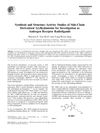
April 2001 in “Bioorganic & Medicinal Chemistry Letters” The nature of the side chain in RU 58841 derivatives greatly affects its AR affinity, with the N-(iodopropenyl) derivative 13 showing the highest AR binding affinity, suggesting its potential for developing high-affinity radioiodinated AR radioligands.
March 2026 in “Journal for ImmunoTherapy of Cancer” Long-term data and a team approach are needed to manage chronic side effects from cancer treatments.
7 citations
,
September 2024 in “The Journal of Dermatology” Ritlecitinib helps regrow hair in people with alopecia totalis and universalis and is safe to use.
9 citations
,
October 1947 in “The Lancet” 1 citations
,
November 1947 in “The Lancet”  November 2022 in “Journal of the Endocrine Society”
 Immunotherapy for cancer caused a patient to develop a condition affecting hormone production, requiring ongoing hormone replacement therapy.
7 citations
,
October 2024 in “Journal of the American Academy of Dermatology” Continued ritlecitinib treatment helps sustain hair regrowth in alopecia areata patients.
 2 citations
,
September 2020 in “International journal of radiology & radiation therapy”
2 citations
,
September 2020 in “International journal of radiology & radiation therapy” Radiotherapy can cause rare changes in hair color, which should be discussed with patients.
 2 citations
,
December 2020 in “JAMA Dermatology”
2 citations
,
December 2020 in “JAMA Dermatology” Radiotherapy is a good option when further surgery for skin cancer isn't preferred, but more research is needed to compare it with other methods.
5-ARI therapy may help prevent prostate cancer progression.
 January 2024 in “Wiadomości Lekarskie”
 Uveal melanoma is hard to treat when it spreads, but a new drug, tebentafusp, helps patients live longer.
2 citations
,
September 2024 in “Expert Opinion on Drug Metabolism & Toxicology” Ritlecitinib is an effective new treatment for Alopecia Areata.
Higher iodine levels in children's hair may help cure tinea capitis during puberty.
February 2026 in “International Journal of Dermatology” Ritlecitinib shows promise in improving hair regrowth in adolescents with alopecia areata.
November 2025 in “SKIN The Journal of Cutaneous Medicine” Ritlecitinib 50 mg effectively promotes and sustains hair regrowth in alopecia areata patients.