9 citations
,
January 2007 in “mediaTUM – the media and publications repository of the Technical University Munich (Technical University Munich)” Microbeam radiation therapy's dose distribution changes with depth.
22 citations
,
November 2020 in “Frontiers in Physics” Proton minibeam radiotherapy shows promise for sparing healthy tissue in cancer treatment but needs further research and technological development.
2 citations
,
March 2010 in “Acta Biochimica Polonica” Raltitrexed conjugates are less potent than the free drug but more effective at high concentrations.
 17 citations
,
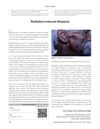
January 2010 in “International journal of trichology”
17 citations
,
January 2010 in “International journal of trichology” A man experienced hair loss from radiotherapy, which can be temporary or permanent depending on radiation dose, with potential treatments available.
 January 2024 in “Deleted Journal”
 Radiation cystitis patients need better monitoring and early treatment due to higher readmission rates.
1 citations
,
February 2002 in “Oncology Times” Intravenous arsenic is safe and effective for treating certain blood cancers.
22 citations
,
July 2024 in “Frontiers in Oncology” FLASH radiation reduces tissue damage more than conventional radiation.
 January 2023 in “Skin appendage disorders”
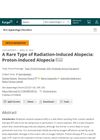
 A woman's hair grew back after treatment for a rare hair loss caused by proton therapy.
January 2026 in “Journal of Radiation Research” 53BP1 focus analysis in hair cells can help estimate radiation doses.
 11 citations
,
October 2019 in “Journal of Cancer Immunology”
11 citations
,
October 2019 in “Journal of Cancer Immunology” Combining Proton Minibeam with FLASH Radiotherapy may improve cancer treatment by reducing side effects and increasing effectiveness.
 January 2025 in “Ege Tıp Bilimleri Dergisi”
 Radiotherapy affects mitochondrial-related genes in metastatic breast cancer cells.
8 citations
,
August 2014 in “Journal of Clinical Oncology” Stereotactic body radiation therapy and radiosurgery are advanced, precise treatments that target tumors while protecting healthy tissue.
January 2020 in “Emergency Medicine News” Early diagnosis, decontamination, and supportive care are crucial for managing acute radiation syndrome.
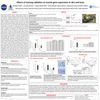 January 2017 in “NASA Technical Reports Server (NASA)”
 Early changes in skin gene expression can predict later bone mass loss after radiation exposure.
47 citations
,
April 2012 in “Analytical and Bioanalytical Chemistry” 10 citations
,
January 2004 in “PubMed” Radiation increases cell death in hair follicles, but certain treatments can protect against this effect.
 13 citations
,
January 1963 in “Radiation Research”
13 citations
,
January 1963 in “Radiation Research” X-ray microbeams can mimic cosmic rays' effects on tissue, aiding wound healing and hair growth.
May 2019 in “Journal of clinical oncology” Radiation therapy with chemotherapy can cause severe, long-lasting hair loss.
12 citations
,
January 2014 in “Journal of X-Ray Science and Technology” Using 100–300 keV X-ray energy is best for treating deep-seated tumors with microplanar beam radiation therapy.
May 1962 in “Zhurnal Fizicheskoi Khimii (U.S.S.R.) For English translation see Russ. J. Phys. Chem. (Engl. Transl.)” PCOS causes hormonal imbalances and health issues like infertility and heart disease.
 October 2004 in “Radiotherapy and oncology”
 Active vitamin D3 might protect hair follicles from radiation damage.
 12 citations
,
April 1960 in “The anatomical record”
12 citations
,
April 1960 in “The anatomical record” X-ray exposure affects developing hair follicles.
 14 citations
,
January 2014 in “Cells Tissues Organs”
14 citations
,
January 2014 in “Cells Tissues Organs” Ionizing radiation causes irreversible skin damage, with single doses leading to acute injury and hair graying, and fractional doses causing more severe long-term tissue damage.
3 citations
,
July 1969 in “PubMed” Radiation reduced zinc levels, growth, organ weights, and hair pigment in swine.
2 citations
,
January 2004 in “AIP conference proceedings” Hair analysis can help screen for serious diseases like cancer and osteoporosis.
 5 citations
,
January 2004 in “Biochimie”
5 citations
,
January 2004 in “Biochimie” Arsenic trioxide effectively treats APL, improving survival rates despite its toxicity.
5 citations
,
May 1957 in “Nature” June 2025 in “Clinical and Experimental Dermatology” A 76-year-old man's grey hair turned back to its original color after radiotherapy.
 January 2024 in “Wiadomości Lekarskie”
 New markers can detect tumors, aid drug delivery, and treat cancer effectively and safely.