Search
for
Sort by
Research
300-330 / 1000+ resultsresearch Structure and Mechanical Properties of Human Trichocyte Keratin Intermediate Filament Protein
Disulfide bonds make keratin in hair stronger and tougher.

research Dataset from the uniaxial tensile testing of human curly hair fibers under different conditions
Curly hair's strength and flexibility vary with moisture and temperature.
research Chapter 4 Cytomechanics of Hair
Hair's strength and flexibility come from its protein structure and molecular interactions.
research A modular modeling approach for investigating wool critical buckling from biologically variable along-fiber microstructure
The model helps understand how wool fiber structure affects its strength and flexibility.
research Observation of the Microstructure of Human Hair Based on a Single Detector Optical Coherence Tomography
Chemical dyes damage hair's internal structure more than perming, as shown by a special imaging technique.
research Structural changes in the trichocyte intermediate filaments accompanying the transition from the reduced to the oxidized form
Oxidation changes the structure of hair protein filaments, causing them to compact and rearrange.
research Fine Structure of Perifollicular Nerve Endings in Human Hair
research Effect of shampoo, conditioner and permanent waving on the molecular structure of human hair
Perming significantly changes hair's molecular structure, while shampoo and conditioner do not.
research Morphological and Macromolecular Structure
research Morphological and Macromolecular Structure
research INTRODUCING GAP IN HAIR FOLLICLE ELECTROMAGNETISM AS MECHANISM FOR THE PRESENCE OF BIPOLAR ELECTRICAL CHARGES INHERENT IN THE HUMAN HAIR SHAFT
Human hair has bipolar electrical charges because of a gap in the hair follicle's electromagnetic field.

research A novel fracture lattice in spiny mouse skin facilitates tissue autotomy and regeneration
Spiny mice have a unique skin structure that helps them heal and regenerate quickly.
research Sequence analyses of Type I and Type II chains in human hair and epithelial keratin intermediate filaments: Promiscuous obligate heterodimers, Type II template for molecule formation and a rationale for heterodimer formation
Type I and Type II keratin chains can form heterodimers despite sequence differences.
research The in vitro Assembly of Hair Follicle Keratins: Comparison of Cortex and Companion Layer Keratins
Different conditions affect how hair proteins assemble, and certain mutations can change their structure.
research Engineering Human Skin with Spatially Defined Hair Peg-Like Structures Using Self-Organizing Composite Organoids and Micropatterned Dermal Scaffolds
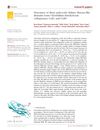
research Structures of three polycystic kidney disease-like domains fromClostridium histolyticumcollagenases ColG and ColH
The study concludes that certain domains in Clostridium histolyticum enzymes are structurally unique, bind calcium to become more stable, and play distinct roles in breaking down collagen, with potential applications in medicine and drug delivery.
research Topical Minoxidil
Most people using minoxidil for hair loss probably won't see significant improvement.
research Reply
The authors defended their methods for measuring hair density and caliber, emphasizing the need for consistent photography and manual counting for accuracy in evaluating hair loss treatments.
research Effects of botulinum toxin type A on histamine-induced itch and vasomotor responses in human skin
Botulinum toxin type A reduces itch and inflammation from histamine and may help treat certain skin conditions and hair loss.
research Remission of hair loss and induction of hair regrowth by botulinum neurotoxin A in mice
Botulinum toxin A helped stop hair loss and grow new hair in mice.
research Anhidrotic effect of intradermal injections of botulinum toxin—A comparison of different products and concentrations
Different botulinum toxin products and concentrations can effectively reduce sweating, itching, bladder pressure, hair loss, and muscle spasms.
research Comment on “The effect of platelet-rich plasma on female androgenetic alopecia: A randomized controlled trial”: Phototrichogram analysis
Platelet-rich plasma therapy's effectiveness for female hair loss needs more accurate data and further examination.
research Existence of various structural zones in keratinous tissues revealed by X-ray microdiffraction
Keratinous tissues have multiple structural layers, including ordered keratin and lipid granules.
research Worldwide diversity of hair curliness: a new method of assessment
A new method accurately classifies hair types, showing global hair diversity.
research 486 Molecular Mechanisms of Type II Spiral Ganglion Neuron Development
research Exploring a biological tissue from atomic to macroscopic scale using synchrotron radiation: example of hair.
Hair has unevenly distributed proteins and lipids, with lipids mainly in the cuticle and proteins in the cortex and medulla.

research Curly Hair Follicle is Sculpted by a Contracted Arrector Pili Muscle. A Hypothesis with Treatment Implications
Relaxing the Arrector Pili Muscle might make curly hair straighter.
research [Three-dimensional culture of plucked human hair follicles inside the collagen gel matrix].
Human hair follicles can grow and form structures in a collagen gel, useful for studying hair cell growth.
research Structural features of the α-type filaments of the inner root sheath cells of the guinea pig hair follicle
α-type filaments in guinea pig hair follicles have unique structural features.