1 citations
,
November 2024 in “EMBO Reports” Deleting Gpr54 speeds up hair growth and regeneration.
20 citations
,
January 2022 in “Oxidative Medicine and Cellular Longevity” Reactive oxygen species (ROS) influence hair growth by causing DNA damage, cell death, and changes in immune cells.
66 citations
,
February 2013 in “PeerJ” Activating cannabinoid receptor 1 reduces certain keratin levels, potentially aiding psoriasis treatment.
 41 citations
,
April 2016 in “Journal of experimental botany”
41 citations
,
April 2016 in “Journal of experimental botany” RACB in barley is crucial for cell polarity and nucleus positioning, aiding fungal infection.
115 citations
,
December 2019 in “The Plant Journal” Nitrate helps plants manage phosphate uptake and starvation responses through NIGT1 proteins.
 7 citations
,
March 2022 in “Scientific reports”
7 citations
,
March 2022 in “Scientific reports” Removing anthrax toxin receptor 1 in pigs prevents Senecavirus A infection and causes a rare disease similar to GAPO syndrome.
31 citations
,
March 2016 in “Journal of Investigative Dermatology” AKR1B10 enzyme may cause keloid scars and could be a treatment target.
July 2026 in “Research Square”  April 2023 in “Journal of Investigative Dermatology”
 Changing YBX1 protein activity affects skin stem cell function and aging.
 286 citations
,
April 2009 in “The journal of neuroscience/The Journal of neuroscience”
286 citations
,
April 2009 in “The journal of neuroscience/The Journal of neuroscience” TRPA1 is crucial for mechanical sensitivity in skin sensory neurons.
26 citations
,
May 2007 in “Differentiation” Foxn1 helps skin cells mature by controlling a specific protein's activity.
9 citations
,
February 2001 in “Journal of Dermatological Science” p21waf1/cip1 and p27kip1 help in hair follicle differentiation in rats.
The balance between cell renewal and differentiation controls the growth of cancerous cells in mouse skin.
 April 2016 in “Journal of Investigative Dermatology”
 Mice without the p21 gene can fully regenerate injured ears due to reduced Sdf1 increase and leukocyte recruitment, suggesting new ways to induce tissue regeneration in mammals.
November 2025 in “PLoS ONE” Nucleic acids trigger chemokine production in skin cells, affecting skin inflammation.
36 citations
,
October 2015 in “Cell reports” Gab1 protein is crucial for hair growth and stem cell renewal, and Mapk signaling helps maintain these processes.
January 2024 in “Animals” SP1 promotes and KROX20 inhibits hair cell growth by affecting the CUX1 gene.
19 citations
,
September 2013 in “Psychoneuroendocrinology” Blocking CYP17A1 enzyme may help improve certain brain function issues related to dopamine.
 12 citations
,
October 2020 in “Scientific Reports”
12 citations
,
October 2020 in “Scientific Reports” Necrostatin-1s can promote hair growth and may help treat hair loss.
44 citations
,
February 2023 in “Cell” Fingerprints form uniquely before birth due to specific genetic pathways and local signals.
 6 citations
,
October 2012 in “Journal of Heredity”
6 citations
,
October 2012 in “Journal of Heredity” The Itpr3 gene causes a specific hair pattern in mice.
July 2022 in “Journal of Investigative Dermatology” TRPS1 loss in balding scalp areas contributes to hair loss in androgenic alopecia.
July 2025 in “Journal of Investigative Dermatology” Hhip-Cre effectively targets dermal papilla cells for gene manipulation in hair biology.
 January 1999 in “Journal of the European Academy of Dermatology and Venereology”
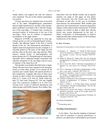
 RAPK is a rare skin disorder with pigmented spots, mainly on hands and feet, starting in youth.
73 citations
,
November 2000 in “Proceedings of the National Academy of Sciences of the United States of America” There are two ways to start hair growth: one needs Stat3 and the other does not, but both need PI3K activation.
 6 citations
,
September 2015 in “Journal of Investigative Dermatology”
6 citations
,
September 2015 in “Journal of Investigative Dermatology” Using special RNA to target a mutant gene fixed hair problems in mice.
1 citations
,
October 2025 in “PLoS ONE” LncRNA RP11-818O24.3 may help treat hair loss by boosting hair follicle stem cell growth and differentiation.
16 citations
,
November 1994 in “Developmental Biology” Retinoic acid causes gland formation instead of hair in mouse skin by altering epidermal and dermal interactions.
 1 citations
,
March 2023 in “Science Translational Medicine”
1 citations
,
March 2023 in “Science Translational Medicine” Blocking a certain signal in the gp130 receptor can improve tissue healing and lessen osteoarthritis symptoms.
38 citations
,
January 2014 in “Journal of Dermatological Science” Krtap11-1 is important for hair strength and structure.