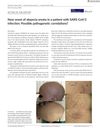
 32 citations
,
March 2021 in “Journal of cosmetic dermatology (Print)”
32 citations
,
March 2021 in “Journal of cosmetic dermatology (Print)” COVID-19 infection may trigger alopecia areata in some patients.
 13 citations
,
February 2015 in “Actas Dermo-Sifiliográficas”
13 citations
,
February 2015 in “Actas Dermo-Sifiliográficas” The document concludes that recognizing specific histological features of different nonscarring alopecias is crucial for accurate diagnosis and understanding hair loss progression.
 23 citations
,
June 2003 in “Journal of Investigative Dermatology Symposium Proceedings”
23 citations
,
June 2003 in “Journal of Investigative Dermatology Symposium Proceedings” Alopecia Areata is an autoimmune disease affecting hair follicles, influenced by genetic and environmental factors, with rodent models being essential for research.
 40 citations
,
August 2022 in “Frontiers in immunology”
40 citations
,
August 2022 in “Frontiers in immunology” Blocking JAK/STAT pathways can help treat hair loss from alopecia areata.
 March 2024 in “Dermatology and therapy”
 AA patients with comorbid conditions face more severe hair loss and need specific treatments.
August 2025 in “American Journal of Dermatopathology” Accurate diagnosis and personalized treatment are crucial in dermatopathology.
August 2025 in “Australasian Journal of Dermatology” Experts created guidelines for who in Australia can get subsidized JAK inhibitor therapy for alopecia areata.
 November 2000 in “Current problems in dermatology”
 New treatments for hair loss and excessive hair growth show promise with few side effects and advancements in laser technology.
 September 2025 in “Australasian Journal of Dermatology”
 New medications could improve treatment for severe alopecia areata in Australia.
17 citations
,
November 2009 in “Dermato-endocrinology” Medium-dose prednisolone pulse therapy is effective and safe for multifocal alopecia areata but not for more severe forms.
9 citations
,
July 2016 in “JAAD case reports” Denosumab treatment for osteoporosis can cause hair loss.
 March 2022 in “Wound practice & research”
 New treatments for alopecia areata show promise, but standardized guidelines are needed.
 2 citations
,
January 2020 in “Skin appendage disorders”
2 citations
,
January 2020 in “Skin appendage disorders” Early onset, severe types, nail changes, family history, and body hair loss worsen alopecia areata prognosis; sticking to treatment helps.
 34 citations
,
April 2009 in “Expert Opinion on Pharmacotherapy”
34 citations
,
April 2009 in “Expert Opinion on Pharmacotherapy” Some treatments work for common baldness, but there's less evidence for other hair loss types, and more research is needed.
 May 2003 in “Facial Plastic Surgery Clinics of North America”
 Hair loss can be treated with medications like minoxidil and finasteride or surgery, but treatment effectiveness varies by alopecia type and accurate diagnosis is important.
 17 citations
,
August 2015 in “Expert Opinion on Pharmacotherapy”
17 citations
,
August 2015 in “Expert Opinion on Pharmacotherapy” The document concludes that oral finasteride and topical minoxidil are effective for genetic hair loss, while other treatments for different types of hair loss show promise but need more research.
 January 2017 in “Springer eBooks”
 Over 40% of postmenopausal women experience hair loss, with treatments aiming to stop further loss and possibly thicken hair.
 59 citations
,
January 2002 in “Dermatology”
59 citations
,
January 2002 in “Dermatology” A new type of sudden, complete female hair loss was found, with most patients fully recovering within 6 months without needing steroid treatment.
4 citations
,
June 2025 in “Cell Reports” Clonally expanded CD8+ T cells cause alopecia areata.
Combining pentoxifylline with corticosteroids improves alopecia areata treatment.
 76 citations
,
July 2011 in “Clinical, Cosmetic and Investigational Dermatology”
76 citations
,
July 2011 in “Clinical, Cosmetic and Investigational Dermatology” The document concludes that proper diagnosis and FDA-approved treatments for different types of hair loss exist, but treatments for severe cases often fail and future improvements may focus on hair follicle stem cells.
 December 2024 in “IntechOpen eBooks”
 Trichoscopy helps diagnose and track alopecia areata by examining specific hair and scalp markers.
 2 citations
,
May 2022 in “JAAD Case Reports”
2 citations
,
May 2022 in “JAAD Case Reports” A woman lost all her hair after mild COVID-19, but it started to regrow after treatment with a specific medication.
 December 2017 in “Journal of the American Academy of Dermatology”
 The patient accepted her hair loss and adapted by wearing a wig and tattooing her eyebrows.
 10 citations
,
February 2011 in “Journal der Deutschen Dermatologischen Gesellschaft”
10 citations
,
February 2011 in “Journal der Deutschen Dermatologischen Gesellschaft” The document concludes that proper diagnosis and evidence-based treatments are crucial for managing hair diseases, and psychological support for patients is important.
 5 citations
,
May 2023 in “Frontiers in immunology”
5 citations
,
May 2023 in “Frontiers in immunology” Environmental factors like diet and vitamin levels, especially Vitamin D, can affect autoimmune diseases differently, with lifestyle changes potentially improving outcomes.
 June 2026 in “Frontiers in Oncology”
 Ipilimumab can cause various adverse events in elderly patients, especially affecting the gastrointestinal and endocrine systems.
 16 citations
,
January 2021 in “Dermatology and therapy”
16 citations
,
January 2021 in “Dermatology and therapy” An imbalance in gut bacteria is linked to skin immune diseases and may affect their outcomes and related health issues.
 January 2014 in “Journal of Investigative Dermatology”
 Proteins like aPKC and PDGF-AA, substances like adenosine and ATP, and adipose-derived stem cells all play important roles in hair growth and health, and could potentially be used to treat hair loss and skin conditions.
 3 citations
,
August 2021 in “Cutis”
3 citations
,
August 2021 in “Cutis” Some alternative medicine treatments might work for skin conditions, but their effectiveness and safety differ a lot.