5-ARI therapy may help prevent prostate cancer progression.
 28 citations
,
March 2010 in “British Journal of Dermatology”
28 citations
,
March 2010 in “British Journal of Dermatology” Genetic marker rs12558842 strongly linked to male hair loss.
4 citations
,
January 2023 in “bioRxiv (Cold Spring Harbor Laboratory)” PrrH sRNA controls pyochelin gene expression in Pseudomonas aeruginosa based on heme levels.
1 citations
,
September 2023 in “Frontiers in Genetics” A heterozygous mutation in HTRA1 can cause severe CARASIL symptoms.
 July 2026 in “bioRxiv (Cold Spring Harbor Laboratory)”
 ACA2 is crucial for root hair growth by controlling calcium levels in cells.
28 citations
,
February 2010 in “Experimental Dermatology” The frizzy mouse and hairless rat mutations are due to changes in the Prss8 gene.
 25 citations
,
May 2016 in “Progress in Biophysics & Molecular Biology”
25 citations
,
May 2016 in “Progress in Biophysics & Molecular Biology” R-spondins and their receptors help increase bone growth and may be used to treat bone loss diseases.
 6 citations
,
September 2021 in “Experimental Brain Research”
6 citations
,
September 2021 in “Experimental Brain Research” Rats have different touch receptors in their paws that help with movement and handling objects.
April 2020 in “The FASEB Journal” Loss of Rap1 protein speeds up heart aging in mice.
13 citations
,
April 1994 in “Baillière's clinical endocrinology and metabolism” Some people have genetic mutations that make them resistant to vitamin D, leading to rickets even with enough vitamin D intake.
June 2025 in “British Journal of Dermatology” Ruxolitinib helped a woman with a genetic mutation regrow her hair and improved her health.
September 2025 in “Radboud University Press eBooks” AHR ligands could treat inflammatory skin diseases.
January 2008 in “OhioLink ETD Center (Ohio Library and Information Network)” SARMs work differently in tissues due to unique interactions and structures.
16 citations
,
November 1994 in “Developmental Biology” Retinoic acid causes gland formation instead of hair in mouse skin by altering epidermal and dermal interactions.
 May 2012 in “Journal of Clinical Oncology”
 Taking 5-alpha reductase inhibitors might be linked to breast cancer in men.
303 citations
,
October 2000 in “Nature” RXRα is crucial for hair growth and skin cell function.
Raptor and Rictor have stable expression in hair cycles, with Raptor marking stem cells and Rictor involved in hair shaft formation.
44 citations
,
May 1998 in “PubMed” The retinoid receptor antagonist effectively disrupts vitamin A-related development in embryos.
 35 citations
,
May 2019 in “Frontiers in genetics”
35 citations
,
May 2019 in “Frontiers in genetics” Non-coding RNAs play key roles in the hair growth cycle of Angora rabbits.
 1 citations
,
January 2013 in “MedChemComm”
1 citations
,
January 2013 in “MedChemComm” PF-05314882 selectively activates androgen receptors without much effect on prostate and may help in prostate cancer treatment and hair loss prevention.
 6 citations
,
January 2018 in “Annals of dermatology/Annals of Dermatology”
6 citations
,
January 2018 in “Annals of dermatology/Annals of Dermatology” Hyaluronic acid filler can safely and effectively improve facial contour in Parry-Romberg Syndrome.
 3 citations
,
August 2021 in “Research Square (Research Square)”
3 citations
,
August 2021 in “Research Square (Research Square)” The most common sign of aging at the gene level is more Ectodysplasin A2 Receptor (EDA2R) being made.
March 2023 in “SKIN The Journal of Cutaneous Medicine” Ritlecitinib helped most alopecia areata patients regrow hair by Week 48.
 11 citations
,
April 2019 in “Bioscience Reports”
11 citations
,
April 2019 in “Bioscience Reports” Certain genetic variations in the RAB5B gene are linked to a higher risk of polycystic ovary syndrome in Chinese Han women.
 September 2024 in “Journal of Medicine and Life”
 A specific gene mutation causes a severe skin disorder in a family.
 10 citations
,
November 2015 in “Experimental Dermatology”
10 citations
,
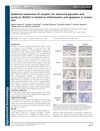
November 2015 in “Experimental Dermatology” Skin RAGE levels are linked to inflammation and cell death.
232 citations
,
January 2002 in “Mechanisms of development” Different enzymes are active in different parts of developing mouse organs.
RNase L hinders hair follicle regeneration by altering immune signals.
 1 citations
,
September 2019 in “Steroids”
1 citations
,
September 2019 in “Steroids” Two new mutations in the AR gene linked to severe androgen insensitivity were found.
3 citations
,
November 2023 in “Journal of Investigative Dermatology” Over 45% of patients with alopecia areata benefit from ritlecitinib, mostly within a year.