 June 2025 in “Rapid Communications in Mass Spectrometry”
 The new method improves protein extraction and analysis in hair, aiding biomedical and forensic work.
 January 2025 in “bioRxiv (Cold Spring Harbor Laboratory)”
 Rhamnose may help hair growth and pigmentation, making it a potential treatment for hair loss.
 1 citations
,
September 2023 in “Rheumatology advances in practice”
1 citations
,
September 2023 in “Rheumatology advances in practice” A woman's rare scalp condition worsened after using a specific arthritis medication, suggesting such medications can sometimes trigger or aggravate psoriasis.
 May 2025 in “Cermin Dunia Kedokteran”
 Leukokoria can signal Coats disease or other retinal issues, requiring early detection to prevent severe outcomes.
2 citations
,
July 2024 in “Bioengineering” PRF lysates reduce inflammation in cancer cells and boost immune response in healthy oral cells.
 2 citations
,
December 2018 in “Journal of cosmetic dermatology”
2 citations
,
December 2018 in “Journal of cosmetic dermatology” Higher CRBP1 levels are linked to more severe alopecia areata.
10 citations
,
November 2018 in “The Italian Journal of Pediatrics/Italian journal of pediatrics” Early diagnosis of Trichorhinophalangeal syndrome type 1 is crucial for treatment and was achieved through clinical examination and family history.
8 citations
,
June 2023 in “Acta Biochimica et Biophysica Sinica” rRSPO1 protein boosts hair growth by activating a key signaling pathway.
April 2017 in “Annales de Toxicologie Analytique” Hair analysis is crucial for diagnosing, managing, and monitoring addiction.
39 citations
,
August 1998 in “FEBS Letters” Two new enzymes, PAD-R11 and PAD-R4, were cloned and showed activity, with PAD-R11 resembling epidermal enzymes.
 November 1971 in “Bulletin of Experimental Biology and Medicine”
 The location of a skin injury affects how well a rat's skin can heal.
 4 citations
,
January 1974 in “The BMJ”
4 citations
,
January 1974 in “The BMJ” All medications can cause skin rashes, often without a clear cause, and better tests are needed to identify these drug-related skin issues.
Ritlecitinib can reduce inflammation and help hair regrow in Alopecia Areata.
April 2016 in “Journal of Investigative Dermatology” Mutations in the TSPEAR gene cause a new form of ectodermal dysplasia affecting hair and tooth development.
 1 citations
,
January 2023 in “Biochemical and biophysical research communications”
1 citations
,
January 2023 in “Biochemical and biophysical research communications” Keratin 79 is linked to liver damage and may help diagnose liver diseases.
May 2022 in “Journal of Cutaneous Immunology and Allergy” Asymptomatic cats can spread scalp infections to humans.
 1 citations
,
August 2011 in “Dermatology Reports”
1 citations
,
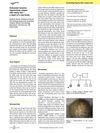
August 2011 in “Dermatology Reports” Two siblings were found to have a genetic condition causing progressive hair loss and woolly hair, which may often be misdiagnosed.
23 citations
,
October 2024 in “British Journal of Dermatology” Ritlecitinib effectively treats alopecia areata and is safe for long-term use in people 12 and older.
 1 citations
,
February 2018 in “British Journal of Dermatology”
1 citations
,
February 2018 in “British Journal of Dermatology” The CWARTS tool is a promising method for assessing warts and could improve treatment and research.
10 citations
,
February 2022 in “JEADV Clinical Practice” Dermoscopy helps diagnose and classify rosacea by revealing key features.
 12 citations
,
February 2008 in “Journal of The American Academy of Dermatology”
12 citations
,
February 2008 in “Journal of The American Academy of Dermatology” Combining skin tissue pathology with genetics has greatly improved the diagnosis and understanding of certain skin diseases.
33 citations
,
January 1977 in “PubMed” Feeding rats oxidized rapeseed oil and lard caused weight loss, organ damage, and toxicity symptoms.
52 citations
,
July 2011 in “PubMed” TRPS1 is crucial for bone, kidney, and hair follicle development.
127 citations
,
April 1999 in “Journal of Investigative Dermatology” Rodent models helped understand psoriasis but none perfectly replicated the disease.
June 2026 in “Frontiers in Immunology” JAK inhibitors effectively treat inflammatory skin diseases by targeting specific cytokine signals.
14 citations
,
December 2001 in “Journal of autoimmunity” Rats can develop an immune response to prion protein peptides, but it may cause severe skin issues in older rats.
 10 citations
,
March 2022 in “Communications biology”
10 citations
,
March 2022 in “Communications biology” A new non-invasive method can analyze skin mRNA to understand skin diseases better.
16 citations
,
September 2019 in “Journal of biological chemistry/The Journal of biological chemistry” Mice without certain skin enzymes have faster hair growth and bigger eye glands.
 26 citations
,
September 2012 in “Journal of The American Academy of Dermatology”
26 citations
,
September 2012 in “Journal of The American Academy of Dermatology” Patients with rapidly progressive alopecia areata often have a better outlook and shorter disease duration, with regrown fine hairs and no past alopecia being positive signs.
 January 2014 in “Pathology”
 RET mutation is important in familial medullary thyroid carcinoma, and BRAF mutation in papillary thyroid carcinoma is linked to more aggressive cancer and higher death rates.