Accurate diagnosis of cicatricial alopecias requires thorough scalp examination and multiple biopsy techniques.
64 citations
,
March 2004 in “The journal of investigative dermatology/Journal of investigative dermatology” GPRC5D is linked to the formation of hair, nails, and certain tongue areas.
 42 citations
,
November 2004 in “Paediatric Respiratory Reviews”
42 citations
,
November 2004 in “Paediatric Respiratory Reviews” Children generally have milder SARS symptoms than adults, with good outcomes and no deaths reported, but long-term effects are unclear.
 15 citations
,
February 2003 in “British Journal of Dermatology”
15 citations
,
February 2003 in “British Journal of Dermatology” The study suggests computer-assisted analysis of scalp biopsies could improve hair loss diagnosis but needs more validation.
 January 2026 in “SKIN The Journal of Cutaneous Medicine”
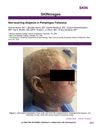
 Rituximab treatment led to complete hair regrowth and improved skin in a woman with pemphigus foliaceus.
55 citations
,
April 2008 in “Clinical Genetics” A new mutation in the ST14 gene was found in a patient with ARIH syndrome, showing milder symptoms and no tooth issues.
47 citations
,
November 1966 in “Archives of Dermatology” Trichorrhexis nodosa is mainly caused by hair trauma, not a metabolic defect.
November 2024 in “Journal of Investigative Dermatology” May 2015 in “The Journal of Dermatology” Alopecia areata and polymyalgia rheumatica may be linked autoimmune conditions.
August 1969 in “Archives of Dermatology” After calciphylaxis, rats showed incomplete skin and hair regeneration, resembling scar tissue with fewer hairs.
3 citations
,
March 2016 in “Experimental Dermatology” A mutation in the hairless gene speeds up severe itchy skin in mice on a special diet.
7 citations
,
March 2004 in “Journal of the American Academy of Dermatology” Tiger tail banding and hair abnormalities are reliable indicators for diagnosing trichothiodystrophy.
 78 citations
,
June 2013 in “Science”
78 citations
,
June 2013 in “Science” Mice without the Sept4/ARTS gene heal wounds better due to more stem cells that don't die easily.
April 2026 in “International Journal of Dermatology” PRP injections are safe for hair loss treatment, but monitoring and sun protection are advised.
 4 citations
,
January 2016 in “Dermatology Review”
4 citations
,
January 2016 in “Dermatology Review” Cancer treatments often cause skin, nail, and hair problems.
8 citations
,
July 2024 in “Children” Biologics and targeted therapies could improve treatment for children with certain chronic skin conditions.
August 2024 in “Postgraduate Medical Journal” A rare skin reaction from cancer treatment was successfully managed with topical treatments and antihistamines.
 January 2014 in “Pathology”
 Non-scarring hair loss can be diagnosed with two 4mm punch biopsies, one cut vertically and the other transversely.
 March 2005 in “Journal of The American Academy of Dermatology”
 Diphencyprone treatment protocols could be simplified as no harm occurred despite not fully following them.
July 2025 in “SKIN The Journal of Cutaneous Medicine” Most patients with alopecia areata see significant hair regrowth within 93 days of starting ritlecitinib treatment.
5 citations
,
December 2023 in “Current Biology” A feedback loop between LRH and RSL4 controls root hair growth in Arabidopsis.
 34 citations
,
July 2011 in “International journal of pharmaceutics”
34 citations
,
July 2011 in “International journal of pharmaceutics” Ion-paired risedronate significantly increases skin penetration without irritation compared to risedronate alone.
September 2023 in “International Journal of Trichology” A rare hair regrowth pattern can occur in some people with alopecia areata.
 5 citations
,
December 2017 in “The Journal of Dermatology”
5 citations
,
December 2017 in “The Journal of Dermatology” A new gene mutation caused a man's rare skin condition, Schöpf-Schulz-Passarge syndrome.
 January 2025 in “Annals of Dermatology”
 PCA patients have more harmful bacteria and antibiotic resistance, needing specific testing for treatment.
 March 2026 in “American Journal of Clinical Dermatology”
 Ritlecitinib is effective and safe for long-term use in treating severe alopecia areata in people aged 12 and older.
12 citations
,
December 1965 in “Immunology and Cell Biology” Mild skin injury can trigger mineral deposits in rat skin, even without full calciphylactic response.
 February 2010 in “Journal of The American Academy of Dermatology”
 Methotrexate treatment for rheumatoid arthritis has a serious infection rate of about two per 100 patient-years.
April 2021 in “Cermin Dunia Kedokteran” Two siblings with tinea capitis improved after treatment with ketoconazole.
47 citations
,
February 2014 in “Journal of Cutaneous Pathology” Matrical tumors share a common growth mechanism involving the Wnt pathway and consistent PHLDA1 expression.