 5 citations
,
October 1984 in “The BMJ”
5 citations
,
October 1984 in “The BMJ” Up to 50% of scalp hair can be lost before it appears thin, and treatment is only needed for hair loss caused by diseases or deficiencies.
 October 2023 in “Acta dermato-venereologica”
 Minoxidil and platelet-rich plasma can help turn thin hair into thicker hair in male pattern baldness.
January 2022 in “Clinical Cases in Dermatology” Chemotherapy can cause significant but usually reversible hair loss, and managing it involves patient education and hair care strategies.
 9 citations
,
July 1992 in “Clinics in Dermatology”
9 citations
,
July 1992 in “Clinics in Dermatology” Scalp reduction surgery can effectively treat male pattern baldness when tailored to the patient and performed with care to minimize complications.
July 2025 in “InnovAiT Education and inspiration for general practice” 
Androgenetic alopecia (AGA) is a common, hereditary hair loss condition that can be slowed but not permanently reversed with available therapies.
 3 citations
,
October 2007 in “Expert Review of Dermatology”
3 citations
,
October 2007 in “Expert Review of Dermatology” Hair ages due to various factors and treatments like minoxidil and finasteride can help, but more research and better public awareness are needed.
April 2021 in “Aktuelle Dermatologie” Frontal Fibrosing Alopecia is a type of hair loss that mainly affects postmenopausal women, has unclear causes, and lacks evidence-based treatments.
 1 citations
,
January 2020 in “Indian Dermatology Online Journal”
1 citations
,
January 2020 in “Indian Dermatology Online Journal” Pigtail hair is a sign of new hair growth and should be recognized in hair loss conditions like acute telogen effluvium.
 May 2026 in “Journal of Case Reports and Scientific Images”
 Homeopathic treatment and lifestyle changes helped a teen regrow hair lost to alopecia.
September 2021 in “Dermatologic Surgery”  July 2012 in “Springer eBooks”
 The document concludes that proper diagnosis and treatment of nonscarring alopecias can improve quality of life and hair regrowth is possible as the hair follicle remains intact.
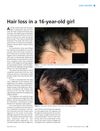 November 2014 in “Prescriber”
 The 16-year-old girl with hair loss was successfully treated for alopecia areata, leading to significant hair regrowth.
 235 citations
,
January 2011 in “Journal of Clinical Investigation”
235 citations
,
January 2011 in “Journal of Clinical Investigation” Men with baldness due to androgenetic alopecia still have hair stem cells, but lack specific cells needed for hair growth.
 January 2023 in “Vìsnik problem bìologìï ì medicini”
 Androgenic alopecia causes hair follicle degradation and skin restructuring, but some hair elements remain.
 155 citations
,
September 2008 in “British journal of dermatology/British journal of dermatology, Supplement”
155 citations
,
September 2008 in “British journal of dermatology/British journal of dermatology, Supplement” FFA is more common in postmenopausal women, can affect younger women, and may stabilize over time.
 34 citations
,
March 2001 in “Cleveland Clinic Journal of Medicine”
34 citations
,
March 2001 in “Cleveland Clinic Journal of Medicine” Manage hair shedding by identifying triggers, possibly using supplements or medications, and tracking with a health calendar.
 May 2023 in “Vestnik dermatologii i venerologii”
 Early-stage male pattern baldness shows two types of hair loss: one on the top of the head linked to hormonal changes, and another at the back of the head. The top hair loss responds well to specific treatment, while the back hair loss does not.
21 citations
,
October 2007 in “Australasian Journal of Dermatology” A woman with hair loss regrew white hair after taking prednisolone.
January 2022 in “Clinical Cases in Dermatology” Hypothyroidism can cause hair loss, which is often reversible with treatment.
February 2006 in “Cambridge University Press eBooks” A 45-year-old woman experienced excessive hair shedding beyond the normal range.
 3 citations
,
January 2021 in “Skin appendage disorders”
3 citations
,
January 2021 in “Skin appendage disorders” Hair loss can occur about 4 weeks after scalp surgery but usually grows back within 3 months without treatment.
August 2025 in “EMC - AKOS - Trattato di Medicina” Non-scarring alopecia can regrow hair, but scarring alopecia is often permanent and needs quick treatment.
May 2014 in “Dermatology Times” 2 citations
,
February 2023 in “International Journal of Cosmetic Science” Hair loss is more common in areas with multiple hair strands, especially in men.
 2 citations
,
June 1980 in “International Journal of Dermatology”
2 citations
,
June 1980 in “International Journal of Dermatology” Scalp biopsies are important for diagnosing hair loss conditions.
 October 1987 in “Clinics in Dermatology”
 Scalp reduction can improve hair distribution in certain baldness cases but requires careful patient selection and understanding of facial structure.
 4 citations
,
July 1993 in “The Journal of Dermatologic Surgery and Oncology”
4 citations
,
July 1993 in “The Journal of Dermatologic Surgery and Oncology” The article concludes that hair restoration techniques must account for ongoing hair loss to ensure successful long-term results.