 February 2025 in “Journal of Nutrients”
 Bone broth may improve health and prevent diseases.
 February 2025 in “Clinical Cosmetic and Investigational Dermatology”
 Higher fasting insulin levels increase the risk of androgenetic alopecia.
 January 2025 in “International Journal of Pharmacology”
 Both steroids, especially cyproterone acetate, harm quail's vital organs.
 January 2025 in “American Journal of Stem Cells”
 Melanocyte stem cells hold promise for skin regeneration and treating pigmentation issues.
January 2025 in “Multimedialen Archiv und Publikationsserver der Christian-Albrechts-Universität zu Kiel (Christian-Albrechts-Universität zu Kiel)” Oxidized LDL reduces cell growth but affects stem cell differentiation less negatively than cytokine-induced inflammation.
 January 2025 in “RSC Pharmaceutics”
 Smart microneedles using advanced tech could improve psoriasis treatment.
 January 2025 in “Scripta Medica”
 Natural hydrolates may improve burn healing and fight antibiotic resistance.
 January 2025 in “Fitoterapia”
 Signaling pathways are key targets for developing effective drugs.
 January 2025 in “Exploratory Animal and Medical Research”
 Lithium carbonate and lead acetate together harm the heart more than individually.
 January 2025 in “Scripta Medica”
 PDO, PLLA, and PCL threads increase collagen in ageing skin but don't change MMP1 gene expression.
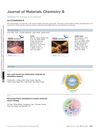 January 2025 in “Journal of Materials Chemistry B”
  December 2024 in “Ankara Universitesi Eczacilik Fakultesi Dergisi”
 Black cumin has many health benefits and potential for new medicines.
 December 2024 in “Deleted Journal”
 New therapies show promise for wound healing, but more research is needed for safe, affordable options.

Oxidative stress, not insulin resistance, is linked to diffuse hair loss.
 September 2024 in “Journal of the Pakistan Medical Association”
 A 589 nm laser increases IL-2 and IFN-y gene expression in human T-cells.

Certain plasma proteins are linked to prostate cancer risk and could help in early detection and treatment.
 August 2024 in “Bioscience of Microbiota Food and Health”
 Microbes might play a role in vitiligo.
 August 2024 in “Life Science Alliance”
 Helminth protein helps wounds heal better by reducing scarring and promoting tissue growth.

Men with androgenetic alopecia may have a higher risk of metabolic syndrome.

Four genes are linked to alopecia areata, with two increasing risk and two offering protection.

Blocking the Mitochondrial Pyruvate Carrier causes stress in hair follicles, which can be reduced by an ISR inhibitor.
June 2024 in “Cermin Dunia Kedokteran” Low level laser therapy is effective and safe for various skin and hair conditions.

Photobiomodulation effectively improves skin and hair conditions with minimal side effects.
 April 2024 in “Research Square (Research Square)”
 Selenium supplements can help improve symptoms and metabolic markers in lupus patients.
 April 2024 in “Cell death and differentiation”
 Cell death shapes skin stem cell environments, affecting inflammation, repair, and cancer.
 April 2024 in “Lasers in medical science”
 Near-infrared LED light improves skin rejuvenation and hair growth better than white LED light.
 April 2024 in “Frontiers in cellular and infection microbiology”
 Blue light might help treat skin conditions by affecting the skin's bacteria.
 March 2024 in “Medical lasers”
 Multiple-wavelength radiation helps hair grow by boosting early hair follicle development.
 March 2024 in “Asian Journal of Advanced Research and Reports”
 Smoking and alcohol are linked to early hair graying.

Ayurvedic herbs may reduce side effects and improve effectiveness of cancer treatments.