 5 citations
,
April 2021 in “JAAD Case Reports”
5 citations
,
April 2021 in “JAAD Case Reports” Platelet-rich plasma therapy may help treat folliculitis decalvans but benefits might not last without ongoing treatment.
 4 citations
,
September 2022 in “Dermatologic Therapy”
4 citations
,
September 2022 in “Dermatologic Therapy” Baricitinib helped some patients with tough-to-treat hair loss regrow hair, but more research is needed on its safety.
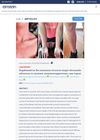 4 citations
,
January 2019 in “Einstein (São Paulo)”
4 citations
,
January 2019 in “Einstein (São Paulo)” Dupilumab improved severe atopic dermatitis in a patient who didn't respond to other treatments.
 2 citations
,
September 2022 in “Dermatologic Therapy”
2 citations
,
September 2022 in “Dermatologic Therapy” Tofacitinib is a promising treatment for severe alopecia areata, with many patients experiencing complete or partial hair regrowth.
 1 citations
,
May 2025 in “Frontiers in Medicine”
1 citations
,
May 2025 in “Frontiers in Medicine” Dual-targeted therapy is effective and safe for difficult-to-treat inflammatory bowel disease.
 1 citations
,
January 2025 in “Advances in Dermatology and Allergology”
1 citations
,
January 2025 in “Advances in Dermatology and Allergology” Platelet-rich fibrin helps heal stubborn wounds in rats by reducing inflammation and boosting tissue repair.
 May 2026 in “International Journal of Homoeopathic Sciences”
 Individualized Homeopathic Medicine shows promise for treating alopecia with lasting hair regrowth.
January 2026 in “Experimental Dermatology” Skin-resident memory T cells may contribute to chronic alopecia areata and baricitinib could be a potential treatment.
January 2025 in “Case Reports in Dermatological Medicine” Adipose tissue-derived exosomes may help regrow hair in alopecia areata.
November 2024 in “Journal of Investigative Dermatology”  December 2023 in “Journal of Cosmetic Dermatology”
 Baricitinib effectively and safely improves hair growth in patients with severe alopecia areata.
April 2019 in “Journal of the Endocrine Society” Glucocorticoid treatment lowered androgen levels but didn't improve hirsutism or ovulation and caused weight gain.
14 citations
,
June 2021 in “Archives of Dermatological Research” Combining stem cell media with laser or microneedling can effectively regrow hair in alopecia areata.
 13 citations
,
March 2002 in “Pediatric Dermatology”
13 citations
,
March 2002 in “Pediatric Dermatology” A child was initially wrongly diagnosed with a fungal scalp infection but actually had a non-scarring hair loss condition called Temporal Triangular Alopecia.
 11 citations
,
January 2018 in “Acta dermato-venereologica”
11 citations
,
January 2018 in “Acta dermato-venereologica” Tofacitinib works better and is more tolerable for severe alopecia than conventional treatments and DPCP immunotherapy.
 7 citations
,
October 2019 in “Evidence-based Complementary and Alternative Medicine”
7 citations
,
October 2019 in “Evidence-based Complementary and Alternative Medicine” Chinese medicine may help hair growth and reduce hair loss in androgenetic alopecia.
2 citations
,
August 2024 in “Journal of Cosmetic Dermatology” Silymarin with hair follicle transplantation might help treat stubborn vitiligo, but more research is needed.
2 citations
,
January 2023 in “Dermatologic Therapy” CEFFE injections effectively and safely improve postinflammatory hyperpigmentation.
 2 citations
,
January 2022 in “Skin appendage disorders”
2 citations
,
January 2022 in “Skin appendage disorders” A combination of methotrexate injections and CO2 laser treatment led to complete hair regrowth in two patients with hard-to-treat alopecia.
High CCL11 levels may indicate poor response to baricitinib in severe alopecia areata.
November 2025 in “The Journal of Dermatology” Nemolizumab improved both severe atopic dermatitis and alopecia areata in one patient.
 August 2025 in “Journal of the American Academy of Dermatology”
 The reported treatment depths were likely incorrect and could risk patient safety.
 August 2025 in “International Journal of Nanomedicine”
 Metal-organic frameworks can help heal wounds, reduce scars, and promote hair growth, but more research is needed.
 November 2024 in “Journal of the American Academy of Dermatology”
 Combining PRP, microneedling, and minoxidil may improve hair regrowth in severe hair loss cases.
January 2016 in “Refubium (Universitätsbibliothek der Freien Universität Berlin)” CAP7.1 is generally safe at 200 mg/m²/day, but can cause fatigue, nausea, hair loss, fever, and blood-related issues.
 2 citations
,
January 1990 in “Leukemia & Lymphoma”
2 citations
,
January 1990 in “Leukemia & Lymphoma” The combination of mitoxantrone, etoposide, and prednisolone is effective for treating relapsed lymphoma with manageable side effects.
January 2026 in “Dermatologic Therapy” Higher RBP4 levels are linked to severe alopecia areata, but genetic variant rs3758539 doesn't affect baricitinib response.
August 2025 in “Journal of the American Academy of Dermatology” Combining PRP with microneedling and minoxidil may help treat severe hair loss.
 120 citations
,
November 2014 in “Biological Reviews”
120 citations
,
November 2014 in “Biological Reviews” The telogen phase of hair growth is active and important for preparing hair follicles for regeneration, not just a resting stage.
 39 citations
,
May 2004 in “Clinics in Dermatology”
39 citations
,
May 2004 in “Clinics in Dermatology” The document concludes that treatment for cutaneous T-cell lymphoma should be customized to each patient's disease stage, balancing benefits and side effects, with no cure but many patients living long lives.