May 2022 in “Dermatology practical & conceptual” Trichoscopy is crucial for diagnosing and managing androgenetic alopecia, showing increased vellus hairs, empty follicles, and fibrosis with severity.
 12 citations
,
January 2014 in “The Pan African medical journal”
12 citations
,
January 2014 in “The Pan African medical journal” Minoxidil caused unwanted hair growth in a child, but stopped after stopping treatment.
29 citations
,
February 2019 in “Pediatric dermatology” Trichotillomania shows specific signs like black dots and uneven hair lengths but lacks certain features of alopecia areata.
21 citations
,
April 2004 in “Australasian Journal of Dermatology” A 3-year-old girl has a rare condition causing sparse hair and nail issues, with minimal improvement from treatment.
 19 citations
,
September 2016 in “Journal of the European Academy of Dermatology and Venereology”
19 citations
,
September 2016 in “Journal of the European Academy of Dermatology and Venereology” Trichofolliculoma is a unique benign tumor mainly affecting middle-aged adults' faces, often misdiagnosed without histopathology.
 June 2023 in “JAAD case reports”
 The document concludes that "hot comb alopecia" is now called "central cicatricial centrifugal alopecia" and its causes are complex.

Trichotillomania treatment is improving with behavior therapy and new drug approaches, but challenges like stigma and underdiagnosis remain.
 April 2023 in “World Journal Of Advanced Research and Reviews”
 Cosmetic products or emotional factors might contribute to Frontal Fibrosing Alopecia, and trichoscopy is useful for diagnosis.
2 citations
,
July 1994 in “Journal of Dermatological Science” Grafted human scalp samples on mice can produce human hair, useful for studying hair genetics.
 1 citations
,
January 2020 in “Indian Dermatology Online Journal”
1 citations
,
January 2020 in “Indian Dermatology Online Journal” Pigtail hair is a sign of new hair growth and should be recognized in hair loss conditions like acute telogen effluvium.
35 citations
,
September 2011 in “The Journal of Dermatology” Trichoscopy helps accurately diagnose temporal triangular alopecia.
January 2026 in “Clinical Case Reports” A 6-year-old girl had both monilethrix and trichorrhexis nodosa, causing brittle hair, with minimal improvement from treatment.
March 2025 in “International Journal of Trichology” Vigorous rubbing of herbal powder on the scalp caused hair damage and loss.
5 citations
,
November 1979 in “PubMed” A hereditary condition causes hair loss and twisted hair in some family members.
11 citations
,
September 1990 in “Clinical Endocrinology” Girls with prepubertal simple hypertrichosis have higher dihydrotestosterone (DHT) levels.
 4 citations
,
May 2015 in “Indian Journal of Dermatology, Venereology and Leprology”
4 citations
,
May 2015 in “Indian Journal of Dermatology, Venereology and Leprology” Congenital triangular alopecia can occur outside the typical fronto-temporal region.
January 2023 in “Indian Dermatology Online Journal” A 23-year-old man has a benign, non-progressive hair loss patch that doesn't respond to treatment but can be cosmetically treated.
 December 2023 in “Portuguese journal of dermatology and venereology”
 Trichoscopy can reliably distinguish between alopecia areata and trichotillomania.
 17 citations
,
November 2012 in “Journal of Investigative Dermatology”
17 citations
,
November 2012 in “Journal of Investigative Dermatology” The document concludes that over 500 genes are linked to hair disorders and this knowledge is important for creating new treatments.
 January 2025 in “Journal of Case Reports and Scientific Images”
 Early recognition and treatment of scalp demodicosis can prevent misdiagnosis and effectively resolve symptoms.
 8 citations
,
September 2021 in “Skin appendage disorders”
8 citations
,
September 2021 in “Skin appendage disorders” Trichotillomania treatment is most successful with a mix of behavioral therapy, medication, and social support.
May 2025 in “Skin Appendage Disorders” Frontal fibrosing alopecia can be diagnosed by examining facial areas and treated with specific medications to stop its progression.
33 citations
,
October 2005 in “Journal of Investigative Dermatology” A specific gene mutation causes sparse, brittle hair in a family.
11 citations
,
March 1991 in “PubMed” Hormonal imbalances, including high prolactin and thyroid issues, contribute to hair growth problems in women.
13 citations
,
January 2018 in “Skin Appendage Disorders” Dermoscopy improves diagnosis and treatment planning for trichostasis spinulosa.
44 citations
,
April 2013 in “Proceedings of the National Academy of Sciences of the United States of America” FGF13 gene changes cause excessive hair growth in a rare condition.
 14 citations
,
February 2017 in “Anais brasileiros de dermatologia/Anais Brasileiros de Dermatologia”
14 citations
,
February 2017 in “Anais brasileiros de dermatologia/Anais Brasileiros de Dermatologia” Trichotillomania is often misdiagnosed as alopecia areata and can be treated effectively with N-acetylcysteine and psychotropic drugs.
 January 2016 in “Journal of Clinical Dermatology”
 Trichoscopy helps diagnose and assess the severity of two types of hair loss diseases, androgenetic alopecia and alopecia areata.
10 citations
,
January 1995 in “Dermatology” Dermatologists should consider congenital syndromes like TRPS in young adults with early hair loss.
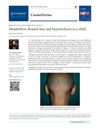 January 2026 in “Cosmoderma”
 A 9-year-old girl has a rare hair disorder causing beaded, sparse hair.