
People with Down syndrome have a higher risk of skin disorders and need better screening and treatment.
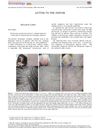 July 2021 in “Australasian Journal of Dermatology”
 The trichoscopy-assisted hair pull test is useful for diagnosing different types of hair loss.
 February 2020 in “International Journal of Research in Dermatology”
 EPDS is a rare, chronic scalp condition that's hard to treat and needs better awareness for improved outcomes.

The extract of Guazuma ulmifolia Lam. has limited antioxidant properties and cannot prevent uric acid synthesis.
 January 2018 in “Elsevier eBooks”
 The document concludes that alopecia has significant social and psychological effects, leading to a market for hair loss treatments.
 January 2018 in “Skin appendage disorders”
 The document focused on hair disorders, especially alopecia, and discussed treatments and impacts on quality of life.
 January 2018 in “Stem cell biology and regenerative medicine”
 The conclusion is that the nuclear lamina and LINC complex in skin cells respond to mechanical signals, affecting gene expression and cell differentiation, which is important for skin health and can impact skin diseases.

Hair loss causes emotional distress, leading to high spending on treatments, with Minoxidil and Propecia being common but having side effects.
 May 2017 in “InTech eBooks”
 Trichoscopy and trichogram are useful for diagnosing hair and scalp conditions.
 May 2017 in “InTech eBooks”
 Some hair loss disorders cause permanent loss due to scarring, and treatments like steroids don't always work well.

Female hair loss is often hereditary and can be treated with medication, hair transplants, and lasers.
 January 2016 in “Skin appendage disorders”
 The document discusses various nail and hair disorders and their treatments.
 June 2015 in “Vestnik dermatologii i venerologii”
 Growth factors influence hair growth and hair loss.

Lupus is a complex disease that requires personalized treatment because it varies greatly between individuals.
 December 2014 in “Berkala Ilmu Kesehatan Kulit dan Kelamin”
 Griseofulvin effectively treats tinea capitis kerion type.

Low-level laser therapy combined with Neoptide improved hair regrowth better than either treatment alone in rats.
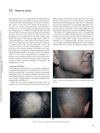 April 2012 in “Informa Healthcare eBooks”
 Alopecia areata is a common autoimmune condition causing varying hair loss, diagnosed by specific patterns of inflammation around hair follicles, with several treatment options available.
 February 2012 in “InTech eBooks”
 PCOS increases the risk of heart disease and type 2 diabetes in women.
 October 2011 in “Iranian Journal of Dermatology”
 Men with male pattern baldness may have a higher risk of heart disease due to increased levels of a specific lipid in their blood.
 January 2011 in “Der Pharmacia Lettre”
 Pig oil was found to significantly promote hair growth in rats, more effectively than Minoxidil.
 January 2010 in “Ciencia UANL”
 Young men with hair loss may have a higher risk of insulin resistance and related health issues.
 February 2008 in “Expert Review of Dermatology”
 Seborrheic dermatitis significantly lowers quality of life, especially in young people, women, and those with higher education.

Hair restoration surgery has improved to transplant hair in natural groupings, but it's labor-intensive and can't fully restore normal hair density.
 January 2006 in “Yearbook of Dermatology and Dermatologic Surgery”
 Hair graying is caused by the loss of pigment cells due to poor maintenance of stem cells in the hair follicle.
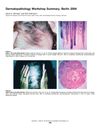 November 2005 in “Journal of Investigative Dermatology Symposium Proceedings”
 The workshop aimed to improve hair loss disorder diagnosis and understanding.
 June 2020 in “Aesthetic Surgery Journal”
 Estradiol-rich plasma can increase hair density faster and more effectively in male pattern baldness treatment than regular plasma.

Women with androgenetic alopecia (hair loss) have normal prostate specific antigen levels but higher testosterone levels.
 March 2018 in “Nepal journal of dermatology, venereology & leprology”
 Hair loss linked to prostate enlargement; stress and family history important factors.
 January 2017 in “Journal of clinical & experimental dermatology research”
 There's no significant link between hair loss from male pattern baldness and early heart disease.
 July 2016 in “Journal of Cutaneous Medicine and Surgery”
 Receding hairlines in men are uneven, with the right side larger than the left.