 March 2026 in “Dermatology Reports”
 FFA has higher long-term remission rates than LPP.
 January 2020 in “Hair transplant forum international”
 The type of previous hair restoration surgery might affect the success of a later one, with strip harvesting possibly leading to fewer damaged hair follicles.
June 2026 in “Dermatology” Frontal fibrosing alopecia has a higher remission rate than lichen planopilaris.
 2 citations
,
November 2023 in “Acta dermato-venereologica”
2 citations
,
November 2023 in “Acta dermato-venereologica” Tofacitinib is effective and safe for treating alopecia areata with a good drug survival rate.
Rehabilitation improved patients' mobility but did not reduce 30-day hospital readmission rates after stem cell transplants.
6 citations
,
June 1983 in “Cancer” A six-drug treatment for metastatic breast cancer showed promising results with low side effects, especially in premenopausal women.
 June 2024 in “International Journal of Dermatology”
 Experienced professionals can fix bad scalp micropigmentation with good results.
 2 citations
,
March 2005 in “Cancer biology & therapy”
2 citations
,
March 2005 in “Cancer biology & therapy” Bexxar treatment led to a high response rate in patients with advanced-stage, treatment-resistant follicular lymphoma.
 25 citations
,
January 2001 in “Facial Plastic Surgery”
25 citations
,
January 2001 in “Facial Plastic Surgery” Both tissue expansion and serial excision are effective for scar revision in the head and neck area.
156 citations
,
August 2014 in “Cochrane library” Budesonide is not effective for maintaining remission in Crohn's disease beyond three months.
53 citations
,
August 2014 in “Cochrane library” Methotrexate is not proven effective for inducing remission in ulcerative colitis.
51 citations
,
August 2015 in “Cochrane library” Methotrexate is not proven to maintain remission in ulcerative colitis.
 May 2025 in “Frontiers in Immunology”
 Autoimmune diseases with high tissue recovery often relapse and remit, while those with low recovery rarely remit.
 February 2026 in “Ciencia Latina Revista Científica Multidisciplinar”
 Early recognition and thyroid evaluation are crucial for managing diffuse alopecia areata linked to autoimmune thyroid disease.
 12 citations
,
August 2020 in “JEADV. Journal of the European Academy of Dermatology and Venereology/Journal of the European Academy of Dermatology and Venereology”
12 citations
,
August 2020 in “JEADV. Journal of the European Academy of Dermatology and Venereology/Journal of the European Academy of Dermatology and Venereology” Azathioprine is the most continued treatment for chronic alopecia areata over a year, often with added low-dose prednisolone.
 November 2018 in “Springer eBooks”
 The document concludes that specialized hair transplant techniques can be effective, with varying success rates depending on the donor area and patient factors.

Treatments for acute leukaemia lead to high remission rates, but relapses occur, requiring ongoing advancements in care.
 47 citations
,
June 2014 in “Journal of Dermatological Treatment”
47 citations
,
June 2014 in “Journal of Dermatological Treatment” Most treatments for lichen planopilaris were found to be generally unsatisfactory.
 August 2025 in “International Journal of Research in Dermatology”
 Combining glucocorticoids with immunosuppressants like cyclophosphamide improves remission and reduces relapse in pemphigus patients.
 8 citations
,
January 2018 in “Journal of the American Academy of Dermatology”
8 citations
,
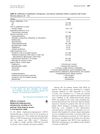
January 2018 in “Journal of the American Academy of Dermatology” Diphenylcyclopropenone treatment helps prevent hair loss relapse in alopecia areata patients.
 January 2023 in “Journal of The American Academy of Dermatology”
 Patients at dermatology specialist hospitals had lower death and readmission rates but higher treatment costs.
 182 citations
,
October 2003 in “British Journal of Dermatology”
182 citations
,
October 2003 in “British Journal of Dermatology” The 2003 guidelines suggest that while some treatments can regrow hair in alopecia areata, none alter the disease's progression, and wigs may be the best option for extensive hair loss.
 39 citations
,
May 2004 in “Clinics in Dermatology”
39 citations
,
May 2004 in “Clinics in Dermatology” The document concludes that treatment for cutaneous T-cell lymphoma should be customized to each patient's disease stage, balancing benefits and side effects, with no cure but many patients living long lives.
 193 citations
,
August 2005 in “Journal of Investigative Dermatology Symposium Proceedings”
193 citations
,
August 2005 in “Journal of Investigative Dermatology Symposium Proceedings” Hair loss common in Australia; men affected earlier, more often than Asians; women less concerned.
 4 citations
,
April 2013 in “Actas Dermo-Sifiliográficas”
4 citations
,
April 2013 in “Actas Dermo-Sifiliográficas” Most Spanish Caucasian women have a widow's peak, and their hormone levels suggest they process certain hormones faster.
 1 citations
,
July 2018 in “Elsevier eBooks”
1 citations
,
July 2018 in “Elsevier eBooks” Triple horizontal scalp biopsies are 98% accurate in diagnosing hair loss, better than single biopsies.
 December 2002 in “International Journal of Cosmetic Surgery and Aesthetic Dermatology”
 Scalp reduction surgery is safe and effective for certain patients with hair loss, leading to dense hair coverage and high satisfaction.
 23 citations
,
April 2021 in “Journal of Clinical Medicine”
23 citations
,
April 2021 in “Journal of Clinical Medicine” Frontal Fibrosing Alopecia's cause is unclear, affects mainly postmenopausal women, and current treatments focus on stopping hair loss rather than regrowth.
 January 2011 in “Journal of The American Academy of Dermatology”
 Treating generalized granuloma annulare is difficult, with PUVA being the most effective option, but relapses are common.
 January 2024 in “Deleted Journal”
 Radiation cystitis patients need better monitoring and early treatment due to higher readmission rates.