 December 2017 in “Journal of The American Academy of Dermatology”
 The document explains how to claim CME credit by diagnosing and treating hair loss conditions in two patient cases.
 October 2017 in “Journal of Investigative Dermatology Symposium Proceedings”
 Using lidocaine before keloid injections makes the treatment more comfortable for patients.
 August 2017 in “International journal of research in dermatology”
 0.05% betamethasone dipropionate is the most effective treatment for mild alopecia areata.
 May 2017 in “IOSR journal of dental and medical sciences”
 Both Betasalic ointment and 5% minoxidil are effective and safe for treating Alopecia Areata.
 March 2017 in “Trichology and cosmetology:”
 Psoriasis treatment may affect body hair growth, with a complex relationship between skin and hair growth mechanisms.
 January 2017 in “Journal of cosmetology & trichology”
 A man with severe hair loss regrew hair after hormone treatment.

The document provides 70 multiple choice questions to improve haematology skills.

The document tests knowledge and decision-making in hematology through multiple-choice questions.
 September 2014 in “Springer eBooks”
 The document concludes that breast pain should be managed with personalized treatment, starting with non-drug methods and progressing to medication if necessary, while considering side effects and patient needs.
 January 2014 in “Journal of the turkish academy of dermatology”
 Hair transplantation is safe and effective for permanent hair loss due to scarring, with high patient satisfaction.
Men with both baldness and scalp psoriasis often don't have psoriasis on bald spots.
 August 2010 in “The Journal of Dermatology”
 The document concludes that low-dose acne treatment is most suitable for moderate acne, with high patient satisfaction and low relapse rates.
Botulinum toxin type A reduces itch and inflammation from histamine and may help treat certain skin conditions and hair loss.
Different botulinum toxin products and concentrations can effectively reduce sweating, itching, bladder pressure, hair loss, and muscle spasms.
 January 2006 in “Journal of Rural Medicine”
 Trichotillomania is more common than previously thought, with increasing diagnosed cases.
 December 2004 in “Medicine”
 Pregnancy can cause skin changes and may affect pre-existing skin conditions, with some treatments not safe for use during pregnancy.
 May 2003 in “Facial Plastic Surgery Clinics of North America”
 Hair loss can be treated with medications like minoxidil and finasteride or surgery, but treatment effectiveness varies by alopecia type and accurate diagnosis is important.
 August 2001 in “Veterinary Dermatology”
 The meeting presented findings on effective treatments for various pet skin conditions and insights into the immune responses of dogs with atopic dermatitis.
 December 2000 in “Journal of the Royal Society of Medicine”
 Antiandrogen therapy may help treat hidradenitis suppurativa.
 September 1997 in “JEADV. Journal of the European Academy of Dermatology and Venereology/Journal of the European Academy of Dermatology and Venereology”
 Psychological factors play a significant role in developing alopecia areata.
 February 1990 in “Journal of The American Academy of Dermatology”
 New skin treatments in 1987-1988 showed effectiveness for various conditions, but some had side effects or risks.
 September 1988 in “Inpharma (Balgowlah)”
 Retinoids are effective for acne but can cause serious side effects.
 July 1988 in “Journal of The American Academy of Dermatology”
 Various dermatologic treatments were effective for skin conditions like acne, rosacea, hair loss, and psoriasis from December 1986 to December 1987.
Doctors recommend postoperative radiation for male breast cancer, advise against testosterone for vasomotor symptoms post-adrenalectomy, suggest non-hormonal treatments for atrophic vaginitis after mastectomy, note no specific treatment for anticoagulant-induced hair loss, and call for more research on silicosis from silicon carbide exposure.
 March 2025 in “Mediterranean Journal of Rheumatology”
 Laser hair removal is safe for people with Systemic Lupus Erythematosus.
 January 2025 in “Annals of Thoracic and Cardiovascular Surgery”
 Removing the thymoma improved the patient's alopecia areata, suggesting a possible link between the two.
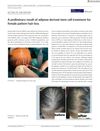 April 2021 in “Journal of Cosmetic Dermatology”
 Stem cell treatment improved hair density in female hair loss patient.
 January 2021 in “Journal of cosmetology & trichology”
 The treatment improved hair growth and thickness in patients with hair loss, even 10 months after therapy without additional products.
 July 2008 in “British Journal of Dermatology”
 Cyclosporin doesn't stop hair loss.
 19 citations
,
December 2006 in “Archives of dermatology”
19 citations
,
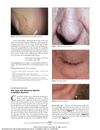
December 2006 in “Archives of dermatology” Hair casts and cutaneous spicules can be signs of multiple myeloma.