5 citations
,
January 1993 in “PubMed” Retinoic acid can change skin structures in vertebrates, like turning scales into feathers or hair buds into glands.
January 2019 in “FarFar - Pharmacy Repository” Microemulsions improve adapalene's skin absorption for better acne treatment.
 1 citations
,
April 2018 in “Journal of Investigative Dermatology”
1 citations
,
April 2018 in “Journal of Investigative Dermatology” Fzd2 is important for skin and hair development through various signaling ways.
3 citations
,
October 2019 in “CRC Press eBooks” Isotretinoin effectively treats severe acne but can cause significant side effects like dry skin and hair loss.
 November 2024 in “SKIN The Journal of Cutaneous Medicine”
 Ritlecitinib provides new treatment options for diverse alopecia areata patients.
 January 1993 in “Side effects of drugs annual”
 Natural products like propolis are causing more skin allergies, and certain skin treatments and medications have various side effects and risks.
15 citations
,
March 2000 in “The journal of investigative dermatology/Journal of investigative dermatology” As skin cells mature, vitamin D receptor levels decrease while retinoid X receptor α levels increase.
 12 citations
,
January 2021 in “Drugs in R&D”
12 citations
,
January 2021 in “Drugs in R&D” Isotretinoin is effective for treating dissecting cellulitis, but recurrence is common.
May 2018 in “Dermatologic Surgery” September 2017 in “BAUST Journal” January 2026 in “Annals of Dermatology” Alitretinoin may help treat mild to moderate alopecia areata.
49 citations
,
January 2005 in “Dermatology” Systemic retinoids may effectively treat erosive pustular dermatosis of the scalp.
Retinoic acid can change skin development, like turning scales into feathers or forming glands.
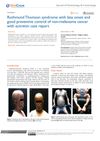 August 2024 in “Journal of Dermatology & Cosmetology”
 Acitretin effectively prevented skin cancer in a patient with late-onset Rothmund-Thomson syndrome.
 October 2023 in “Benha Journal of Applied Sciences”
 Methotrexate and vitamin D3 are potentially more effective and safer than triamcinolone for treating localized alopecia areata.
 February 1990 in “Journal of The American Academy of Dermatology”
 New skin treatments in 1987-1988 showed effectiveness for various conditions, but some had side effects or risks.
 October 2025 in “Indian Dermatology Online Journal”
 2.5 mg/ml of triamcinolone acetonide is more effective for treating alopecia areata.
13 citations
,
February 2019 in “Türk oftalmoloji dergisi” New treatments for chronic central serous chorioretinopathy show promise in preventing permanent vision loss.
11 citations
,
January 2017 in “Skin Appendage Disorders” Use lower concentrations of triamcinolone acetonide to reduce steroid-induced scalp atrophy.
34 citations
,
September 1997 in “Acta Dermato Venereologica” RXR agonists may promote hair growth in humans.
 7 citations
,
May 2022 in “International Journal of Environmental Research and Public Health”
7 citations
,
May 2022 in “International Journal of Environmental Research and Public Health” Isotretinoin therapy for acne can cause many reversible side effects, mainly mild skin conditions, and patient understanding of these effects can improve treatment adherence.
 August 2019 in “Journal of The American Academy of Dermatology”
 RV3466F lotion significantly reduces hair loss and improves acute telogen effluvium.
February 2023 in “Cosmoderma” Combining red LED therapy with beta-carotene is more effective for treating photoaging than red LED therapy alone.
 May 2026 in “Zenodo (CERN European Organization for Nuclear Research)”
 The serum with microneedling device improves hair loss treatment effectively and safely.
 September 2005 in “Journal of Investigative Dermatology”
 Ferulic acid helps stabilize vitamins C and E for better skin protection from the sun, certain compounds may promote hair growth, atopic dermatitis patients have lower skin defense molecules, older men are more likely to get a type of skin cancer, and a substance called relaxin may prevent age-related skin thickening.
11 citations
,
October 1990 in “The Journal of dermatologic surgery and oncology” New treatments for skin aging will soon compete with current ones like tretinoin.
April 2014 in “Investigative Ophthalmology & Visual Science”  August 2023 in “Dermatology Reports”
 Acne not improved by usual treatments may indicate a genetic disorder.
November 2025 in “SKIN The Journal of Cutaneous Medicine” Ritlecitinib is effective long-term for treating alopecia areata in teens.
5 citations
,
February 2025 in “Pediatric Dermatology” Ritlecitinib was generally well tolerated in children with alopecia areata.