 April 1982 in “Journal of The American Academy of Dermatology”
 Retinoids help treat psoriasis effectively, but they can cause side effects and need more research on safe use with other treatments.
 April 2019 in “Journal of Investigative Dermatology”
 Non-coding RNA boosts retinoic acid production and signaling, aiding regeneration.
June 2010 in “The Knowledge Bank (The Ohio State University)” Inhibiting retinoic acid activates WNT signaling, potentially aiding hair disorder and skin cancer treatments.
 1 citations
,
May 2017 in “Journal of The American Academy of Dermatology”
1 citations
,
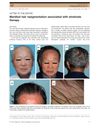
May 2017 in “Journal of The American Academy of Dermatology” A woman's hair grew back after stopping acitretin for psoriasis and getting steroid treatment, and low vitamin D might be linked to alopecia severity.
 9 citations
,
July 2016 in “The Journal of Dermatology”
9 citations
,
July 2016 in “The Journal of Dermatology” An 82-year-old man's white hair regained color after taking etretinate for psoriasis.
March 2023 in “Ukrainian Journal of Dermatology Venerology Cosmetology” The improved tretinoin lotion effectively treats acne with minimal irritation, even in children as young as 9.
32 citations
,
March 1988 in “International Journal of Dermatology” Retinoids can help treat skin disorders by improving the skin's outer layer.
1 citations
,
December 1989 in “PubMed” Tretinoin's effectiveness for hair loss is unclear and needs more research.
The treatment was not recommended due to limited effectiveness and significant side effects.
31 citations
,
September 2012 in “Journal of biological chemistry/The Journal of biological chemistry” The right amount of retinoic acid is essential for normal hair growth and development.
40 citations
,
August 2005 in “JEADV. Journal of the European Academy of Dermatology and Venereology/Journal of the European Academy of Dermatology and Venereology” Acitretin moderately improved skin and eye issues but not hair loss or light sensitivity in a 3-year-old with IFAP syndrome.
 April 2024 in “JEADV. Journal of the European Academy of Dermatology and Venereology/Journal of the European Academy of Dermatology and Venereology”
 Retinoic acid helps activate hair growth in people with common hair loss by working on a specific cell growth pathway.
December 2025 in “Journal of the European Academy of Dermatology and Venereology” The correction does not change the study's main findings.
 6 citations
,
September 2012 in “Our Dermatology Online”
6 citations
,
September 2012 in “Our Dermatology Online” Retinoids are effective for various skin conditions and hair loss but have serious side effects, so low doses are recommended.
39 citations
,
August 1998 in “FEBS Letters” Two new enzymes, PAD-R11 and PAD-R4, were cloned and showed activity, with PAD-R11 resembling epidermal enzymes.
3 citations
,
August 2021 in “Nutrition research” Estrogen affects how vitamin A is processed in mouse skin, which may impact acne treatment, hair growth, and skin defense.
January 2026 in “Annals of Medicine and Surgery”  5 citations
,
March 2019 in “Experimental dermatology”
5 citations
,
March 2019 in “Experimental dermatology” Activating TLR3 may help produce retinoic acid, important for tissue regeneration.

Acitretin treatment unexpectedly darkened a patient's gray hair.
15 citations
,
March 2000 in “The journal of investigative dermatology/Journal of investigative dermatology” As skin cells mature, vitamin D receptor levels decrease while retinoid X receptor α levels increase.
1 citations
,
November 2022 in “International journal of trichology” A girl with a rare skin condition improved after one month of treatment with acitretin.
 59 citations
,
January 2015 in “Nanoscale”
59 citations
,
January 2015 in “Nanoscale” The new micelle formulation delivers acne treatment more effectively and safely than current gels.
 January 2011 in “Side effects of drugs annual”
 Tretinoin gel is safe for sun exposure, but tacalcitol doesn't significantly improve non-segmental vitiligo.
5 citations
,
February 2025 in “Cell Reports” Skin acetyl-CoA synthesis is crucial for overall lipid balance.
16 citations
,
November 1994 in “Developmental Biology” Retinoic acid causes gland formation instead of hair in mouse skin by altering epidermal and dermal interactions.
5 citations
,
January 2016 in “Indian dermatology online journal” A 25-year-old man with multiple skin tumors was successfully treated with acitretin and methotrexate.
15 citations
,
May 1987 in “Fundamental and applied toxicology” SMR-2 and SMR-6 are much more toxic than retinoic acid, causing severe side effects.
2 citations
,
November 2004 in “Blood” RXRa is crucial for Th2 immune cell development and may link nutrition to immune health.
26 citations
,
October 2017 in “PubMed” Isotretinoin and acitretin may effectively stabilize the hairline in patients with frontal fibrosing alopecia.
39 citations
,
January 1977 in “Dermatology” The treatment cleared psoriasis in some patients but caused side effects in most.