 2 citations
,
February 2018 in “Journal of dermatology & cosmetology”
2 citations
,
February 2018 in “Journal of dermatology & cosmetology” Triangular temporal alopecia is a benign hair loss pattern best diagnosed with dermoscopy, with limited treatment options like surgery and hair transplantation.
 421 citations
,
April 2012 in “The New England Journal of Medicine”
421 citations
,
April 2012 in “The New England Journal of Medicine” Alopecia Areata is an autoimmune condition causing hair loss with no cure and treatments that often don't work well.
 March 2019 in “Our Dermatology Online”
 A woman with severe hair loss regrew mostly white hair after treatment.
October 2025 in “Diagnostics” Temporal triangular alopecia is a harmless, non-progressive hair loss condition.
8 citations
,
February 1982 in “Plastic & Reconstructive Surgery” Scalp reduction can effectively treat male pattern baldness, especially when combined with hair transplants.
 5 citations
,
October 1984 in “The BMJ”
5 citations
,
October 1984 in “The BMJ” Up to 50% of scalp hair can be lost before it appears thin, and treatment is only needed for hair loss caused by diseases or deficiencies.
 1 citations
,
July 2010 in “Dermatologic Surgery”
1 citations
,
July 2010 in “Dermatologic Surgery” Splitting one hair follicle into two can help regrow hair with a 50% to 70% success rate, useful when donor hair is limited.
 11 citations
,
August 2012 in “Canadian journal of ophthalmology”
11 citations
,
August 2012 in “Canadian journal of ophthalmology” Eyelash alopecia areata often goes undiagnosed and can lead to complete eyelash regrowth, especially in younger patients.
 October 2020 in “International Journal of Research in Dermatology”
 The review suggests more research is needed to understand Frontal fibrosing alopecia, a condition causing hairline recession in postmenopausal women.
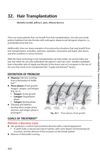 January 2018 in “Georg Thieme Verlag eBooks”
 Hair transplantation is a surgical procedure to move hair to bald areas, requires good donor hair, and results show in about a year.
 July 2003 in “Journal of Cutaneous Medicine and Surgery”
 Minoxidil may improve hair transplants and combining treatments could help alopecia areata.
 155 citations
,
September 2008 in “British journal of dermatology/British journal of dermatology, Supplement”
155 citations
,
September 2008 in “British journal of dermatology/British journal of dermatology, Supplement” FFA is more common in postmenopausal women, can affect younger women, and may stabilize over time.
 January 2024 in “Journal of Cosmetic Dermatology”
 Men's and women's pattern hair loss progress differently, with men showing more hair thinning and women having more widespread hair loss.
 2 citations
,
June 1980 in “International Journal of Dermatology”
2 citations
,
June 1980 in “International Journal of Dermatology” Scalp biopsies are important for diagnosing hair loss conditions.
16 citations
,
December 2015 in “Journal of Investigative Dermatology” Alopecia areata involves persistent gene abnormalities and immune activity, even in regrown hair, suggesting a risk of relapse.
2 citations
,
April 1999 in “PubMed” January 2016 in “Indian dermatology online journal” The patient has frontal fibrosing alopecia (FFA).
 2 citations
,
January 2017 in “Przegla̧d dermatologiczny”
2 citations
,
January 2017 in “Przegla̧d dermatologiczny” Two trichoscopic patterns found in hair loss: diffuse fibrotic and androgenetic alopecia, affecting treatment choice and regrowth chances.
2 citations
,
August 2025 in “JAAD reviews.” Frontal fibrosing alopecia significantly affects men, often causing hair loss in eyebrows, beard, and sideburns.
1 citations
,
January 2004 in “The Internet Journal of Geriatrics and Gerontology” Male pattern baldness is common, treatable, and may be linked to heart disease and prostate cancer.
 34 citations
,
April 2009 in “Expert Opinion on Pharmacotherapy”
34 citations
,
April 2009 in “Expert Opinion on Pharmacotherapy” Some treatments work for common baldness, but there's less evidence for other hair loss types, and more research is needed.
 8 citations
,
June 2008 in “Aktuelle Dermatologie”
8 citations
,
June 2008 in “Aktuelle Dermatologie” Early diagnosis and personalized treatment are crucial for managing different types of alopecia effectively.
4 citations
,
January 2006 in “Indian Journal of Dermatology, Venereology and Leprology” Surgical hair restoration was the best permanent solution for baldness in 2005.
 2 citations
,
May 2018 in “Journal of The American Academy of Dermatology”
2 citations
,
May 2018 in “Journal of The American Academy of Dermatology” Hypothyroidism patients with hair loss typically have thinning hair, smaller hair follicles, and normal hair shedding.
September 2025 in “Surgeries” Hair transplants can work for stable cicatricial alopecia, but success varies by condition.
 2 citations
,
July 2021 in “JAAD Case Reports”
2 citations
,
July 2021 in “JAAD Case Reports” Trichoscopy of the beard is useful for diagnosing frontal fibrosing alopecia in men.
 2 citations
,
March 2009 in “Hair transplant forum international”
2 citations
,
March 2009 in “Hair transplant forum international” Hair loss at the site where hair was taken for a transplant can be due to the normal hair growth cycle.
October 2015 in “CRC Press eBooks” Follicular transplantation is effective for treating hair loss and eyebrow alopecia.
September 2023 in “Journal of the American Academy of Dermatology” Current guidelines may overlook beard and sideburn involvement in diagnosing frontal fibrosing alopecia in men.