 November 2023 in “bioRxiv (Cold Spring Harbor Laboratory)”
 Disrupted cholesterol production impairs hair follicle stem cells, leading to hair loss.

The conference emphasized innovative solutions for global challenges, including disaster architecture, education, health, and economic impacts.

Continuous research and innovative strategies are essential for sustainable development.
 March 2023 in “Seminars in reproductive medicine”
 PCOS often leads to sleep problems, especially obstructive sleep apnea, affecting overall health.
 January 2023 in “Acta dermatovenerologica Alpina, Pannonica et Adriatica (Tiskana izd.)”
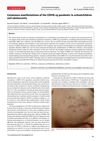
 The article concludes that schoolchildren and adolescents experienced various skin issues during the COVID-19 pandemic, including acne from masks and other skin reactions from the virus and vaccines.

Vitamin D is crucial for skin health and managing skin diseases.

The document concludes that the development of certain tumors is influenced by genetic background and that a specific gene modification can lead to tumor regression and reduced growth.
A mange outbreak nearly wiped out vicuña and guanaco populations in San Guillermo National Park.
 June 2021 in “Experimental and Therapeutic Medicine”
 MEF/KSF-conditioned medium effectively grows mouse hair follicle stem cells with bone-forming potential.
Placental cell medium boosts blood vessel growth in lab tests.
 December 2020 in “The Journal of Family Practice”
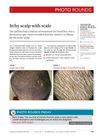
 The boy's itchy scalp and hair loss were likely due to head lice treatment.
 December 2020 in “Current Sexual Health Reports”
 Finasteride can have lasting negative effects on brain function and behavior by disrupting neurosteroid production.
 November 2020 in “Journal of The American Academy of Dermatology”
 Taking vitamin C and vitamin E twice a day can help prevent sunburn and DNA damage from UVB exposure.
 September 2020 in “British Journal of Dermatology”
 The document highlights advancements and findings in dermatology, including AI use, disease prevention, treatment efficacy, and the impact of conditions on patients' lives.

PlacMA hydrogels from human placenta are versatile and useful for cell culture and tissue engineering.
 August 2019 in “Stem cells”
 New treatments for hair loss, fertility, and wound healing are being explored.
SLC24A5 shows a clear selective sweep, but no link to UV radiation intensity.
 May 2016 in “Cambridge University Press eBooks”
 Eating disorders are serious, often undiagnosed conditions requiring early treatment, with anorexia being the most deadly and binge-eating the most treatable.
Avicennia Marina extract and avicequinone C can reduce hair loss hormone production and increase hair growth factors, suggesting they could be used to treat androgenic alopecia.
 January 2016 in “Dermatology Review”
 Endocrine disorders can cause various skin and hair issues.

The document explains how certain drugs block hormones to treat cancers like breast and prostate cancer.
 January 2014 in “HAL (Le Centre pour la Communication Scientifique Directe)”
 Sex hormones affect dog skin conditions, but more data is needed.
Human scalp hair follicles have PGE2 and its receptors, which might affect hair growth.

Hair follicles can be used to quickly assess drug effects in cancer treatment.
Wound healing is complex and requires more research to enhance treatment methods.
 July 2011 in “British Journal of Dermatology”
 Dermatologists give better information on pathology forms, hypersensitivity vasculitis is a common skin issue, misdiagnoses can occur, and various skin conditions are linked to loss of elastin or genetic factors.
 June 2008 in “CRC Press eBooks”
 PCOS may have evolved as an advantage in past environments with food scarcity.
 September 2002 in “Dermatologic Surgery”
 The recipient site can affect the growth and survival of transplanted hair but not its thickness.
 48 citations
,
July 2008 in “Acta Biochimica et Biophysica Sinica”
48 citations
,
July 2008 in “Acta Biochimica et Biophysica Sinica” Wnt signaling is important for development and cell regulation but can cause diseases like cancer when not working properly.
 January 2024 in “PloS one”
 Rat hair-follicle stem cells can become heart cells with specific supplements.