 June 2022 in “Journal of Dermatology Research”
 Using 448-kHz Capacitive-Resistive Electrothermal Therapy can help increase hair density and prevent hair loss in women.
5 citations
,
January 2025 in “Aesthetic Surgery Journal Open Forum” Sequential monopolar-bipolar radiofrequency improves skin regeneration and quality better than monopolar alone.
 61 citations
,
April 2014 in “Radiation Research”
61 citations
,
April 2014 in “Radiation Research” RTA 408 cream protects mice from radiation skin damage.
December 2025 in “eScience” A wireless, battery-free system uses Wi-Fi signals to enhance wound healing and enable smart healthcare at home.
1 citations
,
May 2020 in “bioRxiv (Cold Spring Harbor Laboratory)” The fer-ts mutation in plants prevents root hair growth at high temperatures.
 37 citations
,
March 2012 in “International Journal of Radiation Biology”
37 citations
,
March 2012 in “International Journal of Radiation Biology” Mobile phone radiation can cause DNA damage in human hair root cells.
 February 2021 in “Dermatological reviews”
 Nonablative radiofrequency therapy improves hair density, thickness, and growth rate.
 25 citations
,
May 2014 in “Facial Plastic Surgery”
25 citations
,
May 2014 in “Facial Plastic Surgery” PRFM may help treat hair loss, especially in mild cases.
 February 2024 in “Lasers in Medical Science”
 Lasers and energy-assisted methods show promise for treating hair loss, but more research is needed.
September 2016 in “Journal of dermatological science” FGF18 helps hair follicles resist radiation by stopping hair growth cycles.
January 2021 in “Asian Journal of Pharmaceutical and Clinical Research” FT-Raman spectroscopy is effective for identifying drug polymorphs, ensuring quality and stability.
September 2023 in “World Rabbit Science” The FRZB gene slows hair growth in rabbits.
 25 citations
,
June 2018 in “Clinical and Experimental Dermatology”
25 citations
,
June 2018 in “Clinical and Experimental Dermatology” Combined microneedling and minoxidil improves hair growth more than minoxidil alone.
January 2015 in “UNIFESP Institutional Repository (Universidade Federal de São Paulo)” A 30 Gy radiation dose effectively causes severe radiodermatitis in rabbits.
 1 citations
,
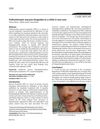
October 2023 in “Journal of the Pakistan Medical Association”
1 citations
,
October 2023 in “Journal of the Pakistan Medical Association” Folliculotropic mycosis fungoides can occur in children and is diagnosed with specific tests, but often stays in early stages with treatment.
12 citations
,
August 2004 in “Veterinary Dermatology” Fipronil effectively treats Lynxacarus radovskyi in outdoor cats.
13 citations
,
August 2000 in “Blood” Measuring minimal residual disease on day 15 helps identify high-risk leukemia patients.
15 citations
,
January 2018 in “Journal of Cutaneous Medicine and Surgery” It's important to understand the differences between FMF and PFM in children.
September 2017 in “The journal of investigative dermatology/Journal of investigative dermatology” Different types of human skin cells respond uniquely to various colors and doses of light, which could lead to specialized light treatments for skin conditions.
 11 citations
,
October 2019 in “Journal of Cancer Immunology”
11 citations
,
October 2019 in “Journal of Cancer Immunology” Combining Proton Minibeam with FLASH Radiotherapy may improve cancer treatment by reducing side effects and increasing effectiveness.
January 2010 in “China Animal Husbandry & Veterinary Medicine” RORs may influence cashmere growth cycles.
 71 citations
,
October 2008 in “The journal of investigative dermatology/Journal of investigative dermatology”
71 citations
,
October 2008 in “The journal of investigative dermatology/Journal of investigative dermatology” HFMs can help study hair growth and test potential hair growth drugs.
 119 citations
,
November 2014 in “Trends in Cell Biology”
119 citations
,
November 2014 in “Trends in Cell Biology” Fibroblast growth factor receptor signaling controls cell development and repair, and its malfunction can cause disorders and cancer, but it also offers potential for targeted therapies.
 21 citations
,
September 2008 in “Magnetic Resonance Imaging”
21 citations
,
September 2008 in “Magnetic Resonance Imaging” MRI can effectively image skin structures noninvasively.
 1 citations
,
September 2016 in “Journal of Dermatological Science”
1 citations
,
September 2016 in “Journal of Dermatological Science” FGF18 treatment during hair's resting phase can protect against hair loss from radiation.
 20 citations
,
April 2011 in “British Journal of Dermatology”
20 citations
,
April 2011 in “British Journal of Dermatology” Reflectance confocal microscopy can tell apart white dots on the scalp as either sweat gland ducts or hair follicle openings.
 October 2023 in “Journal of Advanced Sciences”
 Platelet Rich Fibrin (PRF) is a safe, effective tool for tissue regeneration and healing in various medical fields.
May 2026 in “Free Radical Biology and Medicine”  March 2026 in “Revista Ibero-Americana de Humanidades, Ciências e Educação”
 L-PRF effectively improved healing and bone integration in dental implant surgery.
 October 2025 in “International Journal of Research in Dermatology”
 New laser technologies and methods are safer and more effective for hair removal on darker skin tones.